
Kids ride on tractors and trucks can make outdoor play more exciting while helping children develop important physical, social, and thinking skills. These ride-on toys come in different sizes and styles, from simple foot-powered models to battery-powered vehicles with realistic designs. They allow children to explore their surroundings, create imaginative games, and enjoy active play away from screens.
Whether a child enjoys pretending to work on a farm, transport building materials, or drive along a garden path, ride-on tractors and trucks offer plenty of opportunities for creative play. Choosing a suitable model can also help parents encourage movement, coordination, and independent play.
What Are Ride-On Tractors and Trucks for Kids?
Ride-on tractors and trucks are toys designed for children to sit on and move around. Depending on the model, they may be powered by the child’s feet, pedals, or a rechargeable battery.
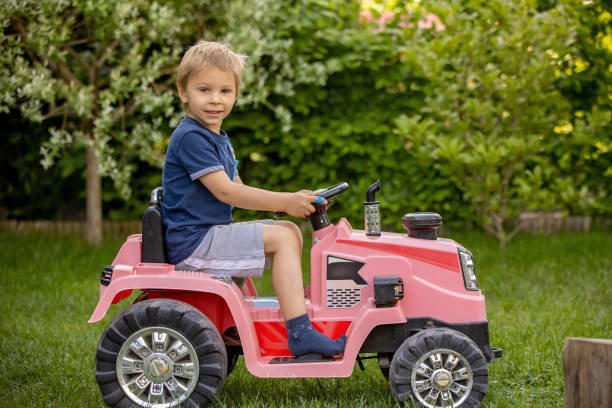
Ride-on tractors often feature large wheels, high seats, steering wheels, and designs inspired by agricultural machinery. Some include trailers that children can use to carry lightweight toys, leaves, or other suitable items during pretend farm activities.
Ride-on trucks may look like construction vehicles, delivery trucks, or off-road vehicles. Some models include features such as working lights, sounds, storage compartments, or parental remote controls.
The best choice depends on the child’s age, physical ability, interests, and the space available for play.
Benefits of Kids Ride-On Tractors for Development
1. Encourages Physical Activity
Outdoor play gives children an opportunity to move their bodies and spend time away from screens. Foot-powered and pedal-powered ride-on toys encourage children to use their legs, adjust their posture, and move around their play area.
Battery-powered models also encourage outdoor exploration, although they generally require less physical effort to operate.
Parents can make play more active by creating simple activities, such as driving between safe markers, following a garden path, or collecting lightweight toys in a trailer.
2. Helps Develop Coordination
Operating a ride-on tractor or truck involves several movements. Children may need to steer, control their speed, look ahead, and avoid obstacles.
These activities can support the development of hand-eye coordination, spatial awareness, and motor skills. Younger children may need time to understand how steering works, while older children can practise following simple routes.
Choose a vehicle that matches the child’s abilities rather than one that is too large or difficult to control.
3. Supports Imaginative Play
Ride-on tractors and trucks can turn an ordinary garden into a pretend farm, construction site, or delivery route.
Children can imagine transporting supplies, moving toy animals, delivering parcels, or helping with garden tasks. This type of imaginative play gives them the freedom to create stories and explore different roles.
Adding suitable toys, such as soft toy animals, building blocks, or lightweight containers, can make these activities more engaging.
4. Builds Confidence and Independence
Learning to steer and operate a suitable ride-on vehicle can give children a sense of achievement. They can practise making simple decisions, navigating familiar spaces, and completing small play activities.
Parents can support this progress by offering encouragement and allowing children to practise at their own pace. A vehicle with simple controls may be a better starting point for a beginner than a model with several additional features.
5. Encourages Social Interaction
Ride-on toys can also be part of group play. Children may take turns using different vehicles, create a pretend delivery service, or work together on a farm-themed game.
These activities provide opportunities to practise sharing, communication, cooperation, and patience. Adults can help younger children by setting simple rules for taking turns and keeping play areas organised.
Types of Ride-On Tractors and Trucks
Different designs suit different ages and play environments.
Foot-Powered Ride-On Tractors
These models are often suitable for younger children who can sit securely and move themselves using their feet. They usually have simple controls and do not require batteries.
They can be a practical option for indoor spaces or smooth outdoor surfaces, depending on the manufacturer’s recommendations.
Pedal-Powered Tractors
Pedal tractors require children to use their legs to move the vehicle. They can encourage active movement and may suit children who have developed the coordination needed to pedal and steer.
Check the recommended age range, pedal design, seat position, and wheel grip before choosing one.
Battery-Powered Ride-On Tractors
Electric ride-on tractors move using a rechargeable battery and motor. Depending on the model, they may include forward and reverse controls, adjustable speeds, lights, sounds, or a trailer.
Some have parental remote controls that allow an adult to help manage movement. However, a remote control does not replace supervision.
Ride-On Trucks and Construction Vehicles
Ride-on trucks may be designed to resemble dump trucks, loaders, or other construction vehicles. They can encourage pretend building-site games and imaginative tasks.
Check whether moving parts, lifting sections, or storage areas are suitable for the child’s age and safe to operate.
How to Choose the Right Ride-On Vehicle
Before buying a ride-on tractor or truck, consider these important factors.
- Age and size: Follow the manufacturer’s age, height, and weight recommendations.
- Power type: Decide whether a foot-powered, pedal-powered, or battery-powered model best suits the child.
- Play surface: Check whether the vehicle is designed for smooth floors, grass, paved paths, or other surfaces.
- Safety features: Look for stable construction, suitable speed limits, secure seating, and easy-to-use controls.
- Battery and charging: For electric models, check the recommended charging method and battery instructions.
- Storage space: Consider where the vehicle will be kept when it is not in use.
- Interests: A farm-style tractor may appeal to one child, while another may prefer a construction truck or vehicle with a trailer.
A toy does not need to have lots of electronic features to provide enjoyable play. The most suitable option is one the child can use comfortably and safely.
Safety Tips for Outdoor Play
Adult supervision is important whenever children use ride-on vehicles. Read the manufacturer’s instructions before the first use and check the toy regularly for damage, loose parts, or worn wheels.
Use the vehicle on a suitable, level surface away from roads, driveways with moving vehicles, steep slopes, swimming pools, and other hazards. Keep children away from stairs, drops, and areas where the vehicle could tip over.
For battery-powered models, use only the recommended charger and follow the manufacturer’s battery and charging instructions. Keep charging equipment away from children and stop using the vehicle if electrical components or the battery appear damaged.
Children should wear appropriate protective equipment where recommended, including a properly fitted helmet when required by the vehicle’s design or safety guidance. Avoid using ride-on toys near traffic, and make sure the play area is clear before children start moving.
Encouraging Learning Through Tractor and Truck Games
Parents can make ride-on play more interesting by introducing simple activities.
For example, set up a pretend farm where children transport soft toy animals or lightweight items in a trailer. A delivery game can involve taking toys from one safe point to another. For children who enjoy construction themes, use soft blocks to create a pretend building site.
These activities can encourage children to follow instructions, solve simple problems, practise counting, and use their imagination. Keep tasks appropriate to the child’s age and avoid placing heavy or unstable loads in trailers.
Frequently Asked Questions
What age is suitable for ride-on tractors?
The suitable age depends on the specific model and the child’s development. Always check the manufacturer’s age and size guidance, and make sure the child can sit securely and use the controls safely.
Are battery-powered tractors better than pedal tractors?
Neither option is best for every child. Pedal tractors encourage physical effort, while battery-powered models can be easier for children who cannot pedal comfortably. Consider the child’s abilities, available space, and the intended type of play.
Can kids ride tractors on grass?
Some ride-on tractors are designed for grass, but others work best on flat, firm surfaces. Check the manufacturer’s guidance about terrain, wheel traction, and operating conditions before using the vehicle outdoors.
Do ride-on trucks help with development?
Ride-on trucks can provide opportunities to practise coordination, spatial awareness, imaginative play, and social interaction. The benefits depend on how the child uses the toy and the support provided by adults.
What safety features should parents check?
Look for age-appropriate design, stable construction, suitable speed controls, secure seating, and clear operating instructions. For electric models, check the battery and charging guidance, and supervise use at all times.
Final Thoughts
Ride-on tractors and trucks can offer more than entertainment. When chosen carefully, they provide opportunities for children to enjoy outdoor activity, practise coordination, build confidence, and develop their imagination through pretend play.
Before buying, consider the child’s age, size, interests, and the available play area. Compare power types, safety features, and manufacturer recommendations to find a suitable vehicle. With appropriate supervision and a safe place to play, a ride-on tractor or truck can become a fun part of a child’s everyday play routine.