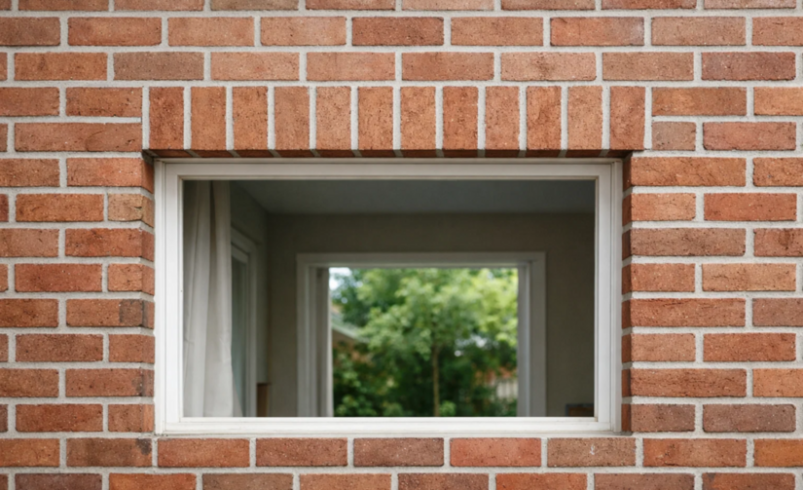

Look above a window or doorway in a brick wall and there’s a good chance you won’t notice the structure doing the hard work. Hidden behind the brickwork is often a lintel, supporting the masonry above the opening and transferring that weight back into the wall on either side.
Brick lintels are one option for doing this, particularly where a traditional appearance or matching brickwork matters. They can work well in suitable situations, but choosing and installing one isn’t simply a matter of filling the space above a window with bricks.
The opening, the weight above it, the span and the condition of the surrounding masonry all matter. Getting those details right at the start can prevent cracking and other problems later.
What Are Brick Lintels?
A lintel is a horizontal structural element placed above an opening such as a window or door. Its job is to carry the load from the masonry above and transfer it to the supporting wall sections at either side of the opening.
A brick lintel uses brickwork to perform this supporting role. Traditional versions may be formed by arranging bricks in a particular pattern, while reinforced brick lintels can include steel reinforcement to improve their ability to handle loads.
They are generally associated with smaller openings and lighter loads. For wider openings or situations with greater structural demands, other lintel materials may be more appropriate.
That distinction is important. A lintel that looks perfectly suitable from the outside may not be suitable for the actual load it needs to carry.
Why Is a Lintel Needed Above a Door or Window?
An opening creates a weak point in an otherwise continuous wall. The bricks above it cannot simply continue across the gap and support themselves indefinitely.
The lintel effectively bridges that opening. It takes the load above and transfers it towards the masonry at the sides, allowing the door or window opening to remain clear.
This is why cracks around windows and doors shouldn’t automatically be dismissed as cosmetic. Diagonal cracking from the corners, movement in the brickwork or signs of localised settlement can sometimes point towards problems with the support above the opening.
The surrounding wall matters just as much as the lintel itself. A strong lintel won’t solve a problem if the masonry supporting its ends is weak or damaged.
Where Brick Lintels Make Sense
There are situations where brick lintels are a practical choice, particularly when the opening is relatively small and the load is suitable.
They can also make sense on buildings where exposed brickwork is part of the visual character. Using matching brickwork can produce a more consistent appearance than introducing a visibly different structural material.
That said, appearance shouldn’t be the deciding factor. The structural requirements come first.
For larger openings, heavier loads or alterations to an existing load-bearing wall, a structural assessment may point towards a steel, reinforced concrete or another type of lintel instead. Different materials have different strengths and limitations.
Bearing Is Just as Important as the Lintel
One detail that is easy to overlook is how much of the lintel actually rests on the wall at each end.
The ends need adequate bearing so the load can be transferred safely into the surrounding masonry. Insufficient bearing can concentrate loads around the corners of an opening and contribute to cracking or movement.
There isn’t one universal bearing measurement that can be applied to every building. The required support depends on the design, span, wall construction and loads involved.
This is one of those jobs where copying a number from another project can create more problems than it solves. The correct detail should come from the structural requirements of the particular opening.
Common Problems to Watch For
Problems with lintels don’t always appear immediately.
Cracks may develop above a window, brickwork can start to bow, or the opening may show signs of movement. Sometimes the issue is the lintel itself. In other cases, the surrounding masonry, inadequate bearing, corrosion, movement or changes made to the building can be responsible.
Another common situation occurs during renovations. Someone wants a larger doorway or window, so part of an existing wall is removed. That changes the way the loads are supported, meaning the new opening needs proper structural consideration rather than simply being cut into the wall.
If substantial cracking or movement is already visible, it’s better to have the wall assessed rather than assuming that replacing the visible brickwork will fix the underlying issue.
Brick Lintels During Home Improvements
Lintels can become relevant during much more than new construction.
A homeowner might enlarge a window, create a new doorway, convert part of a garage or alter an internal opening. Services may also need to be considered during renovation work.
For example, properties being upgraded with a smart gas meter may involve changes around the location of existing utility equipment. Smart meters can automatically send readings to an energy supplier, so homeowners generally don’t need to provide regular readings manually when the meter is operating in smart mode.
That doesn’t mean a smart meter and a lintel are directly related. It simply highlights why renovation planning needs to account for existing structural elements and utility services at the same time. A new opening, service route or alteration should not interfere with structural support.
Choosing the Right Approach
There isn’t a single lintel that works for every opening.
The wall construction, opening width, loads above, materials being used and the condition of the existing masonry all need to be considered. In some cases, a traditional brick solution may be appropriate. In others, a different lintel type will provide the required structural performance.
For structural alterations, professional advice is particularly important. A lintel is a load-bearing component, so its design shouldn’t be based purely on appearance or a rough measurement taken from another property.
A Small Detail That Carries a Lot of Weight
Lintels are easy to ignore because much of the time they disappear behind plaster, brickwork or other finishes. Yet the support above an opening is doing an important structural job every day.
Brick lintels can be a useful solution in suitable applications, especially where smaller openings and matching masonry are involved. The important part is making sure the choice, sizing, bearing and surrounding construction all suit the actual building.
If you’re planning to create or alter an opening, don’t treat brick lintel installation as an afterthought. A few minutes spent getting the structural details right can save a much bigger repair job later.