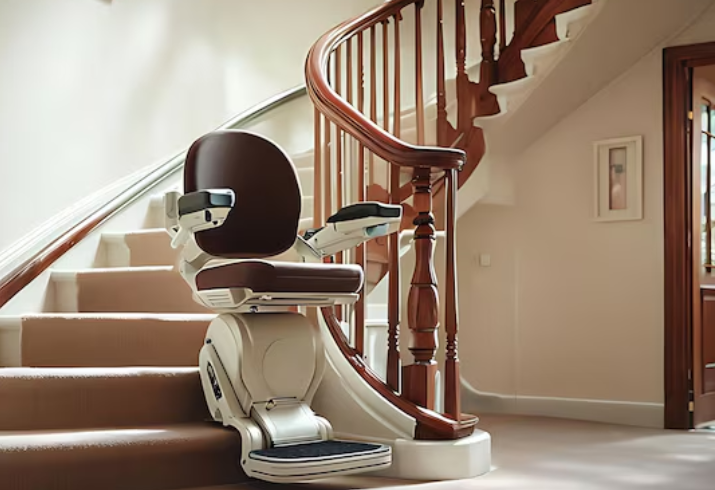

As people grow older or experience mobility challenges, navigating stairs can become increasingly difficult. A staircase that once seemed simple to use may eventually present safety concerns, discomfort, and limitations on everyday activities. Installing a stair lift can provide a practical solution, helping individuals move between floors while maintaining their independence and comfort at home. Understanding stair lift cost and finding the right stair lift for narrow staircase layouts are important steps toward making an informed decision.
What Is a Stair Lift?
A stair lift is a motorized mobility device designed to transport a person up and down a staircase while seated. It typically consists of a seat, a rail system, safety restraints, footrests, and controls that allow the user to operate the lift with minimal effort. The rail is installed along the staircase, allowing the chair to travel smoothly between floors.
Stair lifts are available for straight staircases, curved staircases, and certain specialized layouts. They can be installed in many residential properties, including private homes, apartments, and multilevel living spaces. For individuals who have difficulty climbing stairs, a stair lift can make previously inaccessible areas easier to reach.
Factors That Influence Stair Lift Cost
The overall stair lift cost depends on several factors, including staircase design, equipment features, installation requirements, and the type of lift selected. Understanding these factors helps homeowners establish a realistic budget and compare available solutions.
One of the most significant considerations is the staircase configuration. Straight staircases generally require simpler rail systems, which can make installation more affordable. Curved staircases often require custom-designed rails that follow the exact shape of the stairs, potentially increasing equipment and installation expenses.
The features included with the stair lift can also affect pricing. Basic models may provide essential transportation functions, while advanced options can include powered swivel seats, automatic folding footrests, remote controls, and upgraded upholstery. These additional features can improve convenience, particularly for individuals with specific mobility needs.
Installation conditions may influence the final price as well. A professional installer may need to assess stair dimensions, electrical access, landing space, and the location of nearby doors or hallways. Requesting a detailed estimate helps clarify which services, equipment components, and warranty protections are included.
Choosing a Stair Lift for Narrow Staircase Designs
Homes with limited staircase space require careful planning when selecting mobility equipment. A stair lift for narrow staircase layouts should provide safe, comfortable movement without unnecessarily obstructing the remaining walking area.
Several manufacturers offer compact designs intended for tighter staircases. These models may feature narrow seats, folding armrests, slim rails, and footrests that fold away when the lift is not in use. When folded, certain models occupy less space, allowing other household members to use the stairs more easily.
However, a compact design does not automatically guarantee that a particular staircase can accommodate a lift. The available width, stair angle, handrail position, wall clearance, and landing dimensions must all be evaluated before installation.
Homeowners should also consider whether the staircase is the primary route between essential living areas. If family members frequently use the stairs, choosing a lift that folds neatly against the wall or rail may help maintain practical access.
A professional assessment is especially important when comparing a stair lift for narrow staircase applications because even small differences in measurements can affect installation feasibility and safe operation.
Comparing Stair Lift Options
Different stair lift models offer different advantages, and the best choice depends on the home’s layout and the user’s needs.
Straight stair lifts are designed for staircases without curves, intermediate turns, or unusual changes in direction. They generally offer a straightforward installation process and can be suitable for many traditional residential staircases.
Curved stair lifts follow staircases that bend around corners or include curved sections. Because their rails must match the staircase geometry, they typically require more customization.
Standing or perch-style lifts may be considered by certain individuals who have difficulty sitting down or bending their knees. However, these options are not suitable for everyone, and a mobility assessment can help determine whether they offer an appropriate level of support.
For homeowners with limited space, compact seating and folding components may be particularly useful. Regardless of the model, safety features such as seat belts, obstruction sensors, secure footrests, and emergency stopping controls deserve careful consideration.
How to Budget for a Stair Lift Installation
Planning for stair lift cost involves more than comparing the initial purchase price. Homeowners should evaluate the complete cost of ownership, including installation, maintenance, repairs, and possible future adjustments.
Start by requesting quotes from qualified stair lift providers. Each quote should identify the equipment model, rail configuration, installation labor, warranty coverage, and any additional charges. Comparing written estimates makes it easier to understand differences between products and services.
Ask whether the quoted price includes a home assessment and post-installation testing. It is also helpful to clarify the expected cost of routine servicing, replacement batteries, and repairs outside the warranty period.
New equipment may provide updated safety features and manufacturer support, while professionally inspected refurbished models may offer an alternative for people working with a limited budget. If considering used equipment, confirm that it is compatible with the staircase and that essential components can be serviced or replaced.
Homeowners should also ask about financing arrangements and whether any applicable assistance programs may help cover mobility equipment expenses. Eligibility varies according to the program and individual circumstances, so coverage should never be assumed.
Safety and Maintenance Considerations
A properly selected stair lift can improve accessibility, but safe operation depends on appropriate installation and regular maintenance. Users should receive clear instructions about operating the controls, fastening the seat belt, positioning their feet, and using the emergency stop function.
Before each journey, the seat should be positioned correctly, and the user should ensure that clothing, walking aids, and other objects are clear of moving components. Children and pets should be kept away from the rail while the lift is operating.
Routine maintenance may include checking the rail for obstructions, keeping accessible surfaces clean, and following the manufacturer’s charging and servicing instructions. Any unusual noises, inconsistent movement, or warning indicators should be investigated by a qualified technician.
Professional installation is particularly important for narrow staircases because the equipment must fit correctly while maintaining appropriate clearance and secure mounting.
Improving Accessibility and Independence at Home
A stair lift can help individuals continue using the rooms they need without relying entirely on assistance from others. Bedrooms, bathrooms, storage areas, and family living spaces located on different floors may become more accessible when stair climbing is no longer practical.
The right solution should account for the user’s current mobility, anticipated future needs, home design, and available budget. Families may also wish to consider additional accessibility improvements, such as better stair lighting, secure handrails, and clear walking paths.
When evaluating stair lift cost, it is important to balance affordability with reliability, safety, and long-term usability. Similarly, selecting a stair lift for narrow staircase layouts requires accurate measurements and professional guidance rather than relying on product dimensions alone.
Conclusion
Choosing a stair lift is an important investment in home accessibility, personal comfort, and independence. By understanding the factors that influence stair lift cost, homeowners can compare equipment options, installation services, and long-term maintenance expenses more confidently.
For properties with restricted stair space, a stair lift for narrow staircase designs may provide a practical way to improve mobility while preserving as much usable space as possible. The key is to select a suitable model based on professional measurements, individual mobility requirements, and essential safety features.
With careful planning and expert installation, a stair lift can make everyday movement between floors more manageable and help individuals enjoy greater confidence in their own homes.