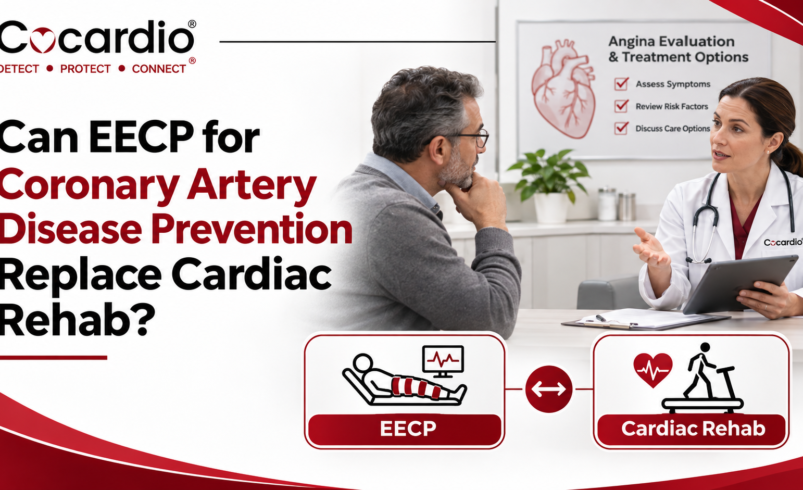

EECP cannot replace cardiac rehabilitation or proven cardiovascular risk reduction. Although people may search for eecp for coronary artery disease prevention, the treatment is not established to prevent heart attacks or cardiovascular death. Its potential role in selected cases of refractory angina is different from the purpose of cardiac rehabilitation.
What Is the Purpose of Cardiac Rehabilitation?
Cardiac rehabilitation is a structured, clinician-guided approach to recovery and long-term cardiovascular health. Depending on an individual’s needs and eligibility, it may address supervised physical activity, education, risk-factor management, and support for returning to routine activities. The treating team advises which elements are safe and appropriate.
Rehabilitation is not defined only by exercise sessions. It is part of coordinated cardiovascular care and cannot be replaced merely by attending a different treatment modality.
How Does EECP Differ From Supervised Cardiac Rehabilitation?
EECP and cardiac rehabilitation have different purposes. EECP may be considered to manage symptoms in selected patients with refractory angina. Cardiac rehabilitation supports recovery, conditioning where appropriate, and management of cardiovascular risk factors under a prescribed program.
Although EECP is a noninvasive heart treatment, that description does not make it equivalent to a rehabilitation program. Patients with exertional symptoms should speak to their cardiologist before changing exercise or treatment plans.
Can EECP for Coronary Artery Disease Prevention Replace Proven Preventive Care?
No. eecp for coronary artery disease prevention is not an established substitute for proven preventive care, and EECP is not established to prevent heart attacks or cardiovascular death. Prescribed medication, risk-factor management, and indicated rehabilitation should continue as directed by clinicians.
A webpage about eecp for coronary artery disease prevention should be understood with that distinction in mind. Symptom-focused treatment can have a role without proving the same long-term benefits as established cardiovascular risk-reduction measures.
When Might Patients With Refractory Angina Discuss EECP?
Patients can ask about eecp therapy for angina when chronic symptoms persist despite medical care and a cardiologist has reviewed appropriate treatment options. A suitability discussion should explain the diagnosis, expected goals, limitations, and reasons EECP might not be appropriate.
Someone searching for EECP therapy near me may also be trying to find support after rehabilitation was difficult or incomplete. That situation calls for clinical review; it does not by itself demonstrate that EECP is a replacement. The EECP and Coronary Blood Flow – CoCardio® Patient Education Guide offers background for questions.
What Should Patients Ask Their Cardiologist Before Choosing a Treatment Path?
Ask whether cardiac rehabilitation is indicated, what makes exercise safe in your specific case, and why angina symptoms persist. Ask whether an EECP evaluation is reasonable and how any proposed treatment would fit alongside medication and risk management. Keep the discussion anchored to your diagnosis rather than a service advertisement.
For those looking for eecp treatment near me in Encinitas, CoCardio® can be contacted to discuss an initial suitability review. Confirm which treatment is being offered if you also encounter a listing for ecp therapy.
Common Mistakes to Avoid
- Treating EECP as equivalent to an exercise-and-education rehab program.
- Stopping risk-reduction care because symptoms feel better.
- Using a local search listing as a clinical recommendation.
Key Takeaways
Cardiac rehabilitation and EECP have different purposes. EECP should not displace indicated rehab or cardiovascular prevention.
Frequently Asked Questions
Does EECP replace cardiac rehabilitation?
No. EECP and cardiac rehabilitation serve different clinical purposes, and EECP is not a substitute for indicated rehab.
Does EECP prevent future coronary events?
EECP has not been established to prevent heart attacks or cardiovascular death.
Can I exercise if I have angina?
Ask your treating clinician for individualized advice on safe activity; do not use generic guidance to provoke symptoms.
Request an EECP Evaluation in Encinitas
If you have already discussed your symptoms with your cardiologist and want to explore whether an EECP assessment is appropriate, contact CoCardio® in Encinitas at +1(858) 500-1399 or use the secure consultation inquiry form. An inquiry is a request for evaluation, not a commitment to treatment or assurance of eligibility.
Medical disclaimer. This article is for general education only and is not medical advice, diagnosis, or an emergency assessment. EECP suitability must be evaluated by licensed healthcare professionals. Seek emergency medical care for new, severe, or worsening chest pain or other possible heart-attack symptoms. Never stop or alter prescribed treatment without your clinician’s advice.
SEO implementation notes
Image concept: Clinician discussing an angina evaluation and treatment options with an adult patient; neutral medical setting, no claims of outcomes.
Image alt suggestion: eecp for coronary artery disease prevention – CoCardio® patient education in Encinitas
Schema publishing note: Set canonical URL, image URL, actual author details, and final datePublished/dateModified in the CMS before generating Article and FAQ structured data. No URL or image is invented in this file.
Credibility review: Confirm the service-specific clinical details and claims with CoCardio® medical staff; review all linked destinations before publishing. The target article length was not stated in the brief; these drafts prioritize documented substance over filler.