
Starting a business is an exciting opportunity to turn your passion, skills, and creative ideas into something profitable. However, having a great business idea is only the beginning. To turn that idea into a successful company, you need money to develop products, purchase equipment, build a website, hire employees, promote your services, and manage daily operations. For many aspiring entrepreneurs, finding the initial capital is one of the biggest challenges.
The good news is that you do not need to be wealthy to start a business. There are several ways to secure funding, even if you have limited savings or no previous business experience. The key is understanding your options, preparing a strong business plan, and knowing where to look for financial support.
If you are wondering how to raise money for a business, this guide will walk you through practical funding strategies that can help you transform your business idea into a real investment opportunity.
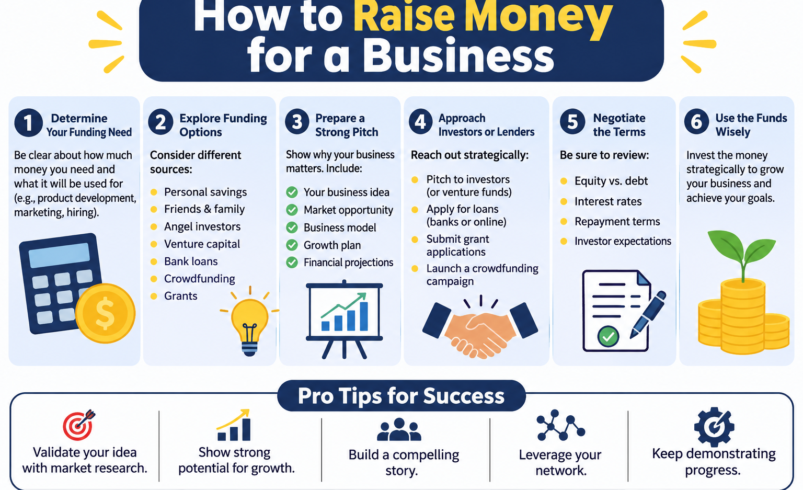
1. Start by Calculating How Much Money You Need
Before searching for investors or applying for loans, you should understand how much money your business requires. Many beginners make the mistake of looking for funding without calculating their actual startup expenses.
Start by creating a list of everything you need to launch your business. Depending on your business model, expenses may include business registration, equipment, office rent, product inventory, website development, packaging, marketing, employee salaries, and transportation.
Separate your expenses into two categories: one-time startup costs and ongoing operating costs. One-time costs include purchasing equipment or registering your company, while ongoing expenses include rent, utilities, salaries, and marketing.
For example, if you want to start an online clothing business, your initial budget might include product inventory, website development, packaging, photography, and advertising.
Once you understand your expenses, calculate how much money you can contribute personally and how much additional capital you need.
Having a clear funding target makes it easier to approach investors, lenders, and financial institutions with confidence.
2. Create a Strong Business Plan
A professional business plan is one of the most important tools when raising money for a new business. Investors and lenders want to understand your business idea, how it will generate revenue, and whether it has the potential to succeed.
Your business plan should clearly explain what your business offers, who your customers are, and what makes your products or services different from competitors.
Include detailed information about your target market, pricing strategy, marketing activities, expected expenses, and revenue projections.
You should also explain how much money you are requesting and exactly how you intend to use the funding. For example, you may need 40% of your capital for inventory, 25% for marketing, 20% for equipment, and 15% for operating expenses.
Make sure your financial estimates are realistic and supported by research. Avoid making unrealistic promises about profits or business growth.
A clear and convincing business plan helps potential investors understand your vision and gives them confidence that you have carefully considered the financial side of your business.
3. Use Your Personal Savings to Get Started
One of the easiest ways to finance a new business is by using your personal savings. This method is known as bootstrapping and is particularly popular among small business owners and first-time entrepreneurs.
Using personal savings allows you to start your business without depending on external investors or taking out loans. You also maintain full ownership and control over your company.
You do not necessarily need a large amount of money to begin. Consider starting with a small version of your business and expanding as you generate revenue.
For example, instead of renting a physical retail store immediately, you could start selling products through an online store or social media. This helps reduce startup expenses while allowing you to test customer demand.
You can also work part-time while building your business to maintain a steady personal income.
However, be careful when using your savings. Keep enough money for essential personal expenses and emergencies. Avoid investing your entire savings into an untested business idea.
4. Find Investors Who Believe in Your Business Idea
Investors can provide the financial support needed to turn a promising business idea into a growing company. They may also bring valuable experience, industry knowledge, and professional connections.
There are different types of investors you can approach, including angel investors, venture capitalists, and private investors.
Angel investors are individuals who invest their own money in early-stage businesses. They often support entrepreneurs who have innovative ideas and strong growth potential.
Venture capitalists are professional investment firms that provide funding to businesses capable of expanding rapidly. They typically invest in exchange for equity ownership.
To attract investors, you need to communicate your business opportunity effectively. Explain the problem your business solves, why customers will purchase your product or service, and how your company will make money.
Prepare a professional pitch deck that includes your business idea, market research, competitive advantages, financial projections, and investment requirements.
You can connect with potential investors through startup events, business networking meetings, entrepreneurship communities, and professional platforms.
Remember that accepting investment usually means giving away some ownership. Carefully evaluate the investment terms before making a decision.
5. Apply for Startup and Small Business Loans
Business loans are another practical option when you need money to launch or expand your company.
Banks, financial institutions, and alternative lenders offer financing options for different business requirements. Depending on the lender, you may be able to use the money for equipment, inventory, marketing, working capital, or other business expenses.
To improve your chances of approval, prepare your business plan, financial projections, identification documents, and any required company registration information.
Lenders may also evaluate your credit history, existing income, business experience, and ability to repay the loan. Some loans require collateral or a personal guarantee.
Before accepting financing, compare interest rates, repayment periods, additional charges, and loan conditions.
A business loan allows you to maintain ownership of your company, but you must repay the borrowed money according to the agreed schedule.
Only borrow an amount that your business can realistically afford. A manageable loan can support growth, while excessive borrowing can create unnecessary financial pressure.
6. Raise Money Through Crowdfunding
Crowdfunding is an effective way to raise money by collecting contributions from multiple people through online platforms.
Instead of relying on one investor, you present your business idea to a large audience and encourage interested individuals to support your project.
Crowdfunding can be particularly useful for businesses launching innovative products, creative projects, or products that appeal to a specific community.
To create a successful campaign, explain your idea clearly and show people why your business deserves their support.
Include attractive product images, a short presentation video, a realistic funding target, and a breakdown of how the money will be spent.
You can promote your campaign through social media, email newsletters, business communities, and your personal network.
Depending on the crowdfunding model, contributors may receive rewards, equity, or other benefits. Make sure you understand the platform’s fees and conditions before launching your campaign.
One major advantage of crowdfunding is that it can help you test market interest before investing heavily in production.
7. Explore Government Grants and Startup Support Programs
Government grants and startup support programs can provide financial assistance to entrepreneurs who want to establish or grow their businesses.
Many governments offer funding initiatives to encourage innovation, entrepreneurship, digital transformation, research, and small business development.
Unlike traditional loans, grants generally do not need to be repaid if you meet the program’s eligibility requirements and funding conditions.
Start by researching official government websites and business development organizations in your country. Look for programs that match your business industry, company size, and funding requirements.
You may need to submit a detailed business proposal, financial projections, company registration documents, and information explaining how the money will be used.
For entrepreneurs in Singapore, Enterprise Singapore and GoBusiness are useful starting points for researching business support schemes and available funding assistance.
Remember that not every business qualifies for every grant. Read the eligibility requirements carefully and prepare your application before submitting it.
8. Turn Your Business Idea Into an Investment Opportunity
Getting money to start a business is not only about finding people willing to provide capital. It is also about demonstrating that your idea has real business potential.
Before approaching potential investors, try to validate your idea. Conduct market research, speak with potential customers, study your competitors, and understand the demand for your product or service.
If possible, create a basic product sample, prototype, or minimum viable product. This gives investors something concrete to evaluate rather than relying entirely on an idea.
You should also develop a simple financial forecast showing your expected expenses, sales, revenue, and growth opportunities.
The more evidence you have that customers need your product or service, the easier it becomes to build confidence among potential funding partners.
Conclusion
Turning a business idea into a successful company requires planning, determination, and financial resources. Although raising startup capital can seem difficult, there are many funding opportunities available to aspiring entrepreneurs.
By understanding how to raise money for a business, you can explore personal savings, business loans, angel investors, venture capital, crowdfunding, and government grants to find the right financial solution.
Start by calculating your funding requirements, preparing a strong business plan, and researching the options available in your industry. Focus on demonstrating the value of your idea and showing potential investors how your business can grow.
Remember, you do not need to raise a huge amount of money immediately. Start with a realistic budget, take manageable steps, and build your business gradually. With the right strategy and financial support, you can turn your business idea into a valuable investment and create opportunities for long-term success.