
In today’s competitive global business environment, organizations are continuously searching for ways to improve financial performance, strengthen supplier relationships, and achieve sustainable growth. Managing cash flow efficiently has become one of the most important priorities for businesses operating across complex supply networks. Delayed payments, rising operational expenses, changing market conditions, and limited access to working capital can create significant financial challenges. To address these issues, companies are increasingly adopting supply chain finance as an effective financial management strategy.
Supply chain finance provides businesses with innovative financing solutions that improve liquidity, enhance operational efficiency, and support long-term growth. By connecting buyers, suppliers, and financial institutions, it creates a collaborative financial environment where all participants can benefit from improved cash flow management. As global supply chains continue to evolve, supply chain finance is becoming an essential tool for building financially stable and resilient business operations.
Understanding Supply Chain Finance
Supply chain finance refers to a range of financial solutions designed to optimize cash flow between buyers and suppliers. It allows businesses to manage payment obligations more efficiently while providing suppliers with opportunities to receive payments earlier.
In traditional business arrangements, suppliers often wait for extended periods before receiving payments from buyers. These delays can create working capital shortages, making it difficult for suppliers to purchase raw materials, pay employees, maintain inventory, and continue production.
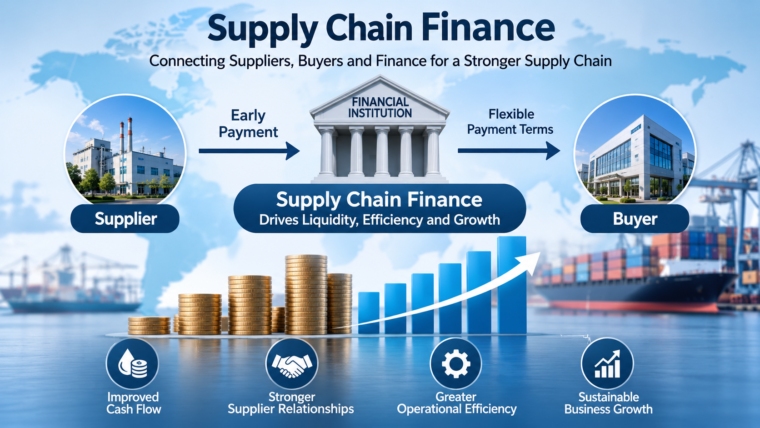
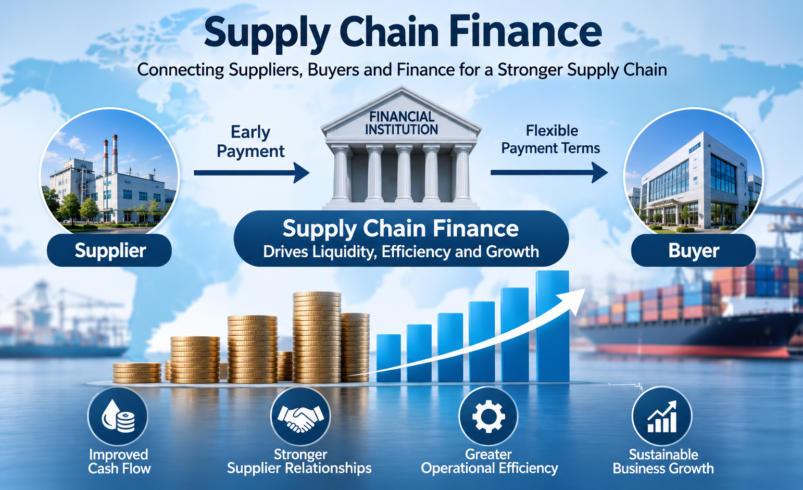
Supply chain finance addresses these challenges by offering financing arrangements supported by financial institutions or digital platforms. One of the most common solutions is reverse factoring, where a buyer approves an invoice and a financial institution provides the supplier with the option of receiving early payment. The buyer then settles the invoice with the financial institution according to the agreed payment terms.
This arrangement improves liquidity for suppliers while allowing buyers to maintain better control over their working capital.
Driving Liquidity Through Supply Chain Finance
Liquidity is essential for maintaining smooth business operations. Companies require sufficient available funds to meet short-term financial obligations, manage operational expenses, and respond to unexpected business requirements.
Supply chain finance improves liquidity by reducing the waiting period between invoice approval and payment. Suppliers can access funds earlier instead of depending entirely on traditional borrowing arrangements or waiting for customers to complete their payment cycles.
For example, a manufacturing supplier may deliver products to a large company under 90-day payment terms. Although the buyer benefits from an extended payment period, the supplier may experience financial pressure while waiting for payment. Through supply chain finance, the supplier can receive early payment from a financial institution after invoice approval.
This provides immediate access to working capital, helping the supplier maintain production activities and meet other financial commitments.
Buyers also benefit from improved liquidity management because they can optimize payment schedules and preserve available cash for business investments, expansion, and operational requirements.
Improving Operational Efficiency
Operational efficiency is another important advantage of supply chain finance. Businesses must coordinate procurement, inventory management, supplier payments, and financial reporting to maintain a smooth supply chain.
Traditional financing processes often involve manual documentation, lengthy approval procedures, and limited financial visibility. These challenges can increase administrative costs and delay important business transactions.
Modern supply chain finance platforms help overcome these difficulties by automating invoice processing, payment approvals, and transaction monitoring.
Digital systems allow buyers and suppliers to access financial information through centralized platforms. This improves transparency and reduces the time required to manage financial transactions.
Automation also minimizes human errors, reduces paperwork, and improves communication between different supply chain participants. Financial teams can spend less time handling administrative activities and more time focusing on strategic financial planning.
By improving coordination and reducing processing delays, supply chain finance contributes to a more efficient and productive business environment.
Supporting Business Growth and Expansion
Business growth requires financial resources, operational stability, and reliable supplier relationships. Organizations that struggle with cash flow management may find it difficult to invest in new technologies, increase production capacity, or enter new markets.
Supply chain finance supports business expansion by improving access to working capital throughout the supply network.
For suppliers, faster access to funds creates opportunities to purchase additional raw materials, improve production facilities, hire employees, and fulfil larger customer orders.
For buyers, stronger supplier networks provide greater flexibility when expanding operations. Reliable suppliers can support increased production requirements, improve product availability, and contribute to better customer satisfaction.
Small and medium-sized enterprises can particularly benefit from supply chain finance because they may face higher borrowing costs or limited access to conventional financing. Financing based on an established buyer’s credit strength can provide suppliers with more competitive funding opportunities.
As a result, supply chain finance supports growth not only for large corporations but also for smaller businesses participating in global supply chains.
Key Supply Chain Finance Solutions
Several financing solutions help organizations improve liquidity and achieve financial efficiency.
- Reverse Factoring
Reverse factoring is a buyer-led financing arrangement in which a financial institution pays suppliers early after invoice approval. The buyer settles the payment with the financial institution on the original agreed due date. This solution helps suppliers improve cash flow while strengthening buyer-supplier relationships.
- Dynamic Discounting
Dynamic discounting allows buyers to pay suppliers earlier in exchange for a discount on the invoice amount. The discount generally depends on how early the payment is made. This solution can reduce procurement costs for buyers while providing suppliers with faster access to funds.
- Receivables Financing
Receivables financing enables suppliers to obtain funds against outstanding invoices. Instead of waiting for customers to make payments, suppliers can use their receivables to secure short-term financing and support daily operations.
- Inventory Financing
Inventory financing provides businesses with funding using available inventory as collateral. It helps manufacturers, wholesalers, and retailers maintain appropriate stock levels while improving access to working capital.
Each solution offers different advantages depending on business requirements, financial objectives, and supply chain structures.
The Role of Digital Technology in Supply Chain Finance
Digital transformation is significantly changing the way businesses manage financial operations. Advanced technologies are making supply chain finance more accessible, transparent, and efficient.
Cloud-based platforms enable businesses to manage invoices, monitor payment schedules, and access financing opportunities through integrated digital systems. These platforms improve communication between buyers, suppliers, and financial institutions.
Artificial intelligence and machine learning can analyze financial data, predict cash flow requirements, and identify potential risks. These insights help organizations make informed decisions and improve financial planning.
Blockchain technology can also contribute to transparency by creating reliable digital transaction records. This can help reduce documentation errors, strengthen trust, and improve transaction security.
As technology continues to advance, digital supply chain finance solutions will become increasingly important for organizations seeking greater financial visibility and operational control.
Managing Risks and Challenges
Despite its advantages, implementing supply chain finance requires careful planning and risk management.
One major challenge is ensuring that suppliers understand the financing arrangements and their associated costs. Organizations should communicate payment terms, financing fees, and eligibility requirements clearly.
Technology integration can also create difficulties, particularly when companies use outdated financial systems. Investing in reliable digital platforms and improving system compatibility can help address these issues.
Businesses must also consider cybersecurity, regulatory compliance, and financial transparency. Protecting sensitive financial information is essential for maintaining trust between supply chain participants.
A successful supply chain finance strategy should include regular performance monitoring, reliable financial partnerships, and clear governance procedures.
The Future of Supply Chain Finance
The future of supply chain finance will be shaped by technological innovation, financial collaboration, and increasing demand for sustainable business practices.
Artificial intelligence will continue improving financial forecasting and risk assessment. Automated financing platforms will simplify transactions and help businesses access working capital more efficiently.
Sustainable supply chain finance is also becoming increasingly relevant. Businesses can encourage suppliers to adopt environmentally responsible practices by offering favorable financing conditions linked to sustainability targets.
Furthermore, the growing importance of global supply chain resilience will encourage organizations to develop more flexible financing strategies. Companies that invest in financial innovation and supplier collaboration will be better positioned to respond to changing market conditions.
Conclusion
Supply chain finance plays an important role in driving liquidity, improving operational efficiency, and supporting business growth. By providing flexible financing solutions, organizations can manage working capital more effectively, strengthen supplier relationships, and reduce financial pressure across their supply networks.
Solutions such as reverse factoring, dynamic discounting, receivables financing, and inventory financing help businesses address different financial requirements. Combined with digital technology, these solutions create opportunities for greater transparency, faster transactions, and improved financial management.
As businesses continue to navigate an increasingly complex global economy, supply chain finance will remain a valuable strategy for building resilient operations, improving financial performance, and achieving sustainable long-term growth.