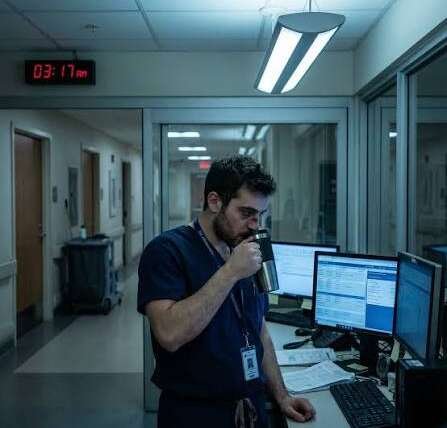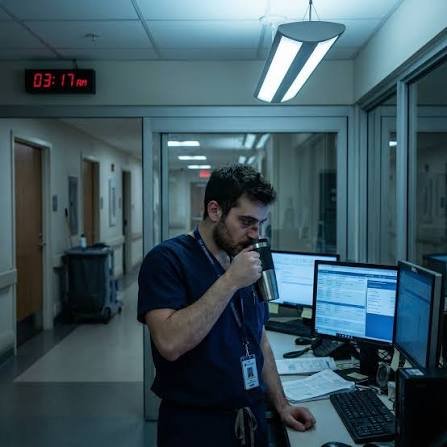

The first coffee of an overnight shift may feel helpful. The last one can be more complicated, especially if it is taken close to the time someone hopes to sleep.
The issue is especially relevant to caffeine timing. Advice about night work often gets reduced to coffee and determination, but those are only small pieces of a larger problem. Sleep opportunity, circadian timing, workload, and the consequences of a mistake all matter. A sensible approach begins by noticing what is happening, then matching the response to the level of risk.
Caffeine helps alertness but not sleep debt
The less obvious challenge is what happens after temporary alertness rather than recovery. Decisions taken near the end of a shift affect the next day. A late stimulant, a long errand on the way home, or a noisy bedroom can reduce the next sleep opportunity and make the following shift harder.
Small changes are worth testing, but avoid promising dramatic results. Protecting a predictable block of sleep, reducing interruptions, and coordinating household expectations may be more useful than buying another product. If schedules leave too little time for sleep, an individual worker cannot solve that problem alone.
Dose and timing both matter
Look at individual sensitivity and total intake from the perspective of the whole week. One good night does not necessarily undo several short sleep periods, and a shift pattern that changes frequently may leave little time for adjustment. That is why recovery should be planned rather than left to chance.
For workers, this may mean protecting rest from optional commitments. For managers, it can mean reviewing staffing, consecutive nights, break access, and handover practices. The details differ, but the principle is consistent: fatigue prevention works better when the system makes adequate sleep possible.
Why the final coffee can backfire
A useful starting point is difficulty sleeping after the shift. This is not proof of a particular disorder, but it is a reason to examine the immediate conditions. How long has the person been awake? Was the previous sleep period shortened? Is the task repetitive, physically demanding, or safety critical? Those questions lead to more practical decisions than simply telling someone to try harder.
The next step is to separate a temporary workaround from a genuine control. A drink, a short walk, or a brighter room may change how alert someone feels for a while. None of them cancels the need for sleep. If the activity could harm someone after a lapse in attention, the safer response may be to pause it, ask for help, or change who performs it.
Energy drinks need label checks
Consider multiple caffeine sources in one drink. It can appear minor when viewed on its own, particularly during a shift when everyone is busy. The difficulty is that fatigue often changes several abilities at once: sustained attention, response speed, memory, and judgment. A worker may remain conversational and still struggle with a detailed task.
There is no single symptom that perfectly measures impairment. It helps to look for a pattern: repeated mistakes, unusually slow responses, or trouble staying focused. When the pattern affects safety, treat it as an operational problem rather than a character flaw. That distinction makes it easier to choose an effective response.
For a broader explanation of the warning signs and everyday choices involved, see NightShiftWell’s guide to fatigue during overnight shifts. The useful point is not that one website can fix a difficult schedule, but that practical decisions should connect sleep, alertness, and safety rather than treating them as separate problems.
Pair caffeine with other controls
The practical issue here is rest breaks and safe staffing. People often build routines around the ideal version of a shift, where breaks happen on time and the commute is straightforward. Real shifts rarely cooperate. An unexpected call, a late handover, or a delayed bus can extend wakefulness beyond what was planned.
Build a fallback before that happens. Identify who can cover an essential task, where a break is possible, and how to get home without driving if alertness deteriorates. A plan made while reasonably rested is easier to follow than one improvised when concentration is already poor.
When caffeine stops helping
It is tempting to look for a universal rule about persistent excessive sleepiness. Individual sleep needs and sensitivity vary, and the work environment matters. A person doing active work may notice fatigue differently from someone watching a quiet display. Neither situation guarantees safety.
Instead of relying on a single rule, record what actually happens over several shifts. Note the approximate sleep window, demanding tasks, breaks, caffeine, and any attention lapses. The purpose is not to create a perfect spreadsheet. It is to find repeatable problems that can be changed.
A more sustainable approach
A reasonable adjustment starts with consistent sleep opportunities. This is a supporting measure, not a substitute for enough sleep. In particular, eating well, drinking water, or getting fresh air should never be presented as a treatment for dangerous drowsiness.
If a worker is already struggling to remain awake, the priority changes. Stop or hand over safety-sensitive duties where possible, and seek a safe opportunity for rest. Persistent symptoms call for a medical discussion, especially when adequate sleep opportunity has not improved the problem.
When to ask for help
Persistent excessive sleepiness deserves assessment rather than endless self-experimentation. A clinician may ask about work hours, total sleep opportunity, snoring or breathing interruptions, medications, and other symptoms. It is useful to bring a record of sleep and shift times rather than relying on memory after several exhausting weeks.
Immediate danger is different from a routine appointment. Someone who cannot stay awake while driving or operating equipment should stop the hazardous activity and arrange a safer alternative. No article can determine whether an individual is fit to drive or perform a specific job.
What the evidence can and cannot tell us
Research on shift work consistently identifies sleep loss and circadian disruption as concerns, but it does not establish one perfect routine for every occupation. The CDC/NIOSH materials on work hours discuss fatigue risk and practical countermeasures. The NHLBI describes how inadequate sleep can affect attention, reaction time, and everyday functioning. Those sources support taking fatigue seriously; they do not justify claiming that a particular snack, lamp, supplement, or alarm eliminates the risk.
A practical article should distinguish three things. First, a person may be sleepy because they have not had enough sleep. Second, overnight work can place demanding tasks at times when the body tends toward sleep. Third, a separate medical problem may also contribute. The correct response depends on which of these is present, and sometimes more than one is involved.
A workable next step
Choose one problem that has actually appeared on a recent shift. It might be a missed break, an attention lapse during a quiet hour, or a commute that felt unsafe. Write down what happened, what conditions contributed, and what would make a safer response possible next time. If the answer requires staffing, schedule changes, or another person’s help, raise it explicitly. Personal habits are useful, but they cannot compensate for every workplace risk.
The aim is not to stay perfectly energetic through every overnight hour. It is to recognize when alertness is changing, preserve enough opportunity for sleep, and make safe choices before a small lapse becomes a serious event.
Sources and further reading
- CDC/NIOSH — Work Schedules: Shift Work and Long Hours
- CDC/NIOSH — Training for Nurses on Shift Work and Long Work Hours
- NHLBI — Sleep Deprivation and Deficiency