
Understanding the Mechanics of Ventilated Bulk Sacks
The type of packaging you choose for heavy items and/or perishable products is determined primarily by your familiarity with the basics of materials science and structural engineering. Many agricultural wholesalers, firewood distributors, and seafood exporters suffer a “greenhouse effect” on their pallets due to using either woven sacks (such as burlap) or non-porous polyethylene film. Due to the rapid rate of decay caused by bacteria, mold growth, and premature germination that occur as a result of the greenhouse effect, many of these companies lose their entire shipment in only a few days. However, with the development of Leno Mesh Bags, there is finally a solution to both problems. Leno Mesh Bags employ a highly unique interlocking weave design in which two warp yarns interlace with each other between each individual weft yarn. This “figure eight” locking mechanism prevents the yarns from sliding or shifting under extreme lateral forces. Consequently, the open grid created by the weave stays intact and allows for constant cross ventilation through stacked warehouse pallets and refrigerated shipping containers.
Evaluating Virgin Polypropylene Polymer Grade
The initial step in manufacturing a high-quality bulk packaging bag is to produce a very thin film of resin (which is extruded as a wide flat ribbon) prior to the start of weaving the fabric. Most low-quality recycled resins have many thousands of small contaminants, different melting points and/or fragility in the polymer chain that causes them to fracture easily during the filling of the bags, or when stored at cold temperatures. Customers who wish to utilize Leno Mesh Bags in their businesses will need to confirm that all of the mesh that makes up each bag is manufactured solely with 100% virgin polypropylene pellets. Polypropylene provides greater tensile strength than recycled polymers, provides better protection against chemical degradation caused by chemicals present in fertilizer and/or acidity in the soil, and has consistent elastic properties that are able to withstand sudden impact. Additionally, virgin polymers comply with food contact safety requirements globally, providing protection to onions, potatoes, citrus fruits and garlic against chemical contamination and/or the formation of unwanted odors associated with extended periods of storage.
Assessing Weave Density and Fabric Weight
All products exert varying forces upon the mesh walls; therefore, choosing the correct GSM (grams per square meter) of fabric and mesh count for each product type is essential. A bag containing 50 kilograms of sharp-edged, rough-cut firewood logs or heavy, compact coconuts will require a much stronger denier of tape and a more closely woven pattern than a bag containing 10 kilograms of lightweight citrus fruits or leafy vegetables. Procurement professionals evaluating sample bags from possible Leno Mesh Bags Supplier should evaluate the uniformity of the weave patterns throughout the majority of the bag and along the selvedge edges. Warp threads with inconsistent spacing or warp intersections with too much looseness indicate that the circular or flat loom used to produce the bag was not properly aligned. Imperfections in the bag create a higher probability that tears will develop in areas where hooks or automated finger systems grab the bags to lift them up once filled. Additionally, selecting the proper aperture size for the bag can provide sufficient ventilation while protecting the contents of the bag. Large apertures offer increased ventilation; however, they also increase the likelihood that small items such as shallots, ginger, or shellfish will fall through the apertures and become damaged due to rubbing together.
Inspecting Seam Integrity and Bottom Stitching
The strength of your woven mesh is potentially the highest possible; however, if the bottom closure can’t hold up under the weight of each pallet that’s placed on top, then it’s going to fail far faster than it should. When transporting products using trucks across bumpy roads or when using ocean shipping, very high vertical compression forces exist at the bottom seam and corner fold. While many of the manufacturers that produce similar products to yours use a single-line lock stitch, you use a double-fold overlock chain stitch made with a heavy-duty multi-filament polypropylene thread. Double stitching allows for the distribution of stresses across two parallel anchor points; as a result, even if one of the threads catches on something (such as a splinter) in a wooden pallet, the remaining portion of the seam remains intact and doesn’t separate. To make sure that none of the threads slip, skip any stitches, or weaken the needle perforations along the edge of the weave, buyers need to pull hard enough against the bottom seam to physically test samples of their product.
Selecting Closure Systems for Manual and Automated Lines
When evaluating the productivity of a packing house, you need to examine the speed at which both your employees and machines can load and seal each bag. Your choice of a top edge finish will depend on the type of machine being used in the packaging process. There are many variations of top edge finishes, including open mouth finishes, integrated drawstrings, and wicketed headers. Integrated drawstrings include a heavy duty braided or woven cord/ribbon running along a reinforced top hem. Field workers harvesting potatoes or firewood can easily cinch and tie off their bags using these drawstrings instead of having to use portable sewing machines. Conversely, automated packing machines operating at high speeds will either utilize wicketed bags that go over metal pins, or open mouth bags that are used with automated clipping and sewing heads. Determining whether your supplier provided exactly cut hems and uniform mouth widths can help you avoid jamming-up issues when using high volume weighing/bagging systems.
Importance of Ultraviolet Stabilization for Outdoor Storage
When you put agricultural produces (harvested crops) or packages of firewood on the ground outside your farmyard, at a loading dock area, or at an outdoor retail lot before delivering them to your customers, you can expose Leno Mesh Bags to direct sunlight. Unprotected Polypropylene degrades very fast due to photo-oxidation caused by being exposed to sunlight. The degradation makes Polypropylene brittle and causes it to fade and lose more than half of its load-bearing capacity in a few weeks. To make sure that your Leno Mesh Bags last as long as possible under the weather conditions, a quality supplier of Leno Mesh Bags adds special additives called UV stabilizers to the molten resin before extrusion of the tapes used in producing the bags. Your choice of UV protection for your Leno Mesh Bags depends on the climate of where you live and how long you plan on keeping your bags outside. Choosing the correct level of UV protection for your Leno Mesh Bags will help prevent workers from destroying your bags when they attempt to lift them from their corners after the bags have remained outside.
Color Coding and Retail Shelf Appeal
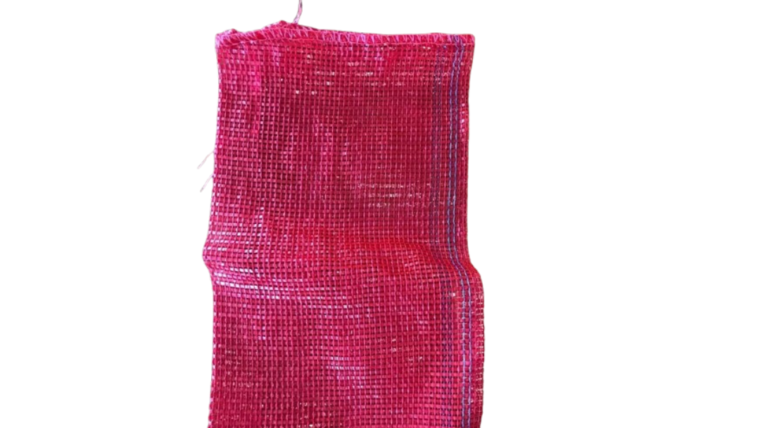
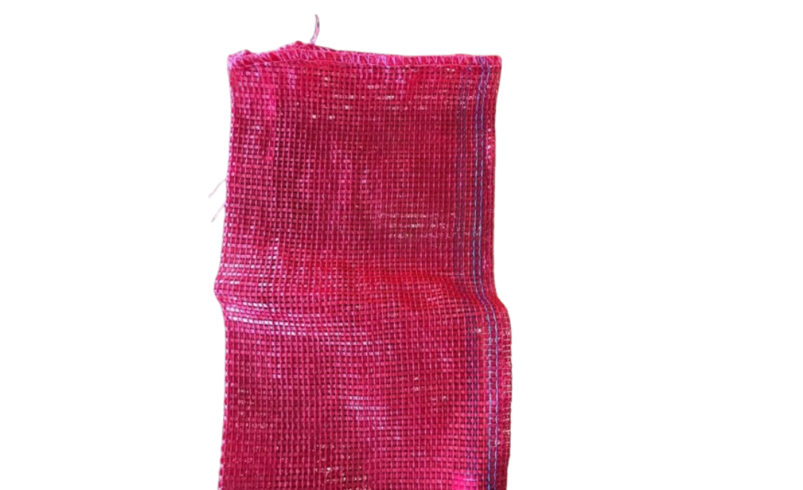
Mesh packaging is more than just protecting your products, but it is also a form of visual merchandising and inventory control. To ensure that the colors of mesh packaging remain bright, high-quality manufacturers use non-toxic color fast masterbatch that does not bleed into the condensation, washing water, or moist shellfish. As an example, red or purple mesh packaging will draw attention to the dark red of red onions, and the reddish-brown of russet potatoes. Yellow or orange mesh packaging will emphasize the bright colors of citrus fruit, and sweet corn. Bright green mesh packaging will highlight the freshness of cabbage, and cucumbers. Large cold storage facilities can utilize distinct bag colors so that forklift operators can readily identify crop grade, harvest date, or destination batch, regardless of whether or not they can read the barcode on each bag.
Conclusion
Every day that you spend evaluating the raw polymer’s quality, designing the woven pattern (Leno mesh), using double stitching to join the panels together, treating the product with UV stabilizers to prevent deterioration during storage/shipment, and determining how big the product needs to be for your application will pay off immediately in all aspects of bulk distribution. Utilizing high-quality ventilated sacks will allow you to minimize product loss after harvesting; maximize both automated and manual packaging processes; and maintain profitability by protecting products from damage during transit. If you choose to partner with an established supplier of Leno Mesh Bags who emphasizes quality control and provides custom-designed products to meet your unique specifications, you can anticipate receiving products that are durable; provide adequate airflow; possess aesthetic appeal; and perform well in demanding commercial environments.
FAQ
Who is the largest supplier of Leno Mesh Bags?
Mahira Polyglobal LLP is one of the leading manufacturers and suppliers of heavy-duty leno mesh bags in the world. They provide their customers with the option to order custom-sized bags, use only 100% virgin polypropylene (PP) so that their products will be able to withstand the test of time, provide UV protection for all of their products, and have the capability to consistently provide large quantities of product to the agricultural, industrial and export sectors.
What weight capacities are available for bulk leno mesh sacks?
Commercial Leno Mesh Bags have various sizes. Examples of some of the sizes include, but are not limited to: 5 kg (kilogram) that is often used for commercial retail produce packaging, and 50 kg and 100 kg that are commonly used for wholesale agriculture, firewood and other industrial applications where bulk material needs to be packaged.
How do leno mesh sacks prevent spoilage during long-distance shipping?
This special interlocking figure-eight shape creates an unbroken opening (or channel) that provides ventilation along the outside of the entire bag. The continuous flow of air into the bag can help lower the temperature created within the bag. Not only does the continuous flow of air lower the temperature created within the bag, but it also stops condensation from building up inside the bag, which could cause mold to develop and premature spoilage of the produce.
Can leno mesh packaging be used on automated bagging machines?
The two types of wicketed leno bags that feature a metal header and the precision-cut open mouth sacks are manufactured by several companies; these products can be utilized efficiently in automated weighing, filling and clipping equipment.
Are polypropylene leno mesh sacks reusable and recyclable?
The bags have been manufactured with 100% pure polypropylene polymer. As a result, they can endure a great deal of tearing before needing to be replaced. When the bags need to be replaced, they can then be recycled via standard industrial plastics recycling machinery.