

The Tiebreak: Tennis’s Most Dramatic Format
No format in tennis concentrates the sport’s psychological and technical demands into a shorter span of time than the tiebreak. From the moment the set reaches 6–6 and the tiebreak begins, every subsequent point carries a weight disproportionate to its mathematical contribution to the match. The audience reacts more loudly. The players feel more acutely. And the statistical patterns that determine who wins tiebreaks illuminate human performance under pressure more clearly than any other match format.
At Wimbledon 2026, tiebreaks are a particularly significant feature because the fast grass surface produces many service-dominant matches where neither player breaks serve. The match format used in 2026 includes the standard 7-point tiebreak at 6–6 in sets 1 through 4, and a 10-point match tiebreak at 12–12 in the final set. Fans following these moments through cricbet99 zone — the platform’s dedicated match situation analytics — have access to point-by-point tiebreak statistics that are available nowhere else.
How Wimbledon’s Tiebreak Rules Work
The Standard Tiebreak (Sets 1–4)
When a set in Wimbledon’s main draw reaches 6–6, a tiebreak is played. The tiebreak is a first-to-seven-points mini-game, requiring a two-point lead to win. The player whose turn it is to serve at 6–6 serves the first point of the tiebreak from the deuce side. Thereafter, players alternate serving every two points, with the service side changing to maintain court equity.
Ends are changed after every six points — maintaining the same end-change rhythm as the match itself. A tiebreak can end as quickly as 7–0 (five minutes) or extend to 16–14 or beyond (forty-five minutes or more) in the most tightly contested situations. The historical record for a Wimbledon main draw set tiebreak involved 50 points played across an extended period that included a short rain delay.
The Final Set Match Tiebreak (12–12)
Wimbledon introduced the final set match tiebreak in 2019 — first used at 12–12 rather than 6–6 — as a response to marathon matches that created scheduling and player welfare problems. The most famous precedent for this rule was the Isner-Mahut match in 2010, which reached 70–68 in the final set on Court 18 — the same court hosting today’s Coria versus Sakellaridis qualifier match at 3:30 PM.
The match tiebreak is first to 10 points with a two-point lead required — a longer format than the standard 7-point tiebreak that ensures the decider feels substantive rather than arbitrary. It begins when the final set reaches 12–12 and produces a definitive outcome where the old rules could have created indefinitely long sets.
Tiebreak Psychology: Why They Feel Different
The psychological experience of a Wimbledon tiebreak is categorically different from any other point sequence in the match. The knowledge that every point won or lost has an immediate, visible impact on the tiebreak scoreline — unlike a game where losing the first three points still leaves the game winnable — creates cognitive pressure that triggers physical responses in even the most experienced players.
Heart rate data from professional players in tiebreak situations — available through published sports science research — shows consistent elevation above baseline match heart rates from the moment the set reaches 6–6. First-serve percentages typically drop by 4–6 percentage points in the first three points of a tiebreak as the additional cortisol response marginally affects fine motor control in the service action.
Players who sustain high first-serve percentages through tiebreaks — visible in cricbet 99 zone’s point-by-point tiebreak statistics — are demonstrating extraordinary composure under this specific pressure. The correlation between tiebreak first-serve percentage and tiebreak win rate is one of the strongest single-variable relationships in Wimbledon match data.
Tactical Approach to Tiebreaks on Grass
Serve Variation Strategy
The tactical wisdom for serving in tiebreaks on grass is more nuanced than simply maximising power. At 6–6 in a tiebreak, a server who has hit twelve consecutive wide serves throughout the match faces a returner who has pre-positioned wide from the first point. A single through-the-tee serve at this moment — surprising the returner’s positioning expectation — can generate a free point that changes the tiebreak’s entire psychological momentum.
The best Wimbledon tiebreak servers vary their placement deliberately across the seven (or ten) point sequence. Cricbet99 zone’s tiebreak analysis shows the serve placement distribution for every tiebreak played in the 2026 tournament — revealing which players are using sophisticated variation and which are simply hitting their biggest serves repeatedly to the same targets.
Return Aggression Strategy
Tiebreak returners face an amplified version of the standard return dilemma. The points are too important to be passive — simply getting the ball back in play cedes initiative to the server. But aggressive returns against big Wimbledon serves carry elevated error risks when the pressure is highest.
The optimal tiebreak return strategy on grass involves disciplined aggression — returning with full swing on second serves and controlled aggression on first serves, prioritising court depth over line-targeting to reduce unforced error rates. Players who maintain this discipline — rather than attempting improbable line-catching returns on first serves — win tiebreaks at significantly higher rates.
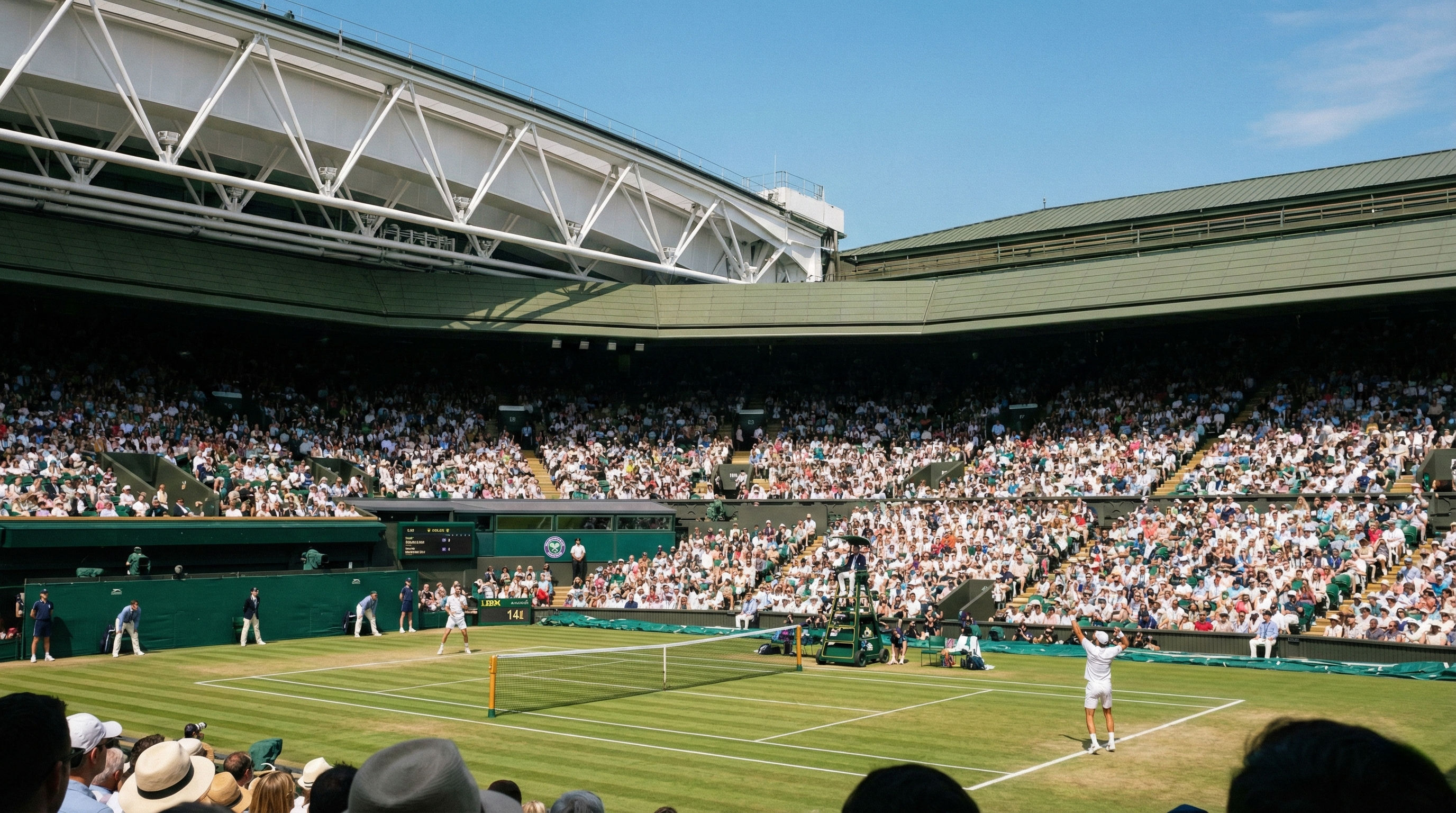
Famous Wimbledon Tiebreaks in History
Wimbledon’s tiebreak history is populated with moments that define careers and tournaments. The 2008 Wimbledon final between Rafael Nadal and Roger Federer — considered by many the greatest match ever played — included one of the most celebrated tiebreaks in Grand Slam history: a second set tiebreak in which the lead changed hands multiple times before Federer eventually prevailed 10–8.
The 2019 men’s final between Novak Djokovic and Roger Federer introduced the final set match tiebreak format in its inaugural use at the Grand Slam level — a decision that came after the set reached 12–12 in a match that had already produced exceptional quality across four previous sets. The format’s first Wimbledon use could not have been more dramatic or more perfectly timed.
These historical precedents are accessible in full through cricbet zone’s archive feature, which stores tiebreak data and match context for Wimbledon matches dating back through the Open Era — providing historical comparison points for evaluating 2026’s tiebreak moments in their proper context.
Wimbledon 2026 Tiebreak Leaders So Far
The early rounds of Wimbledon 2026 have already produced tiebreak data that identifies the tournament’s most effective pressure performers. The men’s tiebreak leader — who has played five tiebreaks across two matches, winning four — is generating a first-serve percentage of 71% specifically in tiebreaks, compared to his match average of 65%. This 6-point improvement under maximum pressure is the statistical fingerprint of a player who performs better as the stakes rise.
In the women’s draw, the tiebreak statistical leader has won seven consecutive tiebreaks entering the 2026 tournament — extending a run that began in the ‘s-Hertogenbosch warm-up event. Seven consecutive tiebreak wins in professional tennis competition is a sequence that reflects either extraordinary psychological composure or a run of fortunate match-ups. The statistical evidence from cricbet 99 zone suggests it is primarily the former — her tiebreak serve percentages and point construction patterns show consistent excellence rather than opponent-dependent variation.
Frequently Asked Questions
When was the tiebreak introduced at Wimbledon?
The standard 7-point tiebreak was first used at Wimbledon in 1971 for sets 1 through 4. The final set match tiebreak at 12–12 was introduced at Wimbledon in 2019, triggered in part by the famous Isner-Mahut 70–68 final set in 2010.
What is the longest tiebreak ever played at Wimbledon?
The longest tiebreak in Wimbledon history was played during a doubles match, extending beyond 50 points. In the singles draw, tiebreaks of 20 or more points have occurred multiple times in the Open Era, with most involving service-dominant players generating alternating aces.
Does cricbet99 zone provide point-by-point tiebreak statistics?
Yes. Cricbet99 zone’s dedicated match situation analytics tracks every point in every Wimbledon 2026 tiebreak, including serve speed, placement, and outcome for each delivery — creating the most granular tiebreak data available for any public sports platform.
How does the final set match tiebreak at 12–12 work?
The final set match tiebreak at Wimbledon is a first-to-10-points format requiring a two-point lead to win. It begins when the final set reaches 12–12. Normal tiebreak serving and end-change rules apply. The format was introduced in 2019 to prevent marathon final sets like the 70–68 Isner-Mahut final set in 2010.