

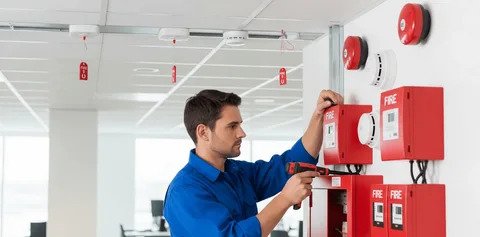

Fire safety is one of the most important considerations for every residential property. Whether it is a villa, apartment, townhouse, or residential complex, a properly designed fire alarm system provides early warning during emergencies, helping occupants evacuate safely while reducing the risk of property damage.
As residential developments continue to expand across Abu Dhabi and the wider UAE, homeowners and property developers are placing greater emphasis on advanced fire detection systems that combine reliability, intelligent monitoring, and regulatory compliance. Modern fire alarm systems have evolved significantly, offering faster detection, improved accuracy, and seamless integration with other building services.
Installing a residential fire alarm system is not simply a legal requirement for many developments; it is an essential investment in protecting lives, safeguarding property, and supporting long-term building safety. This guide explains the importance of residential fire alarm systems, the installation process, maintenance requirements, and how to select the right engineering partner for projects throughout Abu Dhabi and the UAE.
Understanding Residential Fire Alarm Systems
A fire alarm system is designed to detect the early signs of fire and immediately alert building occupants through audible and visual warning devices. Unlike standalone smoke alarms, modern residential fire alarm systems integrate multiple components that work together to provide comprehensive protection.
Professional Residential fire alarm installation includes smoke detectors, heat detectors, manual call points, alarm sounders, control panels, notification devices, emergency interfaces, and system monitoring equipment.
These systems continuously monitor the property and activate automatically when potential fire hazards are detected, providing valuable time for safe evacuation and emergency response.
Why Fire Alarm Systems Are Essential
Early fire detection significantly reduces the risks associated with residential fires.
A fire alarm system provides immediate notification when smoke, excessive heat, or other fire conditions are detected, allowing occupants to respond before the situation becomes critical.
In addition to protecting lives, professionally installed systems help minimise structural damage, protect valuable possessions, reduce repair costs, and improve overall residential safety.
For landlords and property developers, reliable fire protection also contributes to greater confidence among residents and supports long-term property value.
Types of Residential Fire Alarm Systems
Residential properties require fire alarm systems that match the size, layout, and occupancy of the building.
Common system types include:
- Conventional fire alarm systems
- Addressable fire alarm systems
- Wireless fire alarm systems
- Smart fire alarm systems
- Hybrid fire detection systems
Each solution offers different advantages depending on property size, installation requirements, future expansion plans, and monitoring preferences.
Professional engineering assessments help determine the most suitable system for each residential development.
Components of a Residential Fire Alarm System
Modern fire alarm systems consist of several integrated components that work together to provide reliable fire detection.
Typical system components include:
- Smoke detectors
- Heat detectors
- Fire alarm control panels
- Manual call points
- Sounders and visual alarms
- Emergency power supplies
- Communication interfaces
- Monitoring systems
Every component must be carefully selected, positioned, and tested to ensure complete building coverage and reliable operation.
Proper system integration also supports future upgrades and maintenance.
The Importance of Professional System Design
Every residential property presents unique fire safety requirements.
Professional engineers evaluate floor layouts, occupancy levels, escape routes, ceiling heights, ventilation patterns, and potential fire risks before designing the fire alarm system.
Careful planning ensures detectors are positioned correctly while minimising false alarms and maximising detection performance.
A well-designed system also simplifies maintenance and future property modifications.
Installation Quality Determines System Reliability
Even the most advanced fire alarm equipment cannot perform effectively without professional installation.
Installation includes detector positioning, cable routing, electrical connections, equipment mounting, control panel configuration, system programming, and functional testing.
Qualified engineers verify that every device communicates correctly with the central control panel while ensuring complete system functionality.
Accurate installation reduces future maintenance requirements while improving long-term reliability.
Integration With Other Building Systems
Modern residential developments increasingly integrate fire alarm systems with other engineering services.
Fire alarms may communicate with emergency lighting, smoke extraction systems, access control, lifts, HVAC equipment, security systems, and Building Management Systems (BMS).
This coordinated response improves occupant safety by automatically activating emergency procedures when fire conditions are detected.
Integrated engineering also simplifies facility management while enhancing overall building performance.
Compliance With UAE Fire Safety Standards
Residential fire alarm installations throughout Abu Dhabi and the UAE must comply with applicable fire safety regulations, engineering standards, and authority requirements.
Professional contractors prepare technical documentation, coordinate inspections, conduct commissioning procedures, and verify compliance before project completion.
Meeting regulatory requirements helps protect occupants while ensuring residential developments satisfy applicable safety standards.
Experienced engineering professionals understand local compliance procedures and assist property owners throughout the approval process.
Routine Maintenance Is Essential
Fire alarm systems require regular maintenance to ensure reliable operation throughout their service life.
Preventive maintenance typically includes detector cleaning, battery inspections, alarm testing, cable inspections, control panel verification, sounder testing, fault diagnosis, and software updates where applicable.
Routine servicing enables engineers to identify developing issues before system performance is affected.
Well-maintained systems provide greater reliability while reducing the likelihood of equipment failures during emergencies.
Smart Fire Alarm Technology
Modern fire detection technology has become increasingly intelligent.
Smart fire alarm systems offer remote monitoring, mobile notifications, self-diagnostic capabilities, event logging, predictive maintenance alerts, and integration with home automation platforms.
These technologies improve system visibility while enabling homeowners to monitor fire safety even when away from the property.
Digital monitoring also assists maintenance teams by providing real-time equipment status and fault reporting.
Choosing Experienced Engineering Professionals
Fire alarm installation should always be performed by qualified engineering specialists.
Homeowners and developers should evaluate companies based on technical expertise, regulatory knowledge, installation experience, maintenance capabilities, quality management, and previous residential projects.
Working with an experienced Electromechanical Company in Abu dhabi provides access to integrated engineering expertise covering fire alarm systems, electrical installations, mechanical services, building safety systems, and ongoing technical support.
Comprehensive engineering capability ensures all building services operate safely and efficiently together.
Common Mistakes to Avoid
Several common mistakes reduce the effectiveness of residential fire alarm systems.
Incorrect detector placement, selecting inappropriate equipment, poor installation practices, neglected maintenance, delayed repairs, and failing to test systems regularly may all compromise fire safety.
Property owners should also avoid appointing contractors based solely on price without evaluating technical capability and compliance experience.
Investing in professional engineering delivers significantly greater long-term reliability and occupant protection
Why Local Expertise Matters
Fire alarm systems installed within Abu Dhabi and the wider UAE must be designed for regional environmental conditions while complying with local authority regulations.
Experienced local engineering specialists understand climate considerations, building regulations, approval procedures, and fire safety requirements specific to residential developments across the UAE.
Their familiarity with local standards enables smoother project delivery, faster inspections, and reliable long-term maintenance support.
Partnering with regional professionals also provides homeowners with greater confidence throughout the system lifecycle.
Future Trends in Residential Fire Protection
Residential fire safety continues evolving through digital innovation.
Artificial intelligence, wireless detection technologies, Internet of Things (IoT) connectivity, cloud-based monitoring, predictive maintenance, integrated smart home systems, advanced sensor technology, and remote emergency notifications are becoming increasingly common.
These innovations improve fire detection accuracy while enhancing convenience, reliability, and overall residential safety.
Future-ready fire alarm systems will continue supporting smarter, safer, and more connected homes throughout the UAE.
Conclusion
Residential fire alarm systems are a vital part of protecting lives, safeguarding homes, and maintaining long-term property safety. From professional design and compliant installation to routine maintenance and intelligent monitoring, every stage contributes to creating a reliable fire protection system that provides peace of mind for homeowners and residents alike.
For residential developments across Abu Dhabi and the UAE, Laith Electro Mechanical delivers professional engineering expertise, dependable fire protection solutions, and comprehensive electromechanical services designed to meet the highest standards of safety, quality, and long-term performance.