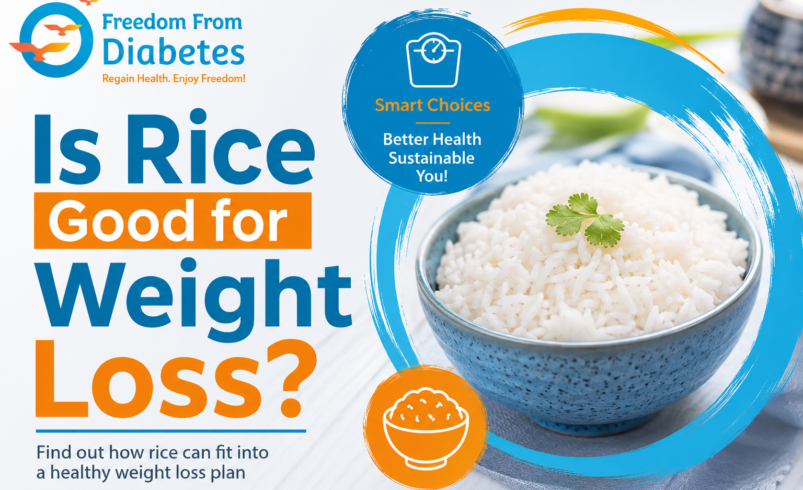

Is Rice Good for Weight Loss?
Rice is one of the most commonly eaten staple foods, especially in Indian households. When trying to lose weight, many people assume that rice must be completely removed from their diet. However, rice itself does not automatically cause weight gain. What matters more is the type of rice, portion size, cooking method, and what you eat along with it.
With the right approach, rice can be included in a balanced weight-loss diet while still allowing you to enjoy familiar meals.
Can You Eat Rice While Trying to Lose Weight?
Yes, rice can be part of a weight-loss diet. Weight management depends largely on maintaining an appropriate calorie intake while getting enough protein, fiber, vitamins, and minerals.
Rice provides carbohydrates, which are an important source of energy. The key is to control portions and combine rice with nutrient-rich foods such as vegetables, pulses, beans, curd, paneer, tofu, or other protein sources.
Instead of completely avoiding rice, focus on creating a balanced plate.
Does Rice Cause Weight Gain?
Rice does not directly cause weight gain. Eating more calories than your body needs over time is what generally contributes to weight gain.
A large serving of rice combined with calorie-dense curries, fried foods, sweets, or sugary drinks can make a meal much higher in calories. On the other hand, a moderate serving of rice with vegetables and a good protein source can be a nutritious and satisfying meal.
Therefore, the overall meal matters more than rice alone.
Which Rice Is Better for Weight Loss?
Different varieties of rice have different textures, nutrient profiles, and effects on fullness. Brown rice is a whole-grain option that contains more fiber than white rice because the bran and germ are retained.
Other options include red rice, black rice, and certain minimally processed traditional rice varieties. These can add variety and nutrients to your diet.
However, choosing brown or other colored rice does not automatically lead to weight loss. Portion control and your overall dietary pattern remain important.
How Much Rice Should You Eat for Weight Loss?
There is no single portion that works for everyone because calorie and carbohydrate needs vary based on age, activity level, body size, and overall diet.
A practical approach is to make rice one part of a balanced plate rather than allowing it to dominate the meal.
Try filling approximately half your plate with non-starchy vegetables, one-quarter with a protein-rich food, and the remaining portion with rice or another carbohydrate source.
This approach can make meals more filling without unnecessarily increasing calories.
Pair Rice With Protein and Fiber
One of the easiest ways to make a rice-based meal more balanced is to combine it with protein and fiber.
Good combinations include:
- Rice with dal and vegetables
- Rice with rajma and salad
- Rice with chole and cooked vegetables
- Rice with curd and vegetables
- Rice with paneer or tofu and a vegetable side
- Rice with grilled or lightly cooked protein and vegetables
Protein supports muscle maintenance and helps promote fullness, while fiber can support digestion and make meals more satisfying.
Choose Cooking Methods Carefully
How rice is prepared can significantly change the calorie content of a meal.
Plain steamed or boiled rice can be relatively simple, while fried rice, pulao prepared with large amounts of oil, or rice dishes containing heavy sauces can provide considerably more calories.
For everyday weight management, consider using moderate amounts of oil and pairing rice with vegetables and protein rather than relying on calorie-dense additions.
Be Mindful of Rice Portions
Portion control is especially important when rice is your main carbohydrate source.
Instead of taking a large serving and then adding more automatically, start with a moderate portion and eat slowly. Give yourself time to recognize whether you are still hungry before taking another serving.
Using a smaller bowl or measuring cooked rice initially can also help you understand appropriate portions.
Is White Rice Bad for Weight Loss?
White rice can still fit into a weight-loss diet. Although it contains less fiber than brown rice, it can be enjoyed as part of a balanced meal.
If you prefer white rice, focus on portion size and combine it with vegetables, protein, and other nutrient-rich foods. Completely eliminating foods you enjoy can make a diet difficult to maintain over the long term.
A sustainable eating pattern is generally more useful than following unnecessarily restrictive rules.
Consider Your Overall Diet
Weight loss is influenced by your entire eating pattern rather than one individual food.
Along with rice, pay attention to:
- Total calorie intake
- Protein intake
- Fiber-rich foods
- Vegetable consumption
- Added sugar
- Highly processed foods
- Portion sizes
- Physical activity
- Sleep and stress
Creating balanced meals consistently is more important than labeling individual foods as “good” or “bad.”
Rice and Healthy Lifestyle Habits
Diet works best when combined with regular physical activity and other healthy habits. Walking, strength training, adequate sleep, and stress management can complement a balanced eating pattern.
If rice is a regular part of your diet, there is usually no need to eliminate it simply because you want to manage your weight. Instead, learn how to include it appropriately within your daily calorie and nutrient needs.
Conclusion
So, is rice good for weight loss? Yes, rice can absolutely be included in a weight-loss diet, even when you are managing diabetes. The key is choosing appropriate portions and pairing rice with protein, vegetables, and fiber-rich foods to create a more balanced meal.
Brown, red, or black rice may provide more fiber and nutrients than white rice, while portion-controlled white rice can also fit into a diabetes-friendly eating pattern. Combining rice with vegetables, dal, paneer, tofu, or other protein sources can help make meals more balanced and support better blood sugar management.
The goal is not to fear carbohydrates or completely eliminate rice. Instead, focus on portion control, balanced meals, better food combinations, and sustainable lifestyle habits. These strategies can support both healthy weight management and better diabetes management over time.
https://www.freedomfromdiabetes.org/blog/post/it’s-all-about-weight-loss-ffd/2784