

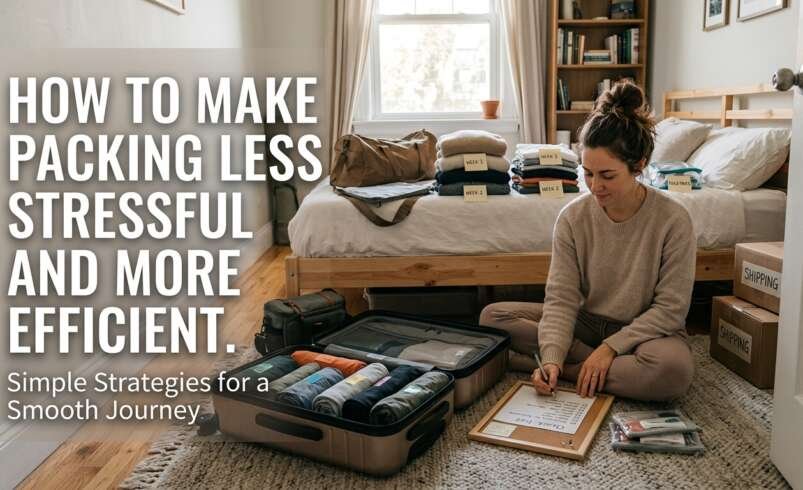

Packing for a move can quickly become overwhelming when an entire home has to fit into boxes.
Without a clear system, people often waste time, overpack, misplace essentials, or leave too much work for the final days.
A practical packing plan can make the process faster, more organized, and far easier to manage.
The goal is not simply to put belongings into boxes. Good packing protects possessions, simplifies loading and unloading, and makes settling into the new home considerably easier.
The right approach starts well before the first box is sealed.
Why Packing Often Becomes the Most Stressful Part of Moving
Packing looks simple until someone begins sorting through years of belongings.
Every room creates dozens of small decisions. What should be packed first? What will still be needed before moving day? Which items need special protection? What should be donated rather than moved?
The American Moving & Storage Association has historically estimated that roughly 40 million Americans move each year. While every relocation is different, packing remains one of the most time-consuming parts of preparing a household for a move.
The biggest problems usually come from poor timing rather than packing itself.
Common causes of unnecessary stress include:
- Starting too close to moving day
- Packing without sorting belongings first
- Running out of boxes or packing materials
- Mixing items from different rooms
- Forgetting to label boxes properly
- Packing important documents or daily essentials too early
- Trying to complete several rooms at once
A structured process removes many of these problems before they have a chance to develop.
Start Earlier Than Seems Necessary
One of the simplest ways to make packing less stressful is to give the process enough time.
Waiting until the final weekend puts unnecessary pressure on everyone involved. It also increases the chance of fragile items being packed carelessly or belongings being thrown into random boxes simply to finish the job.
A household can instead divide packing into smaller stages.
Resources such as My Moving Journey can also help people research moving companies and understand different parts of the relocation process while planning their move.
For most households, packing can begin with items that are rarely used. Seasonal decorations, spare linens, books, collectibles, extra kitchenware, and off-season clothing are good starting points.
Every box packed early is one less box that needs attention during the final days.
Create a Simple Packing Timeline
A packing schedule does not need to be complicated.
Several weeks before moving day, the household can begin sorting possessions and packing nonessential items.
Two or three weeks before the move, attention can shift toward secondary rooms, decorations, books, storage areas, and clothing that will not be needed.
During the final week, frequently used rooms such as the kitchen, bathrooms, and bedrooms can be completed.
The last day should be reserved mainly for essentials rather than an entire house.
Declutter Before Packing Anything
Moving items that are no longer wanted creates extra work at nearly every stage of relocation.
Unwanted belongings require boxes, packing materials, lifting, transportation, unloading, and eventually unpacking. If an item will immediately be discarded after the move, transporting it rarely makes sense.
Before packing a room, belongings can be separated into four basic groups:
- Keep
- Donate
- Sell
- Recycle or discard
This is particularly useful for closets, garages, basements, kitchens, and storage spaces where unused possessions tend to accumulate.
Decluttering can also affect moving costs. Many long-distance moving estimates are influenced by shipment weight or volume, while local movers commonly charge according to labor time. Reducing unnecessary belongings can therefore reduce both the workload and, in some situations, the final moving expense.
Gather Packing Supplies Before Starting
Stopping repeatedly to buy tape, boxes, or protective materials makes packing slower than it needs to be.
A basic supply station can prevent interruptions.
Useful materials include:
- Small, medium, and large moving boxes
- Heavy-duty packing tape
- Packing paper
- Bubble cushioning for fragile belongings
- Permanent markers
- Labels or colored stickers
- Scissors or box cutters
- Furniture blankets
- Resealable plastic bags
- Stretch wrap where appropriate
Not every item belongs in a large box. Books, tools, and other dense belongings should generally be placed in smaller containers so individual boxes do not become unnecessarily heavy.
Lighter items such as bedding, pillows, and some clothing can go into larger boxes.
Pack One Room at a Time
Jumping between several rooms creates confusion.
A more efficient approach is to choose one room, sort it, pack it, label the boxes, and then move to the next space.
This keeps similar belongings together and creates a visible sense of progress.
It also makes unpacking easier because boxes can be taken directly to their intended rooms instead of being opened simply to discover what they contain.
Start With Low-Use Areas
Storage rooms, guest bedrooms, garages, attics, and decorative spaces can usually be packed before everyday living areas.
The kitchen, primary bedroom, bathroom, and home office often need to remain functional longer.
Packing in order of importance keeps the household usable while preparations continue.
Use a Labeling System That Actually Helps
Writing “stuff” or “miscellaneous” on a box provides very little useful information.
Every box should ideally identify its destination and general contents.
For example:
Kitchen — Baking Supplies — Non-Fragile
is considerably more useful than:
Kitchen
Important boxes can also receive additional labels such as “FRAGILE,” “OPEN FIRST,” or “THIS SIDE UP.”
Some households use different colored labels for each room. Others number every box and maintain a simple inventory on a phone or spreadsheet.
Either method works. Consistency matters more than complexity.
Know When Professional Packing Help Makes Sense
DIY packing works well for many moves, but it is not always the most practical choice.
Large homes, short moving timelines, valuable collections, delicate furniture, artwork, antiques, and complicated long-distance relocations can require additional experience.
In those situations, comparing professional movers and packers can help households evaluate companies that offer both transportation and packing assistance rather than managing every stage independently.
Professional packing can also be useful when someone cannot safely lift, wrap, or handle bulky household items.
However, professional help should still be researched carefully. Consumers should review written estimates, insurance or valuation options, service terms, company credentials, and exactly which materials and labor charges are included.
Pack Fragile Items With Extra Care
Fragile belongings should never be packed as quickly as clothing or linens.
Glassware, dishes, electronics, artwork, mirrors, and decorative objects need enough protection to handle vibration and movement during transportation.
Each fragile item should be protected individually when necessary, while empty spaces inside boxes should be filled to reduce shifting.
Avoid Overpacking Fragile Boxes
A completely full box is not automatically a well-packed box.
Overloading can place pressure on delicate items, while leaving too much empty space allows objects to move around.
The goal is a stable box with enough cushioning to prevent direct contact between fragile pieces.
Plates are often safer when packed vertically with appropriate cushioning rather than stacked flat under the weight of multiple dishes.
Original packaging can also be valuable for electronics when it is still available and in good condition.
Keep Essential Items Separate
One of the most frustrating moving mistakes is packing something that is needed immediately.
Medication, identification documents, chargers, toiletries, keys, basic clothing, important paperwork, and children’s necessities should not disappear into the moving truck.
Instead, each household member can prepare a personal essentials bag.
A separate first-night box can contain items such as:
- Toilet paper
- Hand soap
- Towels
- Basic kitchen supplies
- Phone chargers
- Cleaning supplies
- Bedding
- A change of clothes
- Pet supplies
- Basic tools
These items should remain easy to access during transportation and immediately after arrival.
Keep Important Documents With the Household
Certain belongings should not be treated like ordinary household goods.
Passports, identification, financial records, medical documents, moving contracts, property documents, and other critical paperwork are better kept in a secure folder that remains with the owner.
The same principle applies to small valuables and irreplaceable personal items.
Even when a reputable moving company is handling the relocation, keeping critical documents accessible prevents unnecessary complications.
Make Boxes Easier to Move
Efficient packing should consider the person who eventually has to lift each box.
A box that is technically strong enough to hold heavy objects can still be difficult or unsafe to carry.
Weight should be distributed sensibly.
Heavy objects belong in smaller boxes, while lighter belongings can fill larger containers. Empty spaces should be cushioned, and boxes should close naturally without bulging.
Overfilled boxes can tear, lose their shape, or become difficult to stack securely inside a moving vehicle.
Take Photos Before Disconnecting Electronics
Electronics create a different type of packing problem.
Before unplugging televisions, computers, gaming systems, routers, or entertainment equipment, taking a quick photo of the cable connections can save time later.
Cables can then be labeled and placed in separate bags.
Small accessories, screws, mounting hardware, and remote controls should remain with the equipment they belong to whenever possible.
A labeled bag taped securely to the appropriate item can prevent hours of searching after the move.
Avoid the Last-Minute Packing Trap
The final evening before moving day should not involve dozens of unfinished boxes.
Last-minute packing often leads to poor labeling, broken belongings, forgotten items, and unnecessary exhaustion before loading even begins.
A better target is to have nearly everything completed at least one day before the move.
Only genuine daily essentials should remain unpacked.
That creates time for a final walkthrough of closets, cabinets, drawers, storage areas, garages, and outdoor spaces.
Make Unpacking Part of the Packing Strategy
Efficient packing is not finished when a box is sealed.
A good system considers what happens at the destination.
Boxes containing frequently needed belongings should be easy to identify. Items from the same room should stay together, and furniture hardware should remain clearly associated with the correct furniture.
This turns unpacking into an organized sequence rather than another sorting project.
Prioritize Rooms at the New Home
Most households do not need to unpack every room immediately.
A practical order is often:
- Bathrooms
- Bedrooms
- Kitchen
- Children’s rooms
- Work areas
- Living spaces
- Storage and decorative items
Having beds ready, basic toiletries available, and essential kitchen items accessible can make the first night significantly more comfortable.
Small Packing Habits That Save Time
Efficiency often comes from small decisions repeated throughout the process.
For example, a person can keep markers and tape in every active packing area rather than constantly searching for supplies.
Drawers can be sorted before their contents are boxed. Clothing can remain grouped by season or family member. Hardware from disassembled furniture can be labeled immediately.
Another useful habit is finishing each box completely before starting another. A box should be packed, cushioned, sealed, and labeled before attention moves elsewhere.
These habits reduce unfinished work and prevent small tasks from accumulating.
Final Thoughts
Packing becomes stressful when hundreds of small decisions are left until the last moment.
Starting early, removing unnecessary belongings, working room by room, protecting fragile possessions, and using a clear labeling system can turn an overwhelming job into a manageable process.
The most efficient approach is not necessarily the fastest one. It is the approach that keeps belongings organized, protects what matters, and reduces unnecessary work on both sides of the move.
With a realistic schedule and consistent packing system, moving day becomes much easier to manage—and unpacking starts on far better terms.