

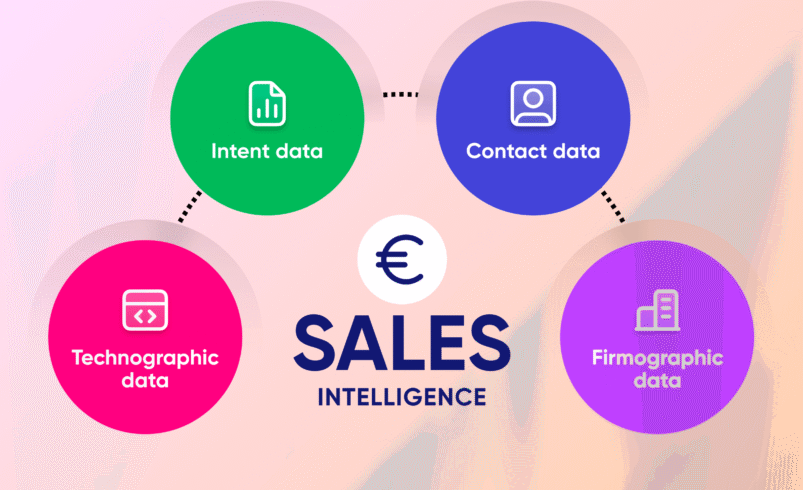

How Multidata Hub’s B2B Data Can Support Lead Generation is an important question for companies that need a consistent way to identify potential business customers. B2B lead generation involves more than collecting names and contact details. Sales and marketing teams need to find businesses that match their ideal customer profile, identify relevant professionals, organize prospect information, and decide which accounts deserve attention.
Understanding How Multidata Hub’s B2B Data Can Support Lead Generation requires looking at how structured business information fits into the wider prospecting process. Multidata Hub presents its marketplace as offering B2B and B2C contact data, business emails, phone numbers, intent data, and data enrichment services. These resources can provide a starting point for identifying prospects, but effective lead generation still depends on targeting, research, qualification, relevant messaging, and responsible data use.
What Is B2B Lead Generation?
B2B lead generation is the process of identifying potential business customers and encouraging suitable prospects to enter a sales or marketing process.
A typical B2B lead generation workflow includes several stages:
- Defining the ideal customer profile
- Identifying target companies
- Finding relevant contacts
- Researching business needs
- Segmenting prospects
- Conducting outreach
- Nurturing interested prospects
- Measuring results
The quality of each stage affects the next one. A company with a poorly defined target market can collect thousands of contacts without generating meaningful opportunities.
B2B data can help strengthen the information stage of this process.
How Multidata Hub’s B2B Data Can Support Lead Generation
1. Identifying Potential Target Companies
The first requirement for effective lead generation is knowing which companies could potentially become customers.
A business selling accounting software, for example, may target companies with particular employee counts, industries, locations, or operational requirements.
Business data can help teams create an initial pool of organizations that fit selected criteria. Instead of researching unrelated companies, sales representatives can focus their time on accounts that appear relevant.
The quality of the targeting criteria remains critical. A broad list may contain many businesses that have little connection to the company’s product or service.
2. Finding Relevant Professional Contacts
Finding the right company is only part of B2B prospecting. Sales teams also need to identify people who may influence or participate in purchasing decisions.
The appropriate contact depends on what the business sells.
For example:
- Cybersecurity solutions may involve IT or security professionals.
- HR software may involve human resources leaders.
- Accounting services may involve finance executives.
- Marketing platforms may involve marketing managers or directors.
- Industrial equipment may involve operations or procurement teams.
B2B contact information can help sales teams begin mapping relevant stakeholders within target accounts.
However, job titles should not be treated as automatic proof of decision-making authority. Additional research is necessary.
3. Supporting Prospect List Building
Creating prospect lists manually can require significant time.
Salespeople may need to visit company websites, search directories, review professional profiles, record contact information, and organize everything in a spreadsheet or CRM.
A structured B2B data source can provide a more organized starting point.
This can be particularly useful for teams that need to research large markets. Instead of spending all their time gathering basic information, sales representatives can devote more attention to account research, qualification, outreach, and follow-up.
The goal should not be to create the largest possible list. A smaller list of relevant prospects can be more useful than thousands of poorly matched records.
4. Improving Lead Segmentation
Not every prospect has the same needs.
A marketing campaign designed for enterprise organizations may not work well for small businesses. Likewise, a message intended for technology companies may not be relevant to healthcare organizations.
B2B data can support segmentation based on available business characteristics.
Teams can create groups according to factors such as:
- Industry
- Geographic market
- Company size
- Professional role
- Department
- Business category
- Other available firmographic information
Better segmentation allows businesses to create more focused campaigns.
Example of Segmentation
Suppose a company sells customer relationship management software.
Instead of sending one message to every business, the marketing team could create separate segments for technology companies, professional services firms, manufacturers, and retail businesses.
Each segment could receive messaging focused on problems that are more relevant to its operating environment.
5. Supporting Personalized Outreach
Data is most useful when it contributes to better communication.
A salesperson can use basic prospect information to understand who they are contacting and why the company’s offering might be relevant.
For example, instead of writing:
“Would you like to learn more about our software?”
A more targeted message could explain the specific business problem the software addresses for companies in that prospect’s industry.
Personalization should go beyond inserting the recipient’s first name. It should connect the message to a legitimate business context.
6. Using Intent Data as a Prospecting Signal
Intent data can provide another layer of information for lead generation.
Multidata Hub lists intent data among the categories available through its marketplace. Intent information can potentially help teams identify accounts that may deserve additional research.
For example, a company selling cloud infrastructure services could prioritize organizations showing relevant research or interest signals.
However, intent data should not be interpreted as a guarantee that a company is ready to buy. Research activity can have many causes. A business may be gathering information, comparing solutions, planning for the future, or simply researching an industry topic.
Intent works best as one signal among several.
7. Enriching Existing Business Records
Many companies already have databases containing customer and prospect information.
Over time, these records can become incomplete. Employees change positions, companies update their contact details, and important fields may be missing.
Data enrichment can help businesses improve existing records where suitable information is available.
For example, a CRM record may contain a company name and website but lack a relevant professional contact. Enrichment can potentially help fill such gaps.
This is particularly useful when businesses want to improve an existing database instead of starting from scratch.
Practical Benefits for Sales and Marketing Teams
More Efficient Prospect Research
Structured information can reduce some repetitive manual research and give teams a starting point for account discovery.
Better Audience Targeting
Business characteristics can help teams concentrate campaigns on prospects that are more closely aligned with their ideal customer profile.
Improved Account Prioritization
Combining company fit, contact relevance, engagement, and other available signals can help salespeople decide which accounts deserve deeper attention.
Better Coordination Between Sales and Marketing
When both departments work from similar account and contact information, they can develop more consistent definitions of target prospects.
Support for Scalable Lead Generation
A structured data approach can help businesses expand prospecting efforts without requiring every contact to be discovered manually.
Common Challenges and Considerations
Data Accuracy
Business information changes frequently. People move between companies, organizations restructure, and contact details become outdated.
Businesses should evaluate the accuracy, verification process, update frequency, and coverage of any data source before depending on it.
Data Coverage
A dataset may be strong in one market and less comprehensive in another. Companies should determine whether the available information covers their target industries, locations, company sizes, and professional roles.
Compliance
Businesses must use contact information responsibly and understand applicable privacy, data protection, licensing, and commercial communication requirements.
Poor Targeting
A large database cannot compensate for an unclear customer profile. If the targeting criteria are weak, the resulting lead list may also be weak.
Over-Reliance on Automation
Automation can improve efficiency, but it should not remove human judgment. Salespeople still need to verify important information and understand the prospect’s business situation.
Best Practices for Using B2B Data for Lead Generation
Start by defining a detailed ideal customer profile. Identify the industries, company characteristics, locations, and professional roles that matter most.
Next, create a focused prospect list. Review the information before outreach and remove companies that clearly do not fit.
Use segmentation to develop relevant messaging. When possible, combine database information with independent research about the company.
Prioritize prospects instead of treating every contact equally. High-fit accounts may deserve personalized outreach, while lower-priority prospects can be placed into appropriate nurturing campaigns.
Finally, measure results. Track qualified leads, meetings, opportunities, conversion rates, acquisition costs, and revenue. These metrics reveal whether the data is actually contributing to business growth.
Frequently Asked Questions
1. How can Multidata Hub’s B2B data support lead generation?
It can provide structured business and contact information that may help companies identify target accounts, find relevant professionals, segment prospects, enrich records, and support sales research.
2. Does B2B data automatically create qualified leads?
No. Data can help identify potential prospects, but qualification requires evaluating factors such as business fit, need, authority, timing, and potential purchasing requirements.
3. What types of businesses can use B2B data?
B2B data can be useful for software companies, agencies, consultants, manufacturers, professional service providers, recruiters, technology businesses, and other organizations that sell to businesses.
4. Is intent data enough to identify buyers?
No. Intent data is best treated as an additional signal. Sales teams should combine it with account fit, contact relevance, research, engagement, and qualification.
5. How should companies measure B2B lead generation performance?
Useful measures include qualified leads, response rates, meetings booked, opportunities created, conversion rates, customer acquisition costs, pipeline value, and revenue.
Conclusion
How Multidata Hub’s B2B Data Can Support Lead Generation can be understood by looking at the role of structured information in the broader sales process. B2B data can help businesses identify potential accounts, discover relevant contacts, segment audiences, enrich existing records, and support more organized prospect research.
Its value depends on how the information is used. A large database does not automatically produce qualified opportunities or sales. Businesses need clear targeting criteria, accurate information, appropriate segmentation, thoughtful messaging, human qualification, and continuous performance measurement.
When these elements are combined, B2B data can become a practical resource for building a more focused and efficient lead generation process. The strongest approach is not simply to collect more contacts, but to identify the right prospects and give sales and marketing teams useful information for engaging them appropriately.