

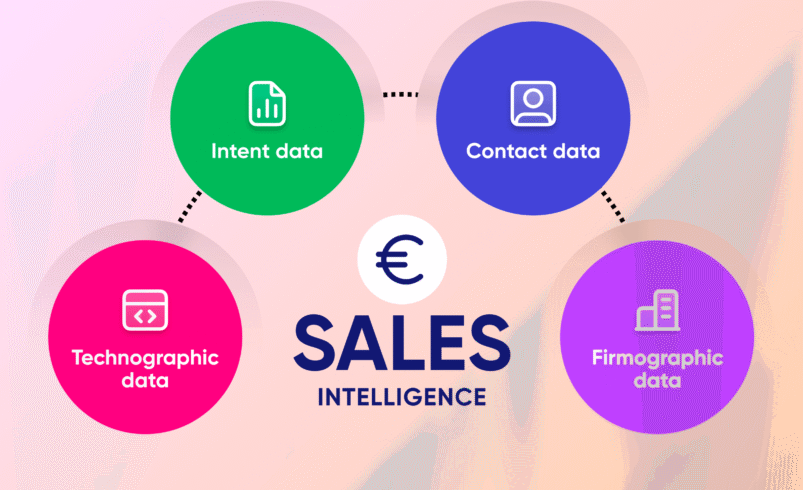

Multidata Hub: A Guide to B2B Data and Business Intelligence explores how structured business information can support companies that need better ways to identify prospects, understand markets, organize contact information, and improve sales and marketing decisions. In B2B markets, businesses rarely succeed by reaching every company available. They need to identify organizations that fit their ideal customer profile and find the right professionals within those organizations.
Multidata Hub: A Guide to B2B Data and Business Intelligence is therefore relevant to sales teams, marketers, lead generation professionals, and businesses that depend on accurate commercial information. Multidata Hub presents its marketplace as providing B2B and B2C contact data, business emails, phone numbers, intent data, and data enrichment services. These types of information can support prospecting and research, although their practical value depends on data quality, relevance, responsible use, and effective sales processes.
What Is B2B Data?
B2B data is information about businesses and the professionals associated with them. It can help companies understand who their potential customers are and how those organizations can be researched or approached.
Depending on the source, B2B records can contain information such as:
- Company names
- Business websites
- Industries
- Locations
- Professional names
- Job titles
- Business email addresses
- Phone numbers
- Company characteristics
- Other available business signals
The purpose of B2B data is not simply to create large contact lists. Its real usefulness comes from helping businesses identify relevant prospects and make better decisions about where to focus their resources.
How Multidata Hub Relates to Business Intelligence
Business intelligence generally involves collecting, organizing, analyzing, and using information to support business decisions.
B2B data can serve as one input into this process.
For example, a sales team might examine the industries it serves, identify companies with similar characteristics, determine which professionals are relevant, and organize accounts according to their potential value.
This turns raw information into something more useful for decision-making.
Multidata Hub’s data offerings can therefore be considered a resource that businesses may incorporate into broader sales intelligence, prospecting, and marketing workflows.
B2B Data and Business Intelligence Are Not the Same
It is important to distinguish between data and intelligence.
Data consists of individual facts or records. Intelligence involves interpreting information and using it to make a decision.
For example, knowing that a company operates in the software industry is data. Determining that the company fits your ideal customer profile and should receive attention from your sales team is an interpretation based on multiple factors.
This distinction helps businesses avoid treating every database record as an opportunity.
What Types of Information Can Support B2B Research?
B2B Contact Data
Professional contact information can help businesses identify people who may be relevant to their sales process.
For example, a company selling HR technology may need to research human resources professionals, while an IT services provider may focus on technology leaders.
The relevant role depends on the product, organization, and purchasing process.
Business Email Data
Business email addresses can support email prospecting, marketing campaigns, and follow-up communication.
However, an email address alone does not establish that someone is interested in a product. Effective campaigns require appropriate targeting, useful messaging, and compliance with applicable communication and privacy requirements.
Business Phone Data
Phone information can support sales processes that depend on direct conversations.
This can be useful when a product requires consultation, product demonstrations, technical discussions, or multiple stakeholders.
Sales representatives should use phone information alongside account research so their calls have a clear and relevant purpose.
Intent Data
Intent data provides signals that may indicate interest in a particular subject, product category, or business solution.
For example, an organization researching cybersecurity solutions may be worth additional attention for a cybersecurity vendor.
Intent data can help prioritize accounts, but it should not be treated as a guarantee of purchase readiness.
Data Enrichment
Data enrichment involves supplementing existing records with additional information.
A business may already have thousands of CRM records but lack current contact details or other useful fields. Enrichment can potentially make these records more complete.
This can be particularly valuable for companies that want to improve an existing database instead of rebuilding their prospect records from scratch.
How B2B Data Can Support Sales Teams
Finding Target Accounts
Sales teams can use company information to identify organizations that match predefined criteria.
A business might focus on:
- Specific industries
- Geographic regions
- Company size
- Business models
- Relevant departments
- Professional roles
This approach helps sales representatives spend more time on accounts that are potentially relevant.
Identifying Potential Contacts
Once a target company is identified, the next step is determining which professionals may be involved in the buying process.
A sales team can research appropriate contacts based on responsibilities and organizational structure.
This is especially important for complex B2B purchases where several people may influence the final decision.
Supporting Sales Prioritization
Not every prospect deserves the same amount of attention.
Sales teams can combine company fit, contact relevance, engagement, intent signals, and previous interactions to establish priorities.
This creates a more structured approach to prospecting.
How B2B Data Can Support Marketing Teams
Audience Segmentation
Marketing teams can use available company and professional information to divide prospects into meaningful groups.
For example, a campaign could be segmented by industry or company size.
This allows marketers to create messages that address the characteristics and challenges of different audiences.
More Relevant Campaigns
Generic campaigns can struggle when recipients have very different needs.
A manufacturing company may respond to messaging about operational efficiency, while a technology company may be more interested in scalability or integration.
Better segmentation can help marketers create more relevant content and campaigns.
Account-Based Marketing
Account-based marketing focuses marketing and sales resources on specific organizations rather than broad audiences.
B2B data can help teams identify target accounts and research relevant contacts within those organizations.
The data can support account selection, contact mapping, campaign planning, and measurement.
Practical Benefits and Key Insights
More Organized Prospecting
Structured business information can provide sales teams with a starting point for prospect research.
Better Targeting
Company and professional characteristics can help businesses focus on prospects that fit their ideal customer profile.
Improved Database Management
Enrichment can potentially help organizations maintain more complete CRM records.
More Effective Segmentation
Available data fields can help marketers divide audiences according to meaningful business characteristics.
Better Account Research
Combining company information, contact data, and other signals can give sales representatives a stronger starting point for researching prospects.
Greater Efficiency
Reducing repetitive information-gathering tasks can allow sales and marketing professionals to spend more time on qualification, communication, and strategy.
Common Challenges and Considerations
Data Accuracy
Business information changes frequently. Employees change jobs, organizations restructure, and contact details become outdated.
Companies should assess the provider’s verification processes, update frequency, and data coverage.
Data Coverage
No database should automatically be assumed to have complete coverage of every industry, country, company size, or professional role.
Businesses should verify whether the available information fits their target market.
Privacy and Compliance
Businesses must use contact information responsibly and understand relevant privacy laws, data protection obligations, licensing terms, and marketing regulations.
Data Does Not Equal Intelligence
A database cannot replace human judgment.
Sales teams still need to research companies, understand their needs, qualify opportunities, and determine whether an account is commercially suitable.
Avoiding Data Overload
Collecting unnecessary information can make databases difficult to manage.
Businesses should focus on the fields that directly support their sales, marketing, and customer research objectives.
How to Get More Value From B2B Data
The process should begin with a clear ideal customer profile.
Define the industries, company sizes, locations, business characteristics, and professional roles that matter most.
Next, determine what information your sales or marketing team actually needs. Avoid collecting data simply because it is available.
After creating a prospect list, review the records and remove obvious mismatches. Research high-priority accounts more deeply before contacting them.
Use segmentation to create more relevant campaigns. Sales teams can then personalize outreach according to the prospect’s business context.
Finally, measure results.
Useful metrics include qualified leads, response rates, meetings booked, opportunities created, conversion rates, acquisition costs, pipeline value, and revenue.
These measures help determine whether the data is creating measurable business value.
Frequently Asked Questions
1. What is Multidata Hub?
Multidata Hub presents itself as a marketplace for business and consumer data, including categories such as B2B and B2C contact data, business emails, phone numbers, intent data, and data enrichment services.
2. How can B2B data support business intelligence?
B2B data provides information about companies and professionals that can be organized and analyzed to support market research, account selection, segmentation, prospecting, and sales decisions.
3. Is B2B data the same as a qualified lead?
No. A data record is not automatically a qualified lead. Qualification requires evaluating factors such as business fit, need, authority, timing, and potential purchasing interest.
4. Why is data enrichment useful?
Data enrichment can help businesses supplement incomplete records and potentially improve the usefulness of their CRM and prospect databases.
5. How should companies evaluate B2B data?
Businesses should consider accuracy, freshness, coverage, relevance, available fields, verification practices, compliance requirements, and how well the data supports their specific commercial objectives.
Conclusion
Multidata Hub: A Guide to B2B Data and Business Intelligence shows how structured business information can contribute to modern sales and marketing operations. B2B contact data, business emails, phone information, intent signals, and enrichment services can support different stages of prospect research and customer acquisition.
The strongest results come from using data as part of a wider process. Businesses need clear customer profiles, meaningful segmentation, careful research, responsible communication, human qualification, and consistent measurement.
B2B data should not be viewed as a shortcut that automatically creates sales opportunities. Its role is to give teams useful information that can improve where they search, whom they contact, how they organize prospects, and which accounts they prioritize.
When combined with sound sales and marketing practices, structured business data can become a practical foundation for more focused prospecting and better-informed commercial decisions.