

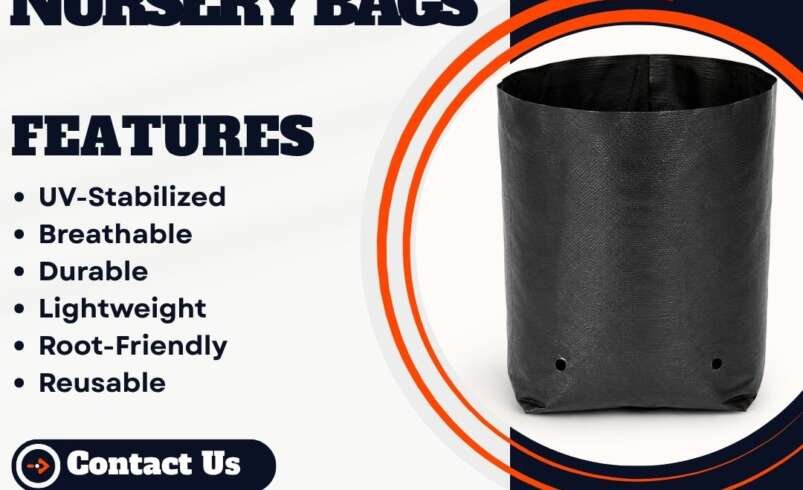

Nursery Bags are useful bags that offer room for cultivation and transportation of plants in different stages of development. They are used by commercial nurseries, farmers, horticulturists, landscapers, greenhouses, and private individuals. While compared with planting beds, these bags offer an opportunity to relocate, sort, and manage plants according to the available space and cultivation requirements. Nursery Bags are produced in various sizes, thicknesses, forms, colors, and types of construction, which allows using them for growing seedlings, flowering plants, vegetables, ornamental plants, shrubs, fruit plants, and young trees. Their design also provides an easy storage possibility after emptying, which may be quite helpful for organizations dealing with huge volumes of products. However, is one bag appropriate for growing every plant? Apparently, it is not. Indeed, the conditions required by a small seedling greatly differ from the requirements of a young tree in terms of space needed for the roots development and filled weight of the bag. It is crucial to choose a proper Nursery Bag considering a plant type, root development stage, growing period, growing medium, watering schedule, climate, and other aspects. The appropriate choice will help to make the process of cultivation more systematized and simplify relocation and transplantation.
Quality Materials Make Bags More Resilient
The material of the Nursery Bags impacts flexibility, strength, drainage, handling, and service life. Depending on the type of plants, the bag may be made of woven polypropylene, polyethylene, non-woven fabric or any other appropriate material. Woven structure provides good strength properties for different commercial purposes, while fabric-based bags may offer flexibility and air ventilation around the growing medium. It is necessary to choose material depending on the requirements of the plant, not on how thick the bag is. Small plants with a small amount of growing media do not require extra strong bags, while larger plants may put a lot of pressure on the bags after watering.
Effect of Bag Size Selection on Plant Growth
The selection of the right bag size is essential as every plant has a different root system and a unique rate of growth. While small bags may be applicable for use with seedlings and other young plants, large bags can be chosen for shrubs, fruit plants, ornamental plants, and tree-growing plants. A bag which is too small to support root development will limit root development if kept inside for a long time. However, the choice of a too large bag is not necessarily better, as well. Large bags need a lot of growing media, take more place in the nursery, are heavy after watering, and may make handling cost-effective.
Supply Reliability Facilitates Continuous Plant Production
Companies who work with Nursery Bags must consider a variety of factors while choosing a supplier and exporter, including consistency, manufacturing capabilities, specifications offered, quality control, prices, customization, packaging, and delivery reliability. A good Nursery Bags Supplier will assist businesses in keeping the inventory replenished at all times, as well as helping them acquire different sizes as the needs change. It is important for the supplier to provide realistic information regarding production schedule rather than giving unrealistic delivery promises. For export purposes, buyers might need to provide further documentation and requirements in certain markets prior to shipment.
Optimal Drainage Improves Rooting Environment
Drainage is one of the main qualities of Nursery Bags as roots require both moisture and air. Water aids in the development of plants; however, excess water around the roots could lead to the creation of an improper environment. The drainage holes help drain off excess water from the growing medium. Nevertheless, it doesn’t mean that maximum watering is allowed. Irrigation will depend on the type of plant, growing medium, climate, bag size, and weather. Fabric Nursery Bags ensure airflow near the roots in some cases, but increased airflow may lead to drying up of the growing medium due to heat and windiness.
Flexible Use Allows Growing Environment Flexibility
Nursery Bags can be applied in various growing environments, including commercial nurseries, farms, greenhouses, terraces, balconies, landscaping projects and home gardens. The flexibility of their design allows using them in places where there are no fixed planting beds, or where plants need to be shifted from time to time. For instance, urban gardeners can use bags where there is not enough free ground for planting; meanwhile, commercial farmers can arrange hundreds of plants according to their kind and development period in rows.
Cost-Effective Choice Enhances Nursery Management
The price for Nursery Bags is subject to variation due to factors including materials, size, thickness, design, drainage mechanism, color, handles, customizing, order quantity, and packing. The buyer should base comparison of bags based on comparable specifications and should not simply choose the most inexpensive bag quoted. Seasonal nurseries could also have to be mindful about their delivery schedule since delay in the arrival of packaging materials would affect planting and production schedule. Business organizations could also confirm minimum order.
Conclusion
Nursery Bags are flexible and effective tools that may be used for growing, organizing, maintaining, moving, and preparing plants for transplantation. Testing the samples can give an idea about the real performance of the product to make the right choice of a large batch. Companies need to analyze such parameters as consistency of the product, production capacity, customizability, price, storage, and delivery. An appropriate Nursery Bags Supplier will facilitate regular purchases, and Nursery Bags Exporter can provide assistance for companies working abroad. The best Nursery Bag is one that gives an opportunity to have proper root growth, drainage, strength, and handling convenience in reasonable prices.
Frequently Asked Questions(FAQ)
Q1. What are Nursery Bags used for?
Nursery bags are used to grow seedlings, vegetables, flowers, ornamental plants, shrubs, fruit plants, and young trees in nurseries, farms, greenhouses, and gardens.
Q2.What do growers consider while selecting the right Nursery Bag size?
These aspects should be considered by the growers in relation to the type of plant, root development requirements, growth phase, growing medium, irrigation, and space for growing.
Q3. Why is there a need for proper drainage in Nursery Bags?
Proper drainage is required so that excess water may drain off from the growing medium and there may be a proper proportion of water and air in the roots of the plants.
Q4. What should be considered by buyers prior to purchasing Nursery Bags?
Material quality, size, thickness, stitching, drainage, flexibility, filling capacity, consistency, customization, cost, and delivery time.
Q5. Who is the largest supplier of Nursery Bags?
It is determined by the type of material needed, size, number of Nursery Bags needed, and application among other specifications.