


How an Ecommerce Marketplace Helps Businesses Expand Online
The growth of online shopping has changed the way businesses connect with customers. From small sellers to established brands, companies are increasingly using digital platforms to showcase products and reach customers beyond their local markets. An ecommerce marketplace provides a convenient environment where multiple sellers can offer products to a large customer base through a single online platform.
For businesses, marketplaces can reduce some of the challenges associated with building an online store from scratch. Sellers can use established platforms to list products, manage orders, communicate with customers, and develop their online presence while focusing on their products and business operations.
What Is an Ecommerce Marketplace?
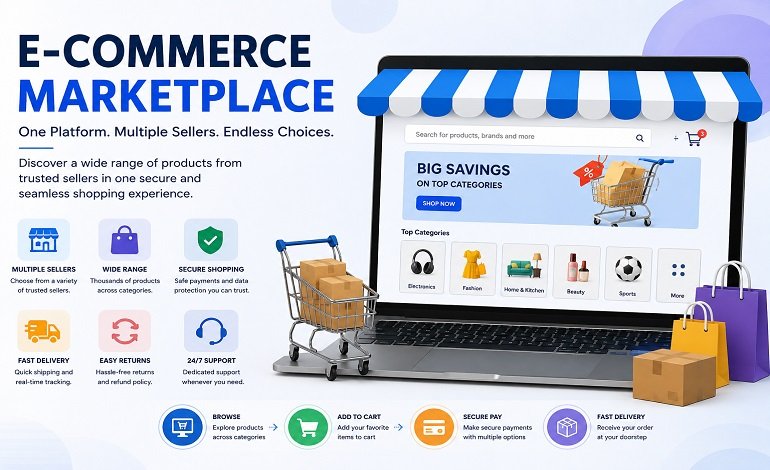
An ecommerce marketplace is an online platform where multiple sellers or brands can offer products to customers. Unlike a traditional single-brand website, a marketplace brings different sellers and product categories together in one digital environment.
Customers can browse products, compare options, check prices, read product information, and place orders through the platform. Sellers, meanwhile, gain access to an established online audience and marketplace infrastructure.
Popular marketplace models can support categories such as:
- Fashion and apparel
- Electronics and accessories
- Home and kitchen products
- Beauty and personal care
- Grocery and daily-use products
- Books and educational products
- Lifestyle and accessories
Why Businesses Choose Online Marketplaces
One of the biggest advantages of selling through an ecommerce marketplace is access to a wider customer audience. A new business may take considerable time to build organic traffic and brand recognition through its own website. Marketplaces can provide sellers with an existing platform where customers are already searching for products.
Other advantages can include:
- Wider customer reach
- Easier product discovery
- Established marketplace infrastructure
- Multiple payment options
- Order management support
- Opportunities to build product visibility
- Access to marketplace-specific promotional tools
However, success still depends on how effectively sellers manage their products and marketplace operations.
Importance of Product Listings
A product listing is often the first detailed interaction a customer has with a product. Therefore, sellers should make sure that product information is clear, accurate, and useful.
A well-prepared listing generally includes a descriptive title, relevant specifications, accurate pricing, appropriate product images, and information about size, material, features, or usage where applicable.
Sellers should focus on:
- Writing clear product titles
- Adding accurate descriptions
- Selecting the correct category
- Uploading quality images
- Providing complete specifications
- Maintaining correct pricing
- Updating product variations
- Keeping inventory information accurate
Good listing practices can make it easier for customers to understand products and make informed purchasing decisions.
Managing Marketplace Operations
Running an online store involves more than uploading products. Sellers need to monitor orders, update inventory, maintain product information, and respond to changing customer requirements.
As the number of products increases, these activities can become difficult to manage manually. Businesses may benefit from structured marketplace management processes that help keep daily operations organized.
An effective management routine can include:
- Reviewing product listings regularly.
- Checking inventory levels.
- Monitoring incoming orders.
- Updating product information when required.
- Reviewing pricing and promotional offers.
- Tracking marketplace performance.
- Identifying products that need listing improvements.
Role of Customer Experience
Customer experience is an important part of marketplace success. Shoppers expect accurate product information, straightforward ordering, timely communication, and reliable service.
Even when a product is good, unclear information or poor communication can create customer dissatisfaction. Sellers should therefore consider the complete buying journey rather than focusing only on product visibility.
Important areas include:
- Accurate product information
- Clear images
- Transparent pricing
- Proper order processing
- Responsive customer support
- Reliable packaging and fulfillment
- Consistent service quality
A positive customer experience can encourage repeat purchases and contribute to stronger brand perception.
Using Data to Improve Performance
Marketplaces generate useful information about product performance, orders, customer activity, and sales trends. Sellers can use these insights to make better business decisions.
For example, if certain products receive more views but fewer orders, the seller may review the listing, images, pricing, or product information. Similarly, products with strong sales may deserve additional inventory or promotional attention.
Regular analysis can help sellers understand:
- Which products attract customer interest
- Which listings need improvement
- What products generate stronger sales
- Where inventory needs adjustment
- Which promotional activities perform better
Data-driven decisions can make marketplace management more systematic instead of relying entirely on assumptions.
Common Challenges for Marketplace Sellers
Although online marketplaces provide valuable opportunities, sellers can also face several challenges. Managing a large product catalog, maintaining accurate information, handling orders, and keeping up with marketplace requirements can require significant time.
Common challenges include:
- Managing multiple product listings
- Keeping inventory updated
- Maintaining consistent product information
- Handling a growing number of orders
- Monitoring product performance
- Managing marketplace policies
- Competing with similar products
- Maintaining customer satisfaction
Businesses can address these challenges by creating organized workflows and using professional support where necessary.
How Small Businesses Can Get Started
Small businesses do not necessarily need hundreds of products to begin selling online. A better approach is to start with a manageable selection of products and focus on quality.
Before expanding, sellers should make sure their basic marketplace operations are organized. This includes product information, pricing, inventory, images, order processing, and customer communication.
A simple starting strategy can be:
- Select products with clear demand.
- Prepare accurate product information.
- Create professional listings.
- Upload suitable product images.
- Set competitive pricing.
- Monitor orders and inventory.
- Review performance regularly.
- Improve listings based on customer response.
This approach allows businesses to learn marketplace operations while gradually expanding their product range.
Future of Online Marketplace Selling
The ecommerce industry continues to evolve as customers become more comfortable with digital shopping. Businesses are also exploring multiple channels to reach customers and reduce dependence on a single source of sales.
An ecommerce marketplace can remain an important part of this strategy because it connects sellers with customers through established digital platforms. Businesses that combine strong products with organized listings, efficient operations, and customer-focused service can create better opportunities for sustainable online growth.
Conclusion
Online marketplaces have created new opportunities for businesses of different sizes. They allow sellers to showcase products to broader audiences while benefiting from established digital infrastructure and customer traffic.
However, marketplace success requires consistent management. Accurate listings, organized catalogs, updated inventory, efficient order handling, and good customer service all contribute to a stronger online selling experience.
By adopting a structured approach and continuously improving their marketplace operations, businesses can use online platforms more effectively and build a foundation for long-term ecommerce growth.