

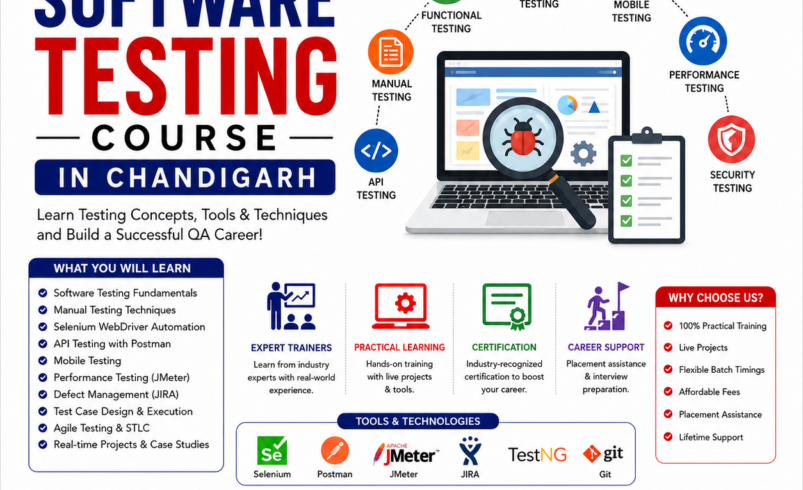

Can You Learn Software Testing Without a Tech Degree is one of the most common questions among students, graduates, career changers, and professionals looking to enter the IT industry. The answer is yes. Thousands of successful software testers have started their careers without a computer science or engineering degree.
Today, companies hire software testers based on their practical skills, problem-solving ability, certifications, and project experience rather than educational background alone. If you are willing to learn, practice, and build real-world projects, you can build a successful career in software testing.
This guide explains Can You Learn Software Testing Without a Tech Degree, the required skills, learning roadmap, free tools, certifications, project ideas, and career opportunities.
Why Learn Software Testing?
Software testing is one of the fastest-growing fields in the IT industry.
Benefits include:
- High-demand career opportunities
- No coding required for manual testing
- Easy entry into the IT industry
- Remote work opportunities
- Excellent career growth
- High salary potential
- Multiple specialization options
Learning Can You Learn Software Testing Without a Tech Degree is a practical way to start an IT career.
What is Software Testing?
Software testing is the process of checking software applications to ensure they work correctly before users access them.
The main objective is to:
- Find bugs
- Improve software quality
- Ensure security
- Verify functionality
- Improve user experience
- Prevent software failures
Software testing plays an important role in every software development project.
Can You Become a Software Tester Without a Tech Degree?
Absolutely.
Many companies recruit candidates from:
- Commerce
- Arts
- Science
- Business Administration
- Hospitality
- Education
- Banking
- Customer Service
Employers often value practical skills and certifications more than academic qualifications.
Why Software Testing is a Great Career in 2026
Almost every company develops software applications.
Software testers help organizations:
- Deliver bug-free software
- Improve customer satisfaction
- Reduce development costs
- Increase software reliability
- Improve application performance
The growing demand for digital products makes software testing a stable career choice.
Skills Required Before Learning Software Testing
Basic Computer Knowledge
Every beginner should understand:
- Windows operating system
- File management
- Internet browsing
- Software installation
- Microsoft Office
Basic computer skills help beginners learn quickly.
Analytical Thinking
Software testers identify problems before users discover them.
Develop:
- Observation skills
- Logical thinking
- Attention to detail
- Problem-solving ability
These skills improve testing quality.
Communication Skills
Software testers communicate bugs clearly.
Improve:
- Written communication
- Reporting
- Documentation
- Team collaboration
Clear communication helps developers fix issues faster.
Step-by-Step Guide on Can You Learn Software Testing Without a Tech Degree
Step 1: Learn Software Testing Basics
Start by understanding:
- What is testing?
- Why testing is important
- Software Development Life Cycle (SDLC)
- Software Testing Life Cycle (STLC)
These concepts form the foundation of software testing.
Step 2: Learn Manual Testing
Manual testing is the best starting point.
Topics include:
- Test Case Writing
- Test Scenario Creation
- Bug Reporting
- Requirement Analysis
- Test Execution
Manual testing teaches software quality fundamentals.
Step 3: Learn Software Testing Types
Understand different testing methods.
Functional Testing
Checks whether features work correctly.
Regression Testing
Ensures existing features continue working after updates.
Smoke Testing
Verifies basic functionality before detailed testing.
Sanity Testing
Confirms specific bug fixes work properly.
Integration Testing
Tests communication between application modules.
System Testing
Evaluates the complete application.
User Acceptance Testing (UAT)
Validates software before release.
Step 4: Learn Bug Tracking Tools
Software testers use bug management software.
Popular tools include:
- Jira
- Bugzilla
- Azure DevOps
- Redmine
Learning bug reporting improves employability.
Step 5: Learn SQL Basics
SQL helps testers verify database information.
Important commands:
- SELECT
- INSERT
- UPDATE
- DELETE
- JOIN
- GROUP BY
Basic SQL knowledge is highly valuable.
Step 6: Learn Automation Testing
Automation improves testing efficiency.
Popular automation tools include:
- Selenium
- Cypress
- Playwright
- TestNG
- JUnit
Automation skills increase career opportunities.
Step 7: Learn API Testing
Modern applications use APIs extensively.
Popular API testing tools:
- Postman
- Swagger
- REST Assured
API testing is an important skill for QA engineers.
Step 8: Learn Basic Programming
Automation requires programming knowledge.
Recommended languages:
- Java
- Python
- JavaScript
Java remains the most widely used language for Selenium.
Step 9: Learn Agile Testing
Most companies follow Agile development.
Understand:
- Scrum
- Sprint planning
- Daily stand-up meetings
- Sprint review
- Sprint retrospective
Agile knowledge prepares you for modern workplaces.
Best Free Software Testing Tools
Practice with these free tools.
- Selenium
- Postman
- Jira Free Version
- TestLink
- Bugzilla
- Cypress
- Playwright
- Visual Studio Code
- GitHub
- Browser Developer Tools
These tools are widely used in the industry.
Best Programming Languages for Test Automation
Popular languages include:
- Java
- Python
- JavaScript
- C#
- Kotlin
Choose one language and master it.
Best Online Platforms to Learn Software Testing
Trusted learning platforms include:
- Coursera
- Udemy
- freeCodeCamp
- LinkedIn Learning
- Test Automation University
- YouTube
- Microsoft Learn
- Guru99
Follow one structured course instead of switching frequently.
Best Software Testing Certifications
Certifications improve your resume.
Popular certifications include:
- ISTQB Foundation Level
- Certified Selenium Professional
- Certified Agile Tester
- Microsoft Azure Fundamentals
- Postman API Fundamentals
These certifications demonstrate practical knowledge.
Beginner Software Testing Projects
Hands-on projects improve confidence.
Project ideas:
- E-commerce website testing
- Banking application testing
- Student management system
- Online shopping cart testing
- Login page testing
- API testing project
- Mobile application testing
- Automation testing using Selenium
Projects build practical experience.
Build a Strong QA Portfolio
A portfolio increases your chances of getting hired.
Include:
- Test cases
- Bug reports
- Automation scripts
- API collections
- SQL queries
- GitHub repository
- Project documentation
Recruiters value real project experience.
Learn Git and GitHub
Version control is important for automation testing.
Git helps:
- Track changes
- Collaborate with teams
- Manage automation projects
GitHub showcases your work professionally.
Join Software Testing Communities
Communities help beginners learn faster.
Join:
- Ministry of Testing
- Software Testing Help
- Reddit QA Communities
- LinkedIn Groups
- GitHub
- Discord Testing Communities
Community participation improves knowledge and networking.
Career Opportunities After Learning Software Testing
Completing Can You Learn Software Testing Without a Tech Degree opens many career paths.
Popular job roles include:
- Manual Tester
- QA Engineer
- Software Test Engineer
- Automation Test Engineer
- API Test Engineer
- Performance Tester
- Mobile Application Tester
- Quality Assurance Analyst
- Test Lead
- QA Automation Engineer
Software testers are needed across startups, product companies, IT services, fintech, healthcare, and e-commerce.
Average Salary for Software Testers
Approximate annual salary in India:
- Beginner: ₹3.5–6 LPA
- Intermediate: ₹6–12 LPA
- Experienced: ₹12–25+ LPA
Automation, API testing, and cloud testing skills can significantly increase earning potential.
Common Mistakes Beginners Should Avoid
Avoid these common mistakes.
- Ignoring testing fundamentals
- Skipping manual testing
- Learning automation too early
- Avoiding SQL
- Not practicing bug reporting
- Ignoring Agile concepts
- Not building projects
- Copying automation scripts without understanding
Consistent practice leads to better results.
8-Week Software Testing Learning Roadmap
Week 1
- Learn SDLC and STLC
- Understand testing basics
Week 2
- Practice manual testing
- Write test cases
Week 3
- Learn bug reporting
- Practice Jira
Week 4
- Learn SQL
- Query sample databases
Week 5
- Study Selenium basics
- Learn Java or Python
Week 6
- Practice API testing with Postman
Week 7
- Build automation projects
- Upload work to GitHub
Week 8
- Create portfolio
- Prepare for interviews
Secondary Keyword Variations
Use these related keywords naturally throughout your content for better SEO:
- software testing for beginners
- learn software testing from scratch
- software testing without a degree
- manual testing course
- automation testing for beginners
- Selenium tutorial
- QA testing career
- software testing roadmap
- software testing certification
- API testing with Postman
- QA engineer training
- ISTQB certification
- software testing tools
- software testing projects
- quality assurance career
Frequently Asked Questions (FAQs)
1. Can you learn software testing without a tech degree?
Yes. Many successful software testers come from non-technical backgrounds. Practical skills, certifications, and projects are often more important than a degree.
2. Is coding required for software testing?
Coding is not required for manual testing. However, learning Java, Python, or JavaScript is recommended for automation testing.
3. Which certification is best for beginners?
The ISTQB Foundation Level certification is one of the most recognized certifications for beginners in software testing.
4. How long does it take to learn software testing?
With consistent study and hands-on practice, most beginners can build job-ready skills within 3–6 months.
5. Is software testing a good career in 2026?
Yes. As software products continue to grow, skilled QA professionals remain in high demand across industries worldwide.
Conclusion
Learning Can You Learn Software Testing Without a Tech Degree is a realistic and rewarding path into the IT industry. Start by understanding software testing fundamentals, manual testing, and SDLC concepts. Then expand your knowledge with SQL, automation testing, API testing, and Agile methodologies. Build practical projects, earn industry-recognized certifications, and maintain a strong portfolio on GitHub. With dedication, continuous learning, and real-world practice, you can become a successful software tester even without a technical degree and build a long-term career in quality assurance.