
A well-organized home starts with storage that fits your daily routine. Whether you live in a cozy cottage, a modern house, or a spacious family home, having enough storage can make everyday life easier. Closets are often overlooked during home improvement projects, yet they play an important role in keeping bedrooms, hallways, and living spaces neat and functional.
Thoughtfully designed muskoka closets can help homeowners make better use of available space while creating a clean, attractive interior. From custom walk-in wardrobes to compact reach-in storage systems, the right closet design can solve common organization problems without requiring a major renovation.
The key is to choose a layout that suits your belongings, available space, and lifestyle. With careful planning, even a small closet can become a practical and stylish storage area.
Why Closet Organization Matters in Everyday Life
A cluttered closet can make simple tasks more difficult. Clothes become hard to find, accessories get misplaced, and unused items take up valuable space. Over time, poor storage can also make an otherwise beautiful room feel crowded.
A well-planned closet system helps address these issues by giving every item a designated place.
Here are some practical benefits of improving closet storage:
-
Better use of space: Shelves, drawers, and hanging sections help maximize vertical and horizontal storage.
-
Easier access: Organized compartments make it simpler to find clothing, shoes, and accessories.
-
Less visual clutter: Closed cabinets and neatly arranged storage keep rooms looking tidy.
-
Improved daily routines: A functional closet reduces the time spent searching for everyday essentials.
-
Flexible storage: Adjustable shelves and modular components can adapt as household needs change.
A closet does not need to be large to work well. The most important factor is how effectively its interior space is arranged.
Custom Closet Designs That Fit Your Home
Every home has different storage requirements. A closet designed for a small bedroom may not work for a large master suite, while a cottage may need storage that accommodates seasonal clothing, outdoor equipment, and extra bedding.
Custom closet systems allow homeowners to make the most of their available space.
Walk-In Closets for Spacious Storage

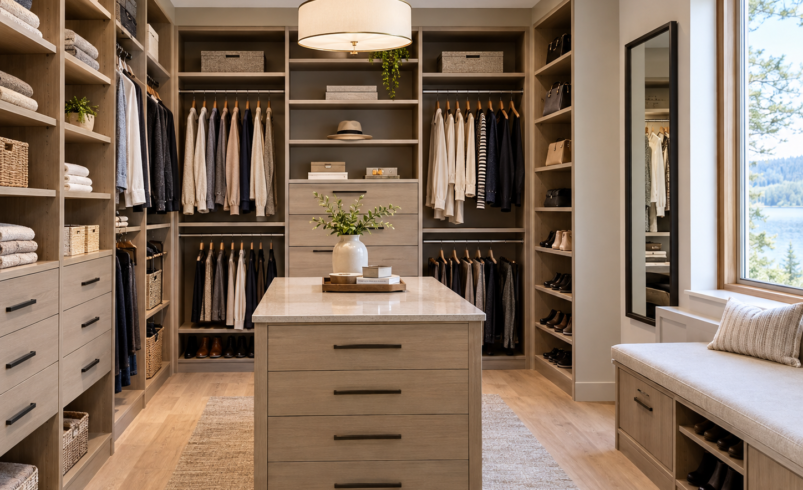
Walk-in closets offer room for a combination of hanging rails, drawers, shelves, and shoe storage. They can also include dedicated sections for handbags, accessories, and seasonal clothing.
To make a walk-in closet more functional, consider separating clothing by type and frequency of use. Everyday outfits should be easy to reach, while occasional-use items can be stored on higher shelves.
Good lighting is another important feature. LED lighting can make it easier to see clothing colors and locate smaller accessories.
Reach-In Closets for Smaller Rooms
Reach-in closets are a practical choice for bedrooms with limited floor space. A carefully designed interior can provide plenty of storage without extending into the room.
Consider adding:
-
Double hanging rods for shirts, jackets, and shorter garments.
-
Adjustable shelves for folded clothing and storage baskets.
-
Pull-out drawers for smaller items.
-
Shoe racks that use the lower part of the closet.
-
Sliding doors when traditional doors take up too much room.
These features can help transform an ordinary closet into a more efficient storage area.
How to Maximize Storage in a Small Closet
Limited closet space is a common challenge, especially in older homes and cottages. The solution is not always to build a larger closet. Often, a few practical changes can significantly improve the way the existing space works.
Make Use of Vertical Space
Many closets have unused space above the main hanging rail. Installing additional shelves can create room for luggage, seasonal clothing, extra linens, and storage bins.
Keep frequently used items at eye level and place less frequently used belongings on higher shelves. This arrangement improves accessibility while reducing clutter.
Add Drawers and Dividers
Loose accessories can quickly make a closet feel disorganized. Drawer organizers and dividers help separate socks, belts, jewelry, and other small belongings.
Built-in drawers are especially useful when a closet has limited room for a separate dresser. They provide enclosed storage while keeping the overall layout neat.
Use Matching Storage Bins
Storage bins can make open shelves look cleaner and more organized. Choose containers that fit the shelf dimensions and label them according to their contents.
For seasonal items, use clearly labeled bins to make switching between summer and winter clothing easier.
Review Your Belongings Regularly
Before investing in new closet components, take time to review what you own. Donate or remove items that no longer serve a purpose.
Reducing unnecessary belongings helps ensure that the storage system is designed around what you actually use rather than what you hope to store.
Choosing the Right Materials for Closet Cabinets
The materials used in a closet system affect its appearance, durability, maintenance, and cost. Selecting suitable materials is especially important for homeowners who want storage that will remain functional for years.
Wood and Wood-Based Materials
Wood offers a warm, natural appearance that works well in traditional and contemporary interiors. Engineered wood products, such as medium-density fiberboard and plywood, are also common choices for closet cabinetry.
The right option depends on the design, expected use, and available budget.
Laminate Finishes
Laminate surfaces are available in a wide range of colors and patterns. They can provide a clean, modern look while being relatively easy to maintain.
Light-colored finishes can help a small closet feel brighter, while wood-look finishes create a more natural appearance.
Hardware and Fittings
Closet hardware affects how smoothly the storage system operates. Durable drawer slides, sturdy hanging rods, and well-fitted hinges can improve everyday usability.
Soft-close drawers and adjustable shelving may also be worth considering, particularly in frequently used closets.
Planning Closet Storage for Muskoka Homes and Cottages
Homes in Muskoka often need flexible storage for changing seasons and different activities. A property used throughout the year may require space for winter coats, boots, summer clothing, recreational equipment, and household essentials.
A thoughtful storage plan can help manage these changing needs.
Consider creating dedicated storage zones for:
-
Winter jackets, hats, gloves, and footwear.
-
Summer clothing and outdoor accessories.
-
Guest bedding, blankets, and extra pillows.
-
Cleaning supplies and household necessities.
-
Seasonal decorations and occasional-use items.
For cottages, entryway closets and mudroom storage can be particularly useful. Hooks, closed cabinets, and shoe compartments help keep outdoor gear organized and prevent clutter from spreading into living areas.
Moisture is another consideration in seasonal properties. Keep closets reasonably ventilated and avoid storing damp clothing or footwear in enclosed cabinets.
How to Plan a Closet Renovation Without Overspending
A closet upgrade does not have to involve a complete remodeling project. Setting a clear budget and identifying your main storage problems can help you choose improvements that provide practical value.
Start With Your Storage Priorities
Before selecting a design, make a list of what your current closet lacks. You may need more hanging space, better shoe storage, additional drawers, or improved access to seasonal items.
Focusing on these needs helps prevent unnecessary features from increasing the project cost.
Measure the Available Space
Accurate measurements are essential for a functional closet layout. Measure the width, height, and depth of the closet, along with the location of doors, windows, and other obstacles.
For walk-in closets, make sure there is enough clearance to open drawers and move comfortably through the space.
Compare Different Storage Options
A basic closet organizer may be sufficient for a simple storage problem. A custom-built cabinet system may be more appropriate when the room has unusual dimensions or specific storage requirements.
Homeowners comparing options from a muskoka cabinet company inc or another local cabinetry provider can ask about materials, installation, customization, and warranty coverage before making a decision.
Requesting a detailed estimate can also help clarify which features are included and where adjustments may be possible.
Common Closet Design Mistakes to Avoid
Even a visually attractive closet can become frustrating if the layout does not support everyday use.
Avoid these common mistakes:
Ignoring hanging space: Too many shelves and not enough hanging rails can make clothing storage inconvenient.
Choosing fixed shelves for changing needs: Adjustable shelving provides greater flexibility as your storage requirements evolve.
Forgetting lighting: Poor lighting makes it harder to locate items, especially in deep closets.
Overlooking door clearance: Drawers and doors need enough room to open without hitting nearby furniture or walls.
Filling every inch with storage: Leaving enough space to move and access belongings is essential for a comfortable, practical design.
Planning these details before installation can help prevent costly changes later.
Conclusion
A well-designed closet can make a meaningful difference in how a home looks and functions. With the right combination of shelves, drawers, hanging space, and durable materials, homeowners can create storage that supports their daily routines and keeps clutter under control.
Whether you are upgrading a small bedroom closet, designing a walk-in wardrobe, or improving storage in a seasonal cottage, the most effective solution is one that fits your available space and actual needs.
By reviewing your belongings, measuring carefully, choosing suitable materials, and planning for seasonal storage, you can create a closet system that remains useful and attractive for years to come.