


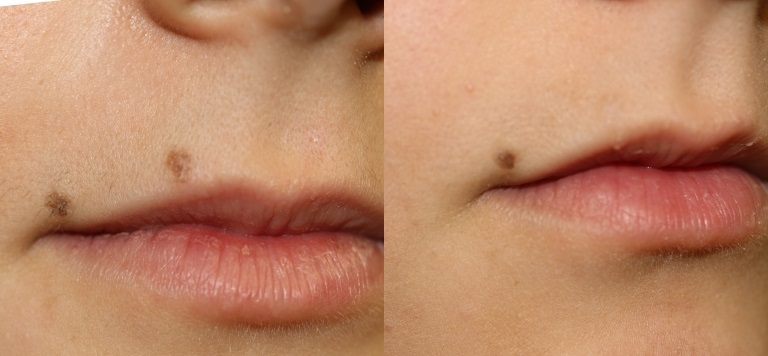
A mole on or around the lip can be a noticeable facial feature. Some people consider it a beauty mark, while others may feel uncomfortable with its size, color, location, or appearance. A mole may also become irritating if it is repeatedly touched, rubbed, or accidentally injured during shaving or other daily activities.
Lip mole removal is a procedure that can be considered when a mole is bothersome, cosmetically unwanted, or needs medical evaluation. Most moles are harmless, but a new or changing mole should be assessed by a qualified dermatologist before cosmetic removal. The American Academy of Dermatology recommends professional evaluation when a mole changes, itches, bleeds, or otherwise looks different.
What Is a Mole?
A mole, medically called a nevus, is a common type of skin growth. Moles can be flat or raised and may vary in color from skin-toned to brown, black, pink, or other shades.
Most moles are benign, meaning they are not cancerous. However, changes in a mole can sometimes indicate a more serious skin condition. This is why a professional examination is particularly important when a mole appears unusual or has changed over time.
Moles can develop on different parts of the face, including the skin around the mouth and lip area.
Why Do People Consider Lip Mole Removal?
There are several reasons someone may consider having a mole removed.
A person may simply dislike its appearance or feel that it draws attention away from other facial features. Others may have a raised mole that catches on clothing, becomes irritated, or is accidentally injured.
A dermatologist may also recommend removal when a mole appears suspicious and needs to be examined under a microscope.
The American Academy of Dermatology notes that dermatologists may remove moles that are bothersome, cosmetically unwanted, or suspicious for skin cancer.
Does Every Lip Mole Need to Be Removed?
No. Many moles do not require treatment.
A stable mole that has been present for a long time and does not cause discomfort may not need to be removed. The decision depends on its appearance, location, symptoms, and the individual’s preferences.
However, a mole that changes should not automatically be treated as a cosmetic issue.
Changes in size, shape, color, itching, bleeding, or other unusual developments should be evaluated by a dermatologist.
Warning Signs That Require Professional Evaluation
Certain changes can make a mole more concerning.
The ABCDE approach is commonly used when looking for possible melanoma warning signs. Asymmetry refers to one half looking different from the other. Border changes can include irregular or poorly defined edges. Color may become uneven or contain multiple shades. Diameter can be larger than about 6 millimeters, although melanoma can also be smaller. Evolving means the mole is changing over time.
A changing mole should be evaluated even when it is small.
A mole that repeatedly bleeds, itches, grows, or changes should receive medical attention rather than being treated at home.
How Is Lip Mole Removal Performed?
The appropriate removal method depends on the type of mole, its location, its appearance, and whether the dermatologist needs to examine the entire growth.
Two common approaches used for moles are surgical excision and surgical shave removal.
With surgical excision, the dermatologist removes the entire mole and may close the area with stitches when necessary. The removed tissue can be examined under a microscope.
With surgical shave removal, a specialized blade is used to remove the mole from the skin. In many cases, the removed tissue is also examined by a trained medical professional.
The appropriate method should be determined during a professional consultation.
What Happens During the Consultation?
A consultation allows the doctor to examine the mole closely and determine whether it appears suitable for cosmetic removal or requires additional evaluation.
The doctor may ask how long the mole has been present and whether it has changed in size, shape, or color. They may also ask about symptoms such as itching, tenderness, or bleeding.
If the mole appears suspicious, a biopsy may be recommended. A biopsy involves removing some or all of the growth and sending the tissue to a laboratory for microscopic examination. A biopsy is the way doctors determine whether skin cancer is present.
Will Lip Mole Removal Leave a Scar?
Any procedure that removes skin can potentially result in a scar. The appearance of the final scar can depend on the removal technique, the size and depth of the mole, the location, and individual healing characteristics.
Because the lip and surrounding facial area are highly visible, patients should discuss potential scarring during the consultation.
A qualified professional can explain where an incision may be placed and what type of healing can reasonably be expected.
It is important to understand that no responsible practitioner can guarantee that a procedure will leave absolutely no visible mark.
What Is Recovery Like?
Recovery depends on the technique used and the size and location of the treated area.
Patients may experience temporary redness, swelling, tenderness, or sensitivity around the treatment site. The doctor will provide instructions for keeping the area clean and supporting proper healing.
Patients should avoid picking at a healing area or applying unapproved products to it.
Following postoperative instructions can help reduce unnecessary irritation and support normal healing.
Can You Remove a Lip Mole at Home?
Home removal is not recommended.
Trying to cut, burn, scrape, or chemically remove a mole can cause infection, bleeding, scarring, and other complications. More importantly, attempting to remove a suspicious mole without professional evaluation could delay the diagnosis of skin cancer.
The American Academy of Dermatology specifically advises against trying to remove moles at home because of the risks of scarring, infection, and delayed cancer diagnosis.
Professional assessment is especially important for a mole that is changing or otherwise unusual.
Can a Lip Mole Be Cancerous?
Most moles are harmless, but melanoma and other skin cancers can sometimes resemble ordinary moles.
Skin cancer can develop on the lips and surrounding areas. The American Academy of Dermatology advises paying attention to spots that grow, bleed, itch, or change in appearance.
This does not mean that every unusual-looking mole is cancerous. It means that changes should be evaluated rather than ignored.
Only appropriate medical examination and, when necessary, a biopsy can establish a diagnosis.
Choosing a Qualified Professional
The person performing the procedure matters, particularly when a mole is located on a highly visible part of the face.
Look for a qualified dermatologist or appropriately trained medical professional who can evaluate the mole, explain the removal technique, discuss scarring, and determine whether laboratory examination is appropriate.
During your consultation, ask what type of mole you have, which removal method is recommended, whether the tissue will be examined, what recovery involves, and what potential complications you should understand before treatment.
A good consultation should focus on both cosmetic considerations and medical safety.
How to Prepare for Treatment
Preparation will depend on the planned procedure.
Tell your healthcare professional about medications, supplements, allergies, previous reactions to anesthetics, and relevant medical conditions. Follow any instructions provided before the appointment.
You should also avoid experimenting with home mole-removal products before your consultation. Some products can irritate or damage the skin and may make professional assessment more difficult.
Planning ahead can also make the recovery period easier.
Protecting the Area After Removal
After treatment, follow the specific wound-care instructions provided by your clinician.
Protecting healing skin from unnecessary irritation and excessive sun exposure can be important for recovery and the eventual appearance of the treated area. Your clinician can recommend appropriate skincare and sun-protection measures based on the procedure.
If the area develops unusual symptoms or the mole appears to return, contact your healthcare professional for evaluation.
The AAD recommends returning to a dermatologist if a removed mole grows back, because recurrence can sometimes require further assessment.
Is Lip Mole Removal Right for You?
Lip mole removal may be appropriate for someone who has a bothersome or cosmetically unwanted mole, provided the mole has been properly evaluated.
For a stable, harmless mole, removal may be an elective cosmetic decision. For a suspicious or changing mole, medical evaluation should come before cosmetic treatment.
The most important step is determining what the growth actually is and whether it needs to be examined by a medical professional.
Final Thoughts
Lip mole removal can be a straightforward procedure when performed by an appropriately qualified professional, but the process should begin with evaluation rather than immediately choosing a cosmetic treatment.
Most moles are harmless, yet a new or changing mole can require further assessment. Changes such as growth, bleeding, itching, irregular borders, multiple colors, or other noticeable evolution should be discussed with a dermatologist.
Avoid attempting to remove a mole yourself. A professional can determine whether removal is appropriate, select a suitable technique, explain potential scarring and recovery, and arrange laboratory examination when medically indicated.
For anyone considering treatment, a consultation with a qualified dermatologist or appropriate specialist is the safest starting point.