

The rapid expansion of digital technology has transformed the way individuals communicate, conduct financial transactions, manage businesses, and access essential services. Online banking, digital wallets, UPI payments, e-commerce platforms, and social networking applications have become integral to everyday life. However, this technological progress has also created opportunities for cybercriminals to exploit unsuspecting individuals and organisations through sophisticated online schemes.
Cybercrime can take many forms, including financial fraud, phishing, identity theft, unauthorised access to digital accounts, social media impersonation, online blackmail, and fraudulent investment schemes. Victims may experience financial losses, reputational damage, emotional distress, and prolonged difficulties in recovering their money or protecting their personal information.
In such circumstances, obtaining appropriate legal guidance can help victims understand their rights, preserve essential evidence, and pursue the remedies available under applicable law. Individuals searching for the Best Cyber Crime Advocate in Agra may require assistance with filing complaints, responding to cybercrime investigations, addressing frozen bank accounts, or pursuing legal proceedings connected with digital offences.
A knowledgeable cybercrime advocate can help assess the circumstances of a case, identify relevant legal provisions, and explain the procedural steps that may be necessary. Legal assistance is particularly valuable when a matter involves multiple bank accounts, disputed digital transactions, electronic records, or communication between banks and law-enforcement authorities.
Agra’s residents, business owners, students, professionals, and senior citizens increasingly rely on digital services. Understanding cybercrime risks and knowing where to seek assistance are therefore important aspects of digital security.
Understanding Cybercrime and Its Legal Implications
Cybercrime generally refers to unlawful conduct involving computers, digital devices, communication networks, online platforms, or electronic information. In some offences, technology is the primary target. In others, digital channels are used to facilitate conventional crimes such as fraud, extortion, impersonation, or theft.
The legal character of a particular incident depends on its facts, the evidence available, the conduct of the persons involved, and the legislation applicable to the alleged offence.
India’s legal framework for addressing cybercrime includes the Information Technology Act, 2000, the Bharatiya Nyaya Sanhita, 2023, and other relevant laws and procedural provisions, depending on the circumstances. The Information Technology Act addresses various forms of unauthorised computer access, identity-related misuse, cheating by personation through computer resources, and other specified electronic offences. The Bharatiya Nyaya Sanhita contains provisions that may apply to cheating, forgery, criminal intimidation, and related conduct.
The Bharatiya Nagarik Suraksha Sanhita, 2023, governs criminal procedure in applicable cases. Electronic evidence is also subject to the relevant evidentiary framework, including provisions of the Bharatiya Sakshya Adhiniyam, 2023, where applicable.
Not every online disagreement or unsuccessful transaction constitutes a criminal offence. A proper assessment is necessary to distinguish criminal conduct from civil disputes, contractual disagreements, technical errors, and other situations that may require different remedies.
Common Categories of Cybercrime
Several forms of cybercrime are frequently encountered by individuals and businesses.
- Online financial fraud
Fraudsters may deceive victims into transferring money through UPI, internet banking, payment applications, debit cards, credit cards, or other digital channels. They may impersonate bank officials, customer-support representatives, investment advisers, or government personnel.
- Phishing and credential theft
Phishing involves deceptive communications designed to obtain confidential information. A victim may receive a fraudulent email, text message, or website link that imitates a legitimate organisation. Entering passwords, card details, or one-time passwords on such platforms can expose accounts to misuse.
- Identity theft and impersonation
Criminals may misuse another person’s photographs, identification documents, telephone number, email account, or other personal information. Such conduct can lead to fraudulent transactions, misleading communications, and reputational harm.
- Social media fraud
Fake profiles, fraudulent advertisements, romance scams, impersonation accounts, and deceptive business offers can cause financial and personal damage. Some perpetrators also use private messages to threaten or manipulate victims.
- Investment and trading scams
Fraudulent schemes may promise unusually high returns through cryptocurrency, share trading, online task applications, or private investment groups. Victims are sometimes persuaded to make repeated payments before discovering that the displayed profits cannot be withdrawn.
- Business email compromise
In this type of fraud, criminals compromise or imitate business email accounts to redirect invoices, alter payment instructions, or persuade employees to transfer funds to fraudulent accounts.
- Cyberstalking, threats, and online harassment
Persistent unwanted digital communication, threats, blackmail, and certain forms of abusive online conduct may warrant legal intervention, depending on the facts and applicable law.
- Unauthorised access to digital accounts
Compromised email accounts, social media profiles, cloud storage, and online banking credentials can expose sensitive information and facilitate further offences.
The correct response varies according to the nature of the incident. A legal professional can help determine which complaint mechanism, statutory provision, or judicial remedy may be appropriate.
Why Legal Assistance Matters in Cybercrime Cases
Cybercrime investigations often involve digital records, financial intermediaries, electronic communications, and technical information that may not be readily understood by a person without relevant experience. Even apparently straightforward incidents can become complicated when money passes through several accounts or when the suspected offender operates from another jurisdiction.
A cybercrime advocate can help organise the available facts into a coherent account of the incident. This may include identifying the sequence of transactions, documenting communications, preparing a chronology, and explaining the significance of supporting records.
Legal assistance may be particularly useful in the following circumstances:
- A substantial amount of money has been lost through an online scam.
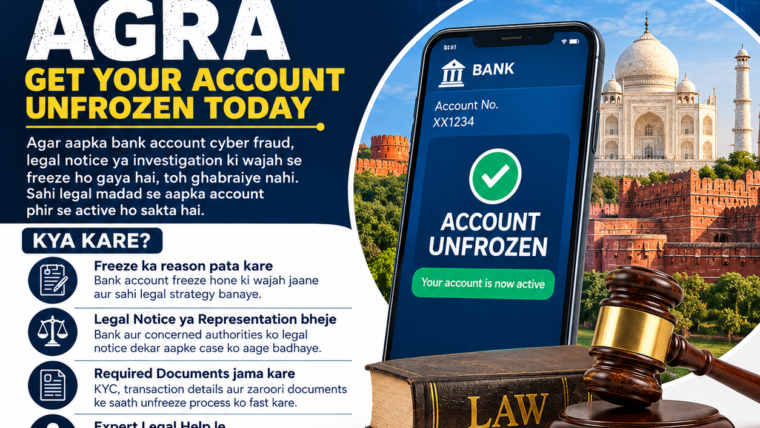
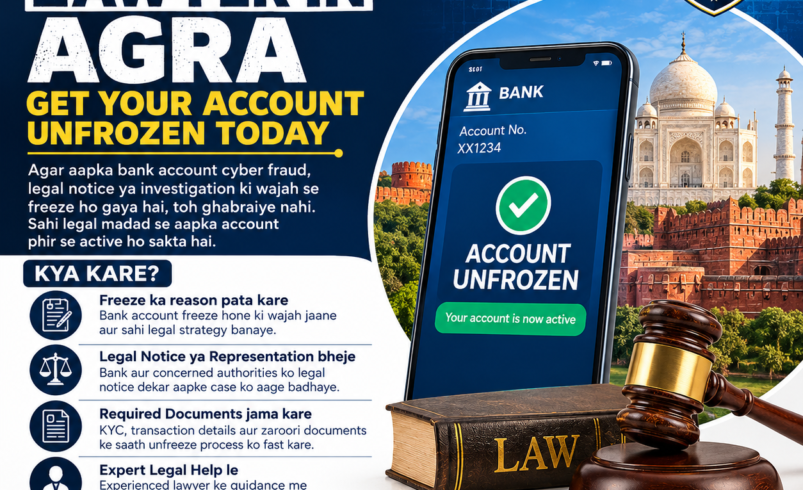
- A bank account has been frozen, restricted, or marked with a lien following a cybercrime complaint.
- A victim needs assistance preparing a police complaint.
- A person has received a notice or summons in connection with a digital transaction.
- An individual has been falsely implicated in a cybercrime investigation.
- Electronic records need to be preserved for a potential legal proceeding.
- A business has suffered financial losses because of impersonation or payment diversion.
- A person needs guidance about the lawful removal or reporting of fraudulent online content.
The value of legal representation lies not merely in preparing documents but also in identifying the appropriate course of action. Every case has its own evidentiary and procedural considerations.
Best Cyber Crime Lawyer in Agra for Online Scams and Financial Fraud
Searching for the Best Cyber Crime Lawyer in Agra for Online Scams and Financial Fraud may be a practical starting point for individuals seeking legal guidance after an online incident. However, choosing a lawyer should involve more than relying on promotional descriptions or unverified claims.
Prospective clients should consider the lawyer’s professional credentials, experience relevant to the type of dispute, familiarity with applicable cybercrime laws, communication practices, and ability to explain realistic legal options.
Online scams frequently involve a combination of deception and financial transactions. The victim may have transferred money voluntarily but only because the transfer was induced through fraudulent representations. Establishing the surrounding circumstances can therefore be crucial.
A lawyer may assist with examining the following questions:
- How did the communication between the victim and the suspected offender begin?
- What representations or promises induced the payment?
- Through which bank account, payment gateway, or digital wallet was the money transferred?
- Is there a transaction reference number or other reliable payment record?
- Has the incident been reported to the relevant authorities?
- Has any receiving account been identified or restricted?
- What supporting documents are available?
- Is there evidence that the suspected offender used impersonation, deception, or unauthorised access?
These questions help establish a factual foundation for the complaint and identify potential avenues for investigation or recovery.
A lawyer cannot guarantee that lost money will be recovered, that a frozen account will be released, or that a criminal proceeding will conclude within a particular period. Outcomes depend on the evidence, the actions of the authorities, the relevant legal provisions, and the circumstances of each case.
Understanding Online Financial Fraud
Online financial fraud encompasses deceptive schemes intended to obtain money, financial credentials, or other economic benefits through digital channels. Fraudsters frequently rely on urgency, false authority, fabricated opportunities, and psychological manipulation.
Some schemes are highly personalised. Others operate on a large scale through automated messages, fraudulent websites, and mass-distributed advertisements.
UPI and QR Code Fraud
Unified Payments Interface services have simplified everyday payments, but fraudsters also exploit misunderstandings about how payment applications work.
A scammer may instruct a victim to scan a QR code or approve a collect request under the pretext of receiving money, obtaining a refund, or completing a verification procedure. Depending on the transaction, the victim may inadvertently authorise a payment instead.
Victims should preserve transaction records, the recipient’s payment details, relevant messages, and any available application notifications. They should contact their bank or payment service provider promptly and report suspected fraud through the appropriate official channels.
Fake Customer Support
Fraudulent customer-support accounts may appear in search results, online directories, social media posts, or comments. Criminals impersonate representatives of banks, courier companies, shopping platforms, and technology providers.
Victims may be persuaded to install remote-access software, reveal credentials, or share confidential verification codes.
A cybercrime complaint should explain how the impersonation occurred and identify the relevant telephone numbers, links, account handles, payment details, and communications wherever possible.
Online Shopping Fraud
Consumers may encounter counterfeit shopping websites, fake advertisements, misleading product listings, or sellers who accept payment but never deliver the goods. In some cases, the seller disappears after receiving an advance payment.
The appropriate remedy depends on the circumstances. A consumer complaint, platform dispute, payment reversal request, civil proceeding, or criminal complaint may be relevant in different situations. These avenues should not be treated as interchangeable.
Investment and Employment Scams
Some fraudulent schemes begin with apparently harmless online tasks, recruitment messages, or investment discussions. After an initial payment or small withdrawal, the victim may be encouraged to deposit larger sums.
The fraudster may display fabricated account balances or claim that additional fees are required to release profits. Requests for repeated payments are a significant warning sign.
Victims should avoid sending further money in an attempt to recover earlier losses. Instead, they should preserve the available records and seek guidance from their bank and the appropriate authorities.
Credit Card and Internet Banking Fraud
Unauthorised card transactions, credential theft, fraudulent payment links, and account takeovers can expose victims to immediate financial losses.
The affected bank or card issuer should be notified without delay. Prompt reporting may help initiate protective measures, transaction disputes, or other procedures available under the relevant banking rules.
A legal professional may assist when the circumstances involve disputed liability, inadequate responses, suspected organised fraud, or the need for formal proceedings.
Immediate Steps After Becoming a Victim of Cybercrime
The actions taken immediately after discovering an online fraud can affect the availability of evidence and the prospects of limiting further damage.
1. Contact the Bank or Payment Provider
Notify the relevant bank, card issuer, or payment service provider as soon as possible. Provide the transaction details and request a complaint or reference number.
Depending on the circumstances, the institution may be able to initiate a dispute process, restrict certain services, or communicate with other participating institutions. The availability of these measures depends on the transaction and applicable rules.
2. Report the Incident Promptly
India’s National Cyber Crime Reporting Portal provides an official channel for reporting cybercrime. Suspected financial cyber fraud can also be reported through the national cybercrime helpline, 1930.
For urgent financial fraud, prompt reporting is especially important because the authorities and financial institutions may need to act quickly to trace or restrict the movement of funds.
A complaint should be accurate, specific, and supported by available records. Exaggerated allegations or unverified assumptions can complicate the process.
3. Preserve Digital Evidence
Save relevant records before deleting messages, changing devices, or closing accounts. Useful material may include:
- Bank statements and transaction confirmations.
- UPI reference numbers and payment receipts.
- Email messages and their available headers.
- Telephone numbers and call logs.
- Website addresses and screenshots.
- Social media profile links and account identifiers.
- Chat histories and relevant attachments.
- Complaint acknowledgements and bank correspondence.
Screenshots can be helpful, but original electronic records should also be retained wherever possible. Preserve files in their original form and avoid unnecessary editing.
4. Secure Compromised Accounts
Change passwords from a trusted device, enable multifactor authentication, and revoke unfamiliar sessions where the service permits it. Contact the relevant institution if banking credentials or payment access may have been compromised.
If remote-access software was installed at a fraudster’s request, obtain appropriate technical assistance to secure the device.
5. Keep a Chronology of Events
Write down when the incident began, how contact was established, what the suspected offender said, which transactions occurred, and when the fraud was discovered.
A clear chronology can help investigators understand the sequence of events and assist a lawyer in preparing a coherent complaint.
6. Obtain Appropriate Legal Guidance
Where the incident involves significant losses, multiple transactions, a frozen bank account, allegations of criminal involvement, or an unsatisfactory institutional response, professional legal guidance may help clarify the available remedies.
The appropriate next step should be determined from the facts rather than from a generic promise of immediate recovery.
Filing a Cybercrime Complaint in Agra
Individuals affected by cybercrime in Agra may need to approach the relevant police or cybercrime authorities, depending on the nature of the incident and the applicable procedure.
The National Cyber Crime Reporting Portal is an important official reporting facility. The portal provides a means of submitting information about cyber offences, including financial fraud and other forms of online misconduct.
A complaint generally benefits from a clear description of the incident, the suspected method of deception, the relevant dates, the financial details, and the available supporting evidence.
Information to Include in a Complaint
A well-organised complaint may contain the following information:
Complainant details: Provide accurate contact information and any other details required by the reporting authority.
Incident chronology: Explain what happened in chronological order, avoiding speculation where the facts are uncertain.
Financial information: Identify the amount involved, the transaction dates, available reference numbers, and the payment channels used.
Suspected offender information: Include known telephone numbers, email addresses, bank details, website links, social media handles, or other identifiers.
Supporting records: Attach relevant statements, screenshots, communications, payment confirmations, and earlier complaint acknowledgements as requested.
Relief sought: Explain the action requested, such as investigation of the incident, tracing of funds, or examination of a disputed account restriction.
The appropriate authority may request additional records or clarification during the investigation.
What Happens After a Complaint Is Filed?
The subsequent process depends on the nature of the allegation and the information available. Authorities may assess the complaint, seek supporting documents, contact financial institutions, examine electronic records, or take other steps authorised by law.
Some matters require coordination between several jurisdictions or institutions. A payment may have passed through multiple accounts before the victim discovered the fraud.
The filing of a complaint does not automatically establish criminal liability. Investigative findings and legal determinations must be based on the available evidence and applicable law.
A cybercrime advocate can help a complainant understand procedural developments, organise requested records, and assess whether further lawful steps may be necessary.
Legal Assistance for Frozen Bank Accounts
A bank account freeze can create substantial practical difficulties. Individuals may be unable to withdraw funds, make payments, receive salary deposits, or meet ordinary financial commitments.
Account restrictions can arise for different reasons. In some cybercrime investigations, a bank may receive a direction or request from an investigating authority concerning funds believed to be connected with a disputed transaction. Other restrictions may result from banking compliance procedures, suspected unauthorised activity, or unrelated regulatory concerns.
It is important to identify the actual reason for the restriction before pursuing a remedy.
A frozen account does not, by itself, establish that its holder committed a crime. Equally, the account holder’s assertion that the money is legitimate does not automatically require the bank or investigating authority to lift a restriction.
Why Bank Accounts May Be Frozen
Potential reasons include:
- A transaction has been reported as part of a cyber fraud.
- Funds have moved through the account from a disputed payment.
- An investigating authority has requested a restriction in connection with an inquiry.
- A bank has detected activity requiring further verification.
- A regulatory or compliance requirement applies to the account.
The nature and legal basis of the restriction determine which documents, authority, and procedure are relevant.
How a Lawyer May Assist With an Account Freeze
Legal assistance may involve reviewing the bank’s communication, identifying the authority responsible for the restriction, examining the transaction history, and preparing a representation supported by documentary evidence.
Where appropriate, the lawyer may communicate with the relevant bank or investigating authority and assess whether an application before a competent court is warranted.
Useful documents may include bank statements, proof of the source of funds, invoices, salary records, business records, transaction references, and copies of relevant notices or complaints.
The objective is to establish the account holder’s position through verifiable evidence and pursue an appropriate legal remedy.
Lien Marking and Debit Freezes
A lien and a debit freeze are not necessarily the same thing.
A lien may involve placing a hold on a specified amount, whereas a debit freeze may restrict withdrawals or outgoing transactions more broadly. The actual effect depends on the bank’s records and the instruction received.
Account holders should request clarification about the nature, scope, and stated basis of the restriction. They should also preserve written communication from the bank.
The legal implications of a restriction depend on the circumstances. There is no universal procedure or guaranteed timeline for releasing every frozen account.
The Role of a Cybercrime Advocate in Financial Fraud Disputes
Legal representation can support several stages of a financial cybercrime matter, from the initial complaint to subsequent proceedings.
Preliminary Assessment
The first step is to understand the factual matrix. This includes examining the payment method, communications, timeline, amount involved, and available records.
A preliminary assessment can help identify gaps in the evidence and distinguish established facts from assumptions.
Complaint Preparation
A lawyer may help structure the complaint so that the sequence of events, alleged deception, and financial consequences are clearly explained.
The purpose is to present relevant information accurately, not to embellish the allegations or predict the outcome of the investigation.
Coordination With Relevant Authorities
Depending on the case, communications may be necessary with the police, cybercrime authorities, banks, payment intermediaries, or other institutions.
The appropriate channel depends on the nature of the request and the applicable procedure. Formal communication should be supported by the relevant records and reference numbers.
Representation in Legal Proceedings
Some disputes may require court applications, responses to notices, bail-related assistance, or other procedural steps. The availability and suitability of these remedies depend on the facts and the stage of the matter.
A lawyer can explain the legal issues, prepare appropriate documents, and represent a client within the scope of the engagement.
Evidence Organisation
Electronic evidence may be scattered across phones, email accounts, banking applications, cloud services, and messaging platforms. Organising the material can help establish a reliable chronology.
Where necessary, technical expertise may also be required to examine device records or other digital information.
Managing Expectations
Legal processes may involve delays, requests for additional evidence, or decisions by institutions outside the lawyer’s direct control.
Clients should receive a realistic explanation of the proposed course of action, likely procedural requirements, potential costs, and the uncertainties involved.
No professional should promise a guaranteed result in a matter whose outcome depends on an investigation or judicial determination.
Digital Evidence and Its Importance in Cybercrime Matters
Digital evidence can be central to establishing how an incident occurred and whether the available records support the allegations.
Unlike a conventional paper document, electronic information may be duplicated, altered, deleted, or distributed across different systems. Metadata, timestamps, account identifiers, and transaction references may therefore have significant evidentiary value.
Types of Digital Evidence
Relevant material may include:
- Electronic bank statements.
- UPI transaction records.
- Emails and message histories.
- Call logs and relevant recordings lawfully obtained.
- Website addresses and screenshots.
- Device logs and available security notifications.
- Social media profile information.
- Digital invoices and payment confirmations.
- Records supplied by banks or service providers.
Not every item will be relevant to every case. Evidence should be collected and retained in a manner consistent with applicable law and privacy requirements.
Preserving Original Records
Avoid altering the original files or relying exclusively on cropped screenshots. Keep copies of important communications and record when and how they were obtained.
If a device may contain relevant evidence, avoid unnecessary resets or deletion of data. Where forensic examination may be required, qualified technical assistance can help preserve the integrity of the material.
Electronic Evidence in Legal Proceedings
Electronic records may need to satisfy applicable evidentiary requirements. Depending on the circumstances, questions may arise about authenticity, integrity, attribution, and the statutory requirements governing admissibility.
A lawyer can help identify the relevant issues, while technical experts may be needed to explain specialised aspects of the evidence.
Careful preservation can improve the usefulness of digital records, although no particular document or screenshot automatically proves every allegation.
Common Challenges Faced by Cybercrime Victims
Cybercrime victims often face difficulties that extend beyond the initial financial loss.
Delay in Discovering the Fraud
Some schemes are designed to conceal their fraudulent nature. A victim may discover the problem only after repeated payments, a failed withdrawal, or an unexpected account notification.
Although delayed discovery does not automatically eliminate every legal remedy, it may affect the availability of records or the ability to trace funds. Prompt action after discovery remains advisable.
Multiple Bank Accounts and Payment Intermediaries
Fraudulently obtained money may move through several accounts. Investigators may need to identify the transaction chain and establish the relationship between the accounts and the alleged offence.
This complexity can make recovery uncertain and may require coordination between multiple institutions.
Cross-Jurisdictional Investigations
The victim, suspected offender, receiving bank account, and digital platform may be located in different jurisdictions. Such circumstances can create additional procedural and investigative requirements.
False or Incomplete Information
Victims may initially lack full details about the person responsible or the exact mechanism of the fraud. A complaint can still explain the known facts and identify what remains uncertain.
Providing accurate information is more useful than speculating about the identity or motives of an unknown person.
Secondary Recovery Scams
After a financial loss, victims may be contacted by individuals claiming to be recovery agents, investigators, lawyers, or technical specialists. They may demand advance fees or confidential credentials in exchange for guaranteed recovery.
Such offers should be treated cautiously. Legitimate legal or investigative work does not justify handing over passwords, one-time passwords, or unrestricted control of a bank account.
How to Choose a Cyber Crime Lawyer in Agra
Selecting legal representation requires careful consideration. A promotional title alone does not establish competence, experience, or suitability for a particular matter.
Verify Professional Credentials
Check the lawyer’s enrolment and professional status through appropriate official channels. Confirm the identity of the person providing the legal service and ensure that the engagement is clearly documented.
Assess Relevant Experience
Cybercrime matters can involve distinct legal issues. A person facing an online investment scam may need different assistance from someone responding to an allegation of unauthorised access or seeking relief from a bank-account restriction.
Ask whether the lawyer handles matters comparable to the specific problem.
Evaluate Communication
A suitable legal professional should be able to explain the relevant issues in understandable language, identify missing documents, and outline possible next steps.
Clear communication is especially important when the client is unfamiliar with criminal procedure or digital evidence.
Discuss Fees and Scope
Request a clear explanation of professional fees, filing expenses, court-related costs, and the work included in the engagement.
Clarify whether the quoted amount covers an initial consultation, complaint preparation, correspondence, court appearances, or subsequent proceedings. Different stages may involve separate charges.
Be Cautious About Guaranteed Outcomes
No lawyer can properly guarantee that a particular amount will be recovered, that an account will be unfrozen immediately, or that a case will be decided in the client’s favour.
A credible legal assessment acknowledges uncertainty and explains the factors that may influence the result.
Protect Confidential Information
Share sensitive documents through appropriate channels. Avoid giving unnecessary access to banking credentials, passwords, or authentication codes.
Legal assistance should not require a client to surrender control of personal financial accounts.
Preventive Measures for Better Digital Security
Prevention remains an important component of cybercrime awareness. Although no security measure can eliminate every risk, prudent digital habits can reduce exposure to common fraudulent schemes.
Protect Authentication Credentials
Never disclose one-time passwords, banking PINs, or confidential login credentials to unknown persons. Banks and legitimate service providers should not require customers to reveal these secrets through unsolicited calls or messages.
Verify Payment Requests
Before approving a transaction, confirm the recipient, amount, and purpose. Receiving money through a payment application generally does not require sharing a secret authentication code with a stranger.
Check Website Authenticity
Examine website addresses carefully and access banking or government services through verified channels. Avoid relying solely on advertisements or comments that appear in search results.
Use Strong, Unique Passwords
Avoid reusing the same password across several services. A compromised password can otherwise provide an attacker with access to multiple accounts.
Where available, enable multifactor authentication and review account recovery settings.
Avoid Unverified Applications
Do not install remote-access applications or unknown files at the request of an unsolicited caller. Such access may expose personal messages, financial applications, or other sensitive information.
Exercise Caution With Investment Offers
Be sceptical of promises of assured, extraordinary returns. Verify the identity and regulatory status of financial service providers through relevant official sources before transferring funds.
Monitor Financial Activity
Review account statements, transaction alerts, and payment notifications regularly. Report unfamiliar transactions to the relevant institution promptly.
Educate Family Members
Senior citizens, students, and individuals who are new to digital payments may benefit from practical guidance about impersonation, fake customer-support calls, QR-code deception, and suspicious investment schemes.
Digital awareness should be treated as an ongoing practice rather than a one-time exercise.
Assistance for Businesses and Professionals
Cybercrime can affect organisations as well as individuals. Small businesses, retailers, service providers, and professional firms may be targeted through fraudulent invoices, compromised email accounts, fake vendor communications, or unauthorised access to business systems.
The consequences can include interrupted operations, disputed payments, loss of confidential information, reputational damage, and contractual disagreements.
A business affected by suspected cybercrime should preserve relevant email records, invoices, payment instructions, access logs, and internal communications. It should also secure compromised systems and notify appropriate financial institutions where necessary.
Legal assistance may help determine whether the incident requires a police complaint, contractual response, regulatory notification, civil remedy, or another course of action.
Organisations should also consider preventive measures such as dual authorisation for significant payments, verification of changes to vendor bank details, employee awareness training, secure access controls, and incident-response procedures.
A written response plan can reduce confusion during an emergency and clarify who is responsible for technical containment, financial reporting, record preservation, and legal coordination.
Assistance for Individuals Facing Cybercrime Allegations
Not every person whose bank account appears in a suspicious transaction chain is necessarily a perpetrator. An account may be involved because of a legitimate commercial transaction, a payment received without knowledge of its alleged origin, or other circumstances requiring investigation.
However, the precise facts are essential. A person’s explanation should be supported by reliable records wherever possible.
Individuals who receive a police notice, summons, or request for information concerning an alleged cybercrime should read the communication carefully and seek appropriate legal advice. Ignoring formal notices may create additional difficulties.
Relevant records may include invoices, employment documents, sale agreements, customer communications, bank statements, and evidence explaining the commercial or personal purpose of a transaction.
A lawyer can assess the allegation, explain applicable procedural rights and obligations, and advise on the appropriate response. No person should fabricate documents, delete potentially relevant records, intimidate witnesses, or attempt to obstruct an investigation.
The objective should be to present a truthful, evidence-based explanation through lawful channels.
The Relationship Between Banking Complaints and Cybercrime Complaints
A financial cybercrime incident may require more than one form of reporting. A bank complaint and a police or cybercrime complaint serve different purposes, although the information supplied through them may overlap.
A bank or payment provider may investigate a disputed transaction under its applicable procedures. Law-enforcement authorities may investigate whether criminal conduct occurred and identify the individuals or accounts involved.
A consumer grievance or regulatory escalation may also be relevant in certain disputes, depending on the nature of the complaint and the applicable rules.
Submitting one complaint does not necessarily complete every other procedure that may be required. Victims should retain reference numbers and copies of communications from each institution.
If responses are delayed or the matter remains unresolved, the next step should be determined by examining the specific facts, relevant deadlines, and available escalation mechanisms.
Legal guidance can help distinguish between a request for transaction review, a complaint alleging criminal conduct, and an application seeking judicial relief.
What to Expect During a Legal Consultation
An initial consultation should establish the essential facts and identify the client’s immediate concerns.
The lawyer may ask about the date of the incident, the amount involved, the transaction method, communications with the suspected offender, steps already taken, and any response received from a bank or authority.
For a frozen account, the consultation may focus on the scope of the restriction, the source of the funds, the identity of the authority involved, and the documents available to explain the transactions.
For an online scam, the discussion may centre on the representations made by the suspected offender, the payment trail, the evidence of deception, and the status of the complaint.
A client can prepare by organising documents chronologically and writing a concise account of events. This can make the consultation more productive.
The lawyer should explain the possible legal routes, the principal uncertainties, the documents still required, and the likely categories of cost. The client should also understand which actions can be taken immediately and which depend on decisions by a bank, investigator, or court.
A consultation is an opportunity to assess the matter, not a guarantee of a predetermined outcome.
Why Timely Action Can Be Important
Time may matter in cybercrime cases because digital information can become harder to obtain, transaction trails may involve rapidly moving funds, and certain complaint or dispute procedures may have deadlines.
Prompt action can help preserve records, notify financial institutions, secure compromised accounts, and place relevant information before the appropriate authorities.
Nevertheless, urgency should not lead to careless decisions. Victims should avoid transferring additional money to supposed recovery agents, sharing confidential credentials, or signing documents they do not understand.
The most useful immediate steps are usually practical: secure accounts, preserve evidence, notify the relevant institution, report suspected fraud, and obtain suitable legal or technical guidance.
A systematic response is often more effective than repeated, uncoordinated attempts to contact different agencies without retaining records.
Frequently Asked Questions
1. What does a cybercrime advocate do?
A cybercrime advocate provides legal assistance in matters involving alleged online fraud, identity theft, unauthorised access, digital impersonation, electronic evidence, and other offences involving digital systems. Depending on the case, assistance may include complaint preparation, legal advice, correspondence, representation in proceedings, or applications for appropriate relief.
2. How can online financial fraud be reported in India?
Suspected cybercrime can be reported through the National Cyber Crime Reporting Portal. For financial cyber fraud, the national helpline 1930 is an important reporting channel. Victims should also contact their bank or payment provider promptly and preserve the relevant transaction records.
3. Can money lost in an online scam be recovered?
Recovery may be possible in some cases, but it is not guaranteed. The result depends on factors such as the reporting timeline, the movement of funds, the availability of evidence, and the action taken by financial institutions and authorities.
4. Why has a bank account been frozen after a cybercrime complaint?
An account may be restricted for several reasons, including a suspected connection with disputed funds or an instruction received from an investigating authority. The account holder should seek clarification about the restriction’s scope and basis and preserve relevant bank communications.
5. Can a lawyer help with a frozen bank account?
A lawyer may review the available records, assess the legal basis of the restriction, prepare a representation, communicate with the relevant institution or authority, and evaluate whether a court application is appropriate. The available remedy depends on the facts and applicable law.
6. Does a frozen bank account prove criminal involvement?
No. A restriction alone does not establish criminal guilt. However, the reason for the restriction should be examined carefully, and the account holder may need to provide records explaining the relevant transactions.
7. What documents should be preserved after an online scam?
Useful records may include bank statements, transaction reference numbers, payment confirmations, emails, messages, telephone details, website links, social media identifiers, screenshots, and complaint acknowledgements. Original electronic records should be retained wherever possible.
8. Can cybercrime involve several states?
Yes. A complainant, suspected offender, bank account, payment intermediary, and digital platform may be located in different jurisdictions. This can require coordination between relevant institutions and authorities.
9. What should be considered before hiring a cybercrime lawyer in Agra?
Verify professional credentials, ask about experience relevant to the matter, discuss fees and the scope of representation, and evaluate whether the lawyer explains the available options realistically. Avoid relying on guaranteed recovery claims or unsupported promises of immediate relief.
10. How can future cybercrime incidents be prevented?
Use strong passwords, enable multifactor authentication, verify payment requests, avoid sharing confidential authentication codes, check website addresses carefully, and report suspicious activity promptly. Businesses should also establish payment-verification and incident-response procedures.
Conclusion
Cybercrime presents a multifaceted challenge involving technology, financial systems, personal information, and legal procedure. Online scams, digital impersonation, unauthorised transactions, and account restrictions can cause considerable disruption, but an informed and organised response can help affected individuals understand their options.
For residents seeking the Best Cyber Crime Advocate in Agra, the priority should be to identify a qualified professional who understands the relevant legal framework, evaluates evidence carefully, communicates clearly, and provides realistic advice about available remedies.
Individuals affected by online financial fraud should act promptly. Notifying the bank, reporting the incident through appropriate official channels, preserving electronic evidence, and securing compromised accounts are important early steps. Where necessary, legal assistance can help organise the facts, prepare relevant documents, and assess further procedural options.
The Best Cyber Crime Lawyer in Agra for Online Scams and Financial Fraud is a search phrase that reflects a genuine need for informed legal support. The most appropriate choice, however, depends on the particular circumstances, professional credentials, relevant experience, and the quality of the advice provided.
No single action guarantees recovery or a favourable legal outcome. Nevertheless, accurate documentation, timely reporting, careful evidence preservation, and appropriate professional guidance can help victims pursue their rights through lawful and evidence-based processes.
Digital safety also requires continuing vigilance. By recognising deceptive practices, protecting authentication credentials, verifying financial requests, and understanding official reporting channels, individuals and businesses can strengthen their defences against online misconduct.
When a cybercrime incident occurs, a measured response grounded in evidence and applicable law provides a sound starting point for addressing the problem and pursuing appropriate relief.