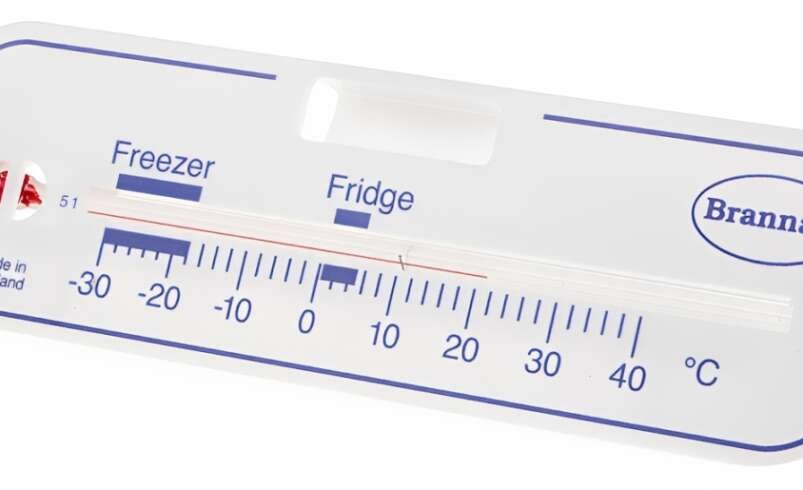

Temperature fluctuations can influence everything from food preservation and laboratory experiments to manufacturing quality and material stability. Even minor measurement inaccuracies may lead to inconsistent results, unnecessary waste or inefficient operational decisions. While sophisticated electronic instruments continue to transform temperature monitoring, traditional thermometers remain valuable for their independent operation, accessibility and straightforward measurement capabilities.
A liquid-in-glass thermometer lets users observe temperature changes through the expansion and contraction of an enclosed measuring fluid. Its simple construction makes it useful for routine inspections, independent temperature verification, and environments where battery-operated instruments may not always be necessary.
What Makes Liquid-in-Glass Thermometers Reliable Measuring Instruments?
A liquid-in-glass thermometer’s effectiveness depends on the predictable thermal expansion of its measuring fluid. As heat transfers into the thermometer bulb, the enclosed liquid changes volume, causing movement within a narrow capillary tube.
The position of the liquid column against a graduated scale indicates the measured temperature. However, reliable readings depend on several physical characteristics, including capillary uniformity, the properties of the filling liquid, and the stability of the glass structure.
Important characteristics that influence thermometer performance include:
- Consistent thermal expansion of the measuring fluid.
- Clearly defined scale graduations.
- Appropriate measurement range.
- Uniform capillary tube dimensions.
- Stable glass bulb construction.
- Suitable thermal response characteristics.
These factors determine how effectively the instrument converts temperature variations into meaningful measurements.
Why Do Temperature Measurement Errors Occur?
Temperature measurement errors can arise even when an instrument appears to be functioning normally. Understanding their causes helps professionals improve measurement procedures and avoid misleading results.
Thermal Response Delay
A glass thermometer requires sufficient time to reach thermal equilibrium with its surroundings. Recording a measurement too quickly may inaccurately represent the actual temperature.
Incorrect Immersion
Laboratory thermometers are designed for specific immersion conditions. Positioning an instrument at an incorrect depth can introduce measurement discrepancies.
Environmental Influences
Direct sunlight, nearby heating equipment, ventilation outlets and contact with surrounding surfaces may influence thermometer readings.
Liquid Column Separation
Mechanical impact, unsuitable storage or rapid temperature changes can cause the liquid column to separate in certain thermometers, affecting measurement reliability.
Long-Term Calibration Drift
Physical changes in the glass bulb over time can gradually alter the relationship between liquid expansion and indicated temperature.
Recognising these potential problems allows users to establish more dependable measurement practices.
How Does Thermometer Calibration Improve Measurement Confidence?
Calibration involves comparing an instrument’s readings against a suitable reference standard under controlled temperature conditions. This process helps identify measurement deviations and determine whether the instrument remains suitable for its intended application.
Professional measurement facilities may utilise compatible Temperature Calibrators alongside reference thermometers and temperature-controlled baths to establish dependable verification procedures.
An effective calibration programme can support:
- Identification of measurement deviations.
- Improved consistency between instruments.
- Traceability to recognised measurement standards.
- Reliable laboratory and manufacturing records.
- Compliance with applicable quality management procedures.
- Informed decisions regarding instrument replacement.
Calibration methods and intervals should reflect the thermometer’s construction, operating range, measurement uncertainty and application requirements.
How Can Traditional Thermometers Support Effective Cold Storage Management?
Maintaining appropriate storage temperatures is essential for preserving temperature-sensitive products. Refrigeration equipment may experience fluctuations caused by frequent door opening, overloading, inadequate airflow or mechanical faults.
Traditional glass thermometers offer a convenient way to check internal storage conditions independently of built-in electronic displays.
In the UK, food safety guidance recommends maintaining domestic refrigerators between 0°C and 5°C. Regular thermometer checks can help identify unsuitable conditions before they contribute to food deterioration or increased bacterial growth.
Effective cold storage monitoring involves positioning instruments appropriately, allowing readings to stabilise and maintaining consistent inspection procedures.
For commercial facilities, manual temperature checks can complement automated monitoring systems where continuous records and temperature alerts are required.
What Is the Difference Between Temperature Resolution and Accuracy?
Resolution and accuracy are important measurement characteristics that are sometimes mistakenly treated as interchangeable.
Resolution describes the smallest temperature increment that an instrument can display or distinguish. Accuracy describes how closely a measurement corresponds to the actual temperature.
For example, a thermometer with 0.5°C scale divisions does not necessarily guarantee measurement accuracy within 0.5°C. Instrument calibration, construction quality and operating conditions also influence measurement performance.
Understanding this distinction helps professionals select instruments based on real measurement needs rather than relying solely on the appearance of the graduated scale.
How Can Proper Handling Extend the Life of a Glass Thermometer?
Although traditional thermometers contain no complex electronic circuitry, their glass construction requires appropriate handling and protection. Accidental impacts, unsuitable storage and excessive thermal stress can compromise instrument integrity.
Using suitable Thermometer Accessories, including compatible protective cases, can help reduce accidental damage during storage, transportation and routine handling.
Recommended instrument care practices include:
- Avoiding sudden exposure to extreme temperatures.
- Storing thermometers according to manufacturer recommendations.
- Inspecting glass surfaces for cracks and physical damage.
- Checking the liquid column for visible separation.
- Avoiding measurements beyond the specified temperature range.
- Maintaining appropriate cleaning and inspection procedures.
- Removing damaged instruments from service.
Mercury-free thermometers are generally preferable where accidental breakage could create environmental contamination or occupational health concerns.
When Should Traditional Temperature Monitoring Be Combined with Digital Technology?
Conventional thermometers provide useful local temperature readings, but they cannot independently record historical fluctuations or generate automatic alerts.
Applications involving pharmaceutical storage, scientific research, commercial refrigeration and temperature-sensitive manufacturing may require continuous monitoring to identify unexpected environmental changes.
Combining traditional temperature checks with electronic recording systems allows organisations to establish more comprehensive monitoring procedures. Independent visual verification can complement automated measurements, while digital records provide valuable information about long-term temperature stability.
This combined approach can support equipment troubleshooting, quality assurance and more informed operational decisions.
Conclusion
The continuing relevance of liquid-in-glass thermometers demonstrates that effective measurement does not always require sophisticated electronics. Understanding calibration, measurement uncertainty, environmental influences and appropriate instrument care enables users to obtain more dependable temperature readings across diverse professional applications.
For environments that require both independent temperature verification and continuous historical monitoring, combining traditional thermometers with suitable Data Loggers can help establish a comprehensive temperature management strategy that supports product quality, operational consistency, and long-term measurement reliability.