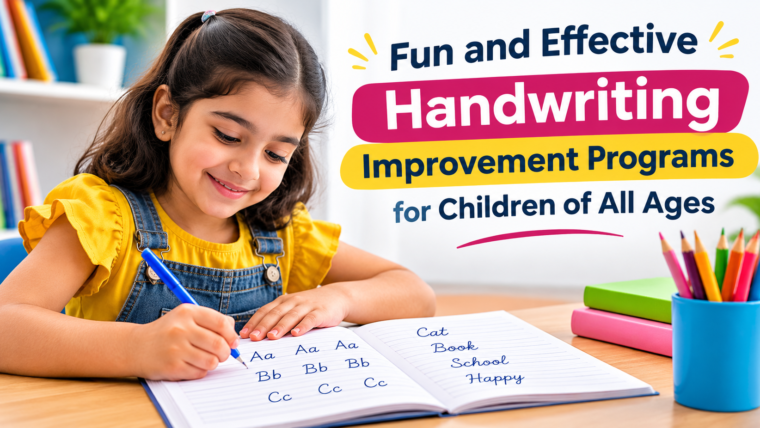

Good handwriting is an important skill that helps children in their daily learning. From writing their first letters to completing schoolwork and exams, children use handwriting every day. However, not every child finds writing easy. Some children struggle to form letters, maintain equal spacing, write neatly, or complete their work on time. These small problems can sometimes make writing difficult and less enjoyable.
The good news is that handwriting is a skill that children can improve with regular practice, the right guidance, and fun learning activities. Handwriting improvement Classes for Children programs help children develop better writing habits while making the learning process enjoyable. Instead of asking children to write the same letters again and again, these programs use creative exercises, games, drawing activities, and simple writing tasks.
Every child learns at a different speed. Some children need help with basic letter formation, while others need to improve their writing speed and neatness. A good handwriting program understands these needs and provides activities based on the child’s age and learning level.
In this article, we will explore how handwriting improvement programs work, their benefits, and some fun activities that can help children develop clear, neat, and confident handwriting.
Why Good Handwriting Is Important for Children
Handwriting is more than just putting letters on paper. It helps children express their thoughts, complete schoolwork, and share their ideas with teachers and classmates. When children develop good handwriting skills, they often feel more comfortable with written tasks.
Neat handwriting also makes schoolwork easier to read. Teachers can understand answers more clearly, and children can review their notes without difficulty.
Here are some important reasons why handwriting matters:
- Better learning: Writing helps children remember letters, words, and information.
- More confidence: Children feel happy when they can write neatly and complete their work.
- Improved focus: Writing activities help children pay attention to small details.
- Clear communication: Good handwriting makes written messages easier to understand.
- Better school performance: Neat and readable answers can make schoolwork easier to check.
Most importantly, children should understand that good handwriting takes time to develop. They do not need to write perfectly from the beginning.
What Are Handwriting Improvement Programs?
Handwriting improvement programs are learning activities or guided classes designed to help children write more clearly and comfortably. These programs focus on different parts of writing, such as letter shapes, spacing, line control, pencil grip, and writing speed.
A good program does not simply ask children to copy letters from a book. It uses different methods to make practice interesting and suitable for each child’s age.
Learning Basic Letter Formation
The first step is teaching children how to form letters correctly. They learn where to start a letter, which direction to move the pencil, and how to complete each shape.
For younger children, teachers may begin with simple lines, curves, circles, and basic shapes before moving to the alphabet.
Practising Capital and Small Letters
Children should practise both capital and small letters. They can begin with a few letters each day instead of learning the complete alphabet in one session.
For example, children can practise A, B, and C by tracing them, writing them independently, and finding words that begin with those letters.
Improving Letter Size and Spacing
One common handwriting problem is writing letters in different sizes. Some letters may be too large, while others may be too small. Children may also leave too much or too little space between words.
Handwriting programs teach children to maintain a similar letter size and leave enough space between words.
Using Four-Line and Ruled Notebooks
Four-line notebooks are useful for younger children because they show where letters should begin and end. Older children can use ruled notebooks to practise keeping their writing straight and organised.
Fun Handwriting Activities for Younger Children
Young children learn better when activities feel like games. They may lose interest if they are asked to write for long periods. Therefore, handwriting practice should include drawing, colouring, tracing, and simple games.
1. Tracing Letters and Shapes
Tracing is a simple way to introduce children to writing. Give them worksheets with dotted letters, numbers, and shapes.
Children can follow the dotted lines using a pencil or crayon. This helps them understand the movement needed to create different letters.
2. Drawing Lines and Patterns
Before learning the alphabet, children can practise drawing straight lines, curves, zigzags, waves, and circles.
These simple activities help improve hand control and prepare children for writing letters.
3. Colouring and Drawing Games
Colouring pictures, joining dots, and drawing simple objects can make handwriting practice more enjoyable.
These activities also help children become comfortable holding pencils and controlling their hand movements.
4. Alphabet Matching Games
Create small cards with letters and pictures. Ask children to match each letter with an object.
For example, A can match with an apple, B with a ball, and C with a cat.
This activity connects letter learning with pictures and makes practice more interesting.
Handwriting Improvement Programs for Primary School Children
Primary school children usually have some basic writing skills. At this stage, they need to focus on writing complete words, sentences, and short paragraphs.
A well-planned handwriting program helps them improve neatness, letter size, spacing, and writing flow.
Developing Neat and Clear Writing
Children should learn to write letters in a consistent style. They should also understand how to keep words on the correct line.
Teachers can provide short sentences for daily practice. Instead of writing long paragraphs, children can start with two or three sentences and slowly increase the amount.
Improving Pencil Grip and Sitting Position
The way children hold a pencil can affect their writing comfort. A relaxed grip helps them move their fingers more easily.
They should also sit comfortably, keep their feet supported, and place the notebook at a suitable angle.
Simple Exercises for Better Hand Control
Children can try activities such as:
- Playing with clay or soft dough.
- Using child-safe scissors for paper crafts.
- Building shapes with small blocks.
- Drawing pictures with crayons.
- Connecting dots to complete simple images.
These activities help children develop the hand movements needed for writing.
Practising Words and Short Sentences
Once children become comfortable with letters, they can begin practising common words and short sentences.
For example:
- I like to play.
- My school is nice.
- The sun is bright.
- I love my family.
These sentences are easy to understand and give children an opportunity to practise writing naturally.
Handwriting Activities for Older Children
Older children may already know how to write, but their handwriting may still need improvement. Some children write too quickly, while others struggle with spacing, letter shapes, or keeping their work neat.
For these children, handwriting programs should focus on improving writing quality without slowing down their schoolwork.
Improving Writing Speed and Neatness
Writing speed becomes important as children move into higher classes. They need to complete notes, homework, and exam answers within a limited time.
However, writing quickly should not mean writing carelessly.
Children can practise writing a short paragraph with a timer. The first goal should be neat writing, followed by a gradual improvement in speed.
Paragraph Copying Activities
Give children a short and interesting paragraph from a storybook or educational text. Ask them to copy it into their notebooks.
After completing the activity, encourage them to check:
- Are all letters clear?
- Is the spacing between words correct?
- Are the words written on the lines?
- Are the letters similar in size?
- Is the paragraph easy to read?
This simple method helps children notice their own writing mistakes.
Learning Cursive Writing
Cursive writing is another useful skill for children who are ready to learn connected letters. It teaches them how to join letters smoothly and write words with a natural flow.
Starting with Simple Letter Connections
Children can begin by practising small groups of connected letters. Once they become comfortable, they can move towards complete words and sentences.
Cursive writing should be introduced gradually. Children should not be forced to learn it before they are comfortable with basic handwriting.
Benefits of Joining a Handwriting Improvement Program
A structured handwriting program offers several benefits beyond neat writing. It gives children regular practice and helps them develop useful learning habits.
1. Builds Writing Confidence
Children sometimes avoid writing because they are unhappy with their handwriting. When they see improvement, they feel more confident and become willing to try new writing tasks.
Small achievements, such as writing a complete sentence neatly, can motivate them to continue practising.
2. Improves Hand and Finger Control
Writing requires children to control their fingers, hands, and pencil movements. Regular handwriting exercises help develop these movements.
Activities such as tracing, colouring, and drawing can support this learning process.
3. Encourages Better Concentration
Handwriting requires attention to letter shapes, word spacing, and line placement. Regular practice can encourage children to focus on one task at a time.
It also teaches them to complete activities carefully instead of rushing through them.
4. Makes Schoolwork Easier
When children write clearly, their homework, notes, and classroom assignments become easier to read.
They can also spend less time correcting unclear letters and more time focusing on what they want to write.
5. Develops Regular Learning Habits
A simple daily writing routine teaches children the value of practice. Even 10 to 15 minutes of focused handwriting practice can help them build consistency over time.
How Parents Can Support Better Handwriting at Home
Parents play an important role in helping children improve their handwriting. They do not always need special books or expensive learning materials. A quiet place, basic stationery, and a little daily practice can make a difference.
Create a Comfortable Writing Space
Choose a clean and quiet place where children can sit comfortably and write without distractions.
Make sure the table and chair are suitable for their height. Keep pencils, erasers, notebooks, and other learning materials within easy reach.
Set a Short Daily Practice Time
Children do not need to spend hours practising handwriting. A short and regular session is often more helpful than a long session once a week.
Parents can encourage children to write a few sentences, copy a short story, or practise difficult letters every day.
Appreciate Progress Instead of Expecting Perfection
Every child improves at a different speed. Parents should appreciate small changes rather than comparing their child’s handwriting with that of other children.
Positive words such as “Good work” or “Your letters look clearer today” can encourage children to continue.
Use Interesting Writing Topics
Give children topics they enjoy. They can write about their favourite cartoon, a family trip, a pet, a game, or their best friend.
When children enjoy the topic, they may feel more interested in practising their writing skills.
How to Choose the Right Handwriting Improvement Program
Not every handwriting program is suitable for every child. Parents should select a program based on the child’s age, current writing level, and learning needs.
Check the Teaching Method
Choose a program that includes practical activities, regular writing practice, and clear instructions. Children should get enough time to practise instead of only listening to explanations.
Look for Age-Based Learning
Younger children need basic activities such as tracing, drawing, and letter formation. Older children may need help with sentence writing, cursive writing, spacing, and writing speed.
A good program should offer activities that match the child’s learning level.
Choose Friendly and Supportive Teachers
Teachers should be patient and understand that every child learns differently. They should guide children without making them feel uncomfortable about their mistakes.
Check Progress Regularly
Parents should be able to see whether their child is improving. Regular writing samples, simple feedback, and practice reviews can help measure progress.
Common Handwriting Mistakes Children Should Avoid
Children often develop small writing habits that can affect the quality of their handwriting. Identifying these problems early can make improvement easier.
Some common mistakes include:
- Holding the pencil too tightly.
- Writing letters in different sizes.
- Leaving uneven spaces between words.
- Writing above or below the notebook lines.
- Rushing through writing activities.
- Sitting in an uncomfortable position.
- Using too much pressure while writing.
Parents and teachers should correct these habits gently. Children need enough time to understand and practise the right method.
A Simple Daily Handwriting Practice Routine
A daily routine can make handwriting improvement easier. Children can follow a short plan based on their age and writing ability.
| Time | Activity |
|---|---|
| 3 minutes | Drawing lines, curves, and shapes |
| 5 minutes | Practising letters or difficult words |
| 5 minutes | Writing short sentences |
| 2 minutes | Checking spacing and letter size |
This 15-minute routine is a simple starting point. The time can be adjusted depending on the child’s age, comfort, and attention level.
Parents should remember that regular practice is more important than completing a large amount of writing in one day.
Conclusion
Good handwriting is a valuable skill that supports children’s learning, communication, and confidence. However, developing neat handwriting takes time, patience, and regular practice. Every child has a different learning style, so the right teaching method should match their age and ability.
Fun activities such as tracing, drawing, colouring, letter games, and paragraph writing can make the learning process more enjoyable. With the help of parents and supportive teachers, children can gradually improve their letter formation, spacing, writing speed, and overall handwriting quality.
Choosing the right handwriting improvement program can give children the guidance and practice they need to become better writers. The main goal should not be perfect handwriting in a short time. It should be helping children enjoy writing, develop confidence, and build a skill that supports them throughout their education.
For More Insightful Articles Related To This Topic, Feel Free To Visit: https://blog.neardirectory.com/