

Industries worldwide continue to invest in pumping technologies that deliver precise fluid handling, consistent pressure, and dependable performance under demanding operating conditions. From oil and gas processing to food manufacturing, pharmaceuticals, chemicals, and water treatment, positive displacement pumps have become indispensable for handling viscous, abrasive, and high-pressure fluids. Continuous industrial modernization and process optimization are supporting the Positive Displacement Pump Market growth across diverse end-use sectors.
According to a study published by Vyansa Intelligence, the Positive Displacement Pump Market was valued at USD 11.41 Billion in 2025 and is projected to reach USD 13.84 Billion by 2032, registering a CAGR of 2.8% during 2026-2032.
Positive Displacement Pumps Deliver Consistent Performance Across Industries
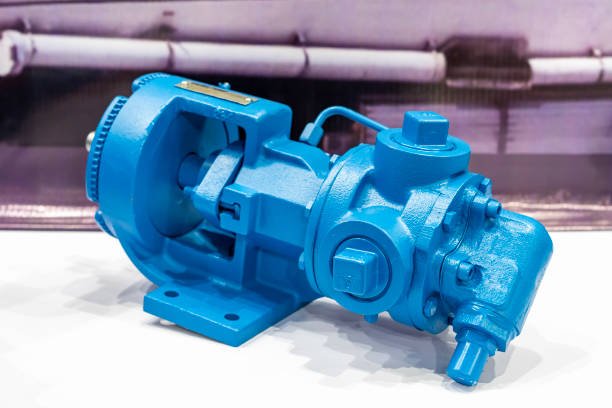
Positive displacement pumps operate by trapping a fixed volume of fluid and moving it through the system during each operating cycle, enabling precise flow rates regardless of pressure fluctuations. Technologies such as gear pumps, diaphragm pumps, piston pumps, peristaltic pumps, screw pumps, vane pumps, and rotary lobe pumps are widely used in applications requiring accurate dosing, high-pressure transfer, and reliable handling of viscous or sensitive fluids. Their operational flexibility continues to strengthen the Positive Displacement Pump Market size across industrial processing environments.
Industrial Automation Continues to Expand Equipment Demand
Manufacturers are increasingly automating production processes to improve efficiency, product consistency, and operational reliability. Positive displacement pumps are well suited for automated production lines because they provide controlled flow rates, repeatable dosing accuracy, and dependable operation across a broad range of industrial fluids.
According to the International Society of Automation (ISA), automation technologies continue to improve manufacturing productivity by enhancing process control, reducing operational variability, and supporting predictive maintenance strategies. As industrial automation expands globally, demand for precision pumping equipment continues to reinforce the Positive Displacement Pump Market.
Energy Efficiency and Process Reliability Influence Equipment Selection
Industrial operators are placing greater emphasis on reducing energy consumption while maintaining high process reliability. Modern positive displacement pumps incorporate advanced hydraulic designs, improved sealing technologies, and efficient drive systems that reduce energy losses while extending equipment service life.
The U.S. Department of Energy (DOE) highlights that pumping systems account for a substantial portion of industrial electricity consumption and identifies system optimization, efficient motor technologies, and variable speed controls as important opportunities for improving industrial energy performance. These initiatives continue to influence emerging Positive Displacement Pump Market trends by encouraging adoption of high-efficiency pumping solutions.
Digital Technologies Are Enhancing Pump Performance
The integration of digital technologies is transforming industrial pumping systems through intelligent sensors, Industrial Internet of Things (IIoT) connectivity, predictive maintenance, and real-time performance monitoring. Smart pumps provide continuous information on flow rate, pressure, vibration, temperature, and operating efficiency, allowing maintenance teams to detect potential issues before failures occur.
Variable frequency drives and automated control systems also enable pumps to adjust output according to changing process conditions, reducing energy consumption while improving operational flexibility. These technological developments are expected to strengthen the long-term Positive Displacement Pump Market forecast as digital transformation accelerates across manufacturing industries.
Expanding Industrial Applications Support Long-Term Demand
Positive displacement pumps remain essential across numerous industries because of their ability to handle challenging fluids that centrifugal pumps may not process efficiently. Chemical manufacturing depends on accurate chemical dosing, pharmaceutical facilities require sterile fluid transfer, food and beverage manufacturers use sanitary pump designs, while oil and gas operations rely on high-pressure pumping systems for production and processing.
The Hydraulic Institute, a leading authority on pump systems, continues to promote best practices for pump selection, efficiency optimization, and lifecycle performance, helping industrial operators improve system reliability and reduce operating costs. Growing adoption across these industries continues to reinforce the Positive Displacement Pump Market growth.
Competition Focuses on Efficiency, Durability, and Smart Engineering
Competition within the industry increasingly centers on pump efficiency, material durability, corrosion resistance, digital diagnostics, and total lifecycle performance. Manufacturers are investing in advanced sealing systems, wear-resistant materials, intelligent monitoring platforms, and modular pump designs that simplify maintenance while extending service life.
Research and development efforts are also improving sanitary designs, chemical compatibility, and energy-efficient operation to address evolving customer requirements across multiple industries. These innovations continue to enhance the competitiveness of the global positive displacement pump industry.
Future Outlook Remains Supported by Industrial Modernization
Industrial facilities are expected to continue investing in technologies that improve operational efficiency, reduce maintenance costs, and support increasingly automated production environments. As manufacturing expands and digital process control becomes more widespread, reliable fluid handling systems will remain essential across critical industrial applications.
Driven by automation, infrastructure investment, energy efficiency initiatives, and expanding industrial production, the Positive Displacement Pump Market forecast remains supported by steady long-term demand. Manufacturers that continue advancing intelligent pump technologies, sustainable engineering, and precision fluid handling solutions are expected to strengthen their position within the broader positive displacement pump industry.