

Introduction
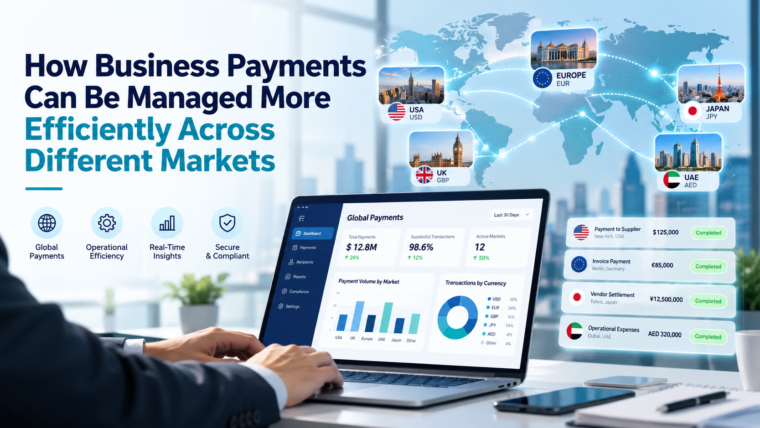
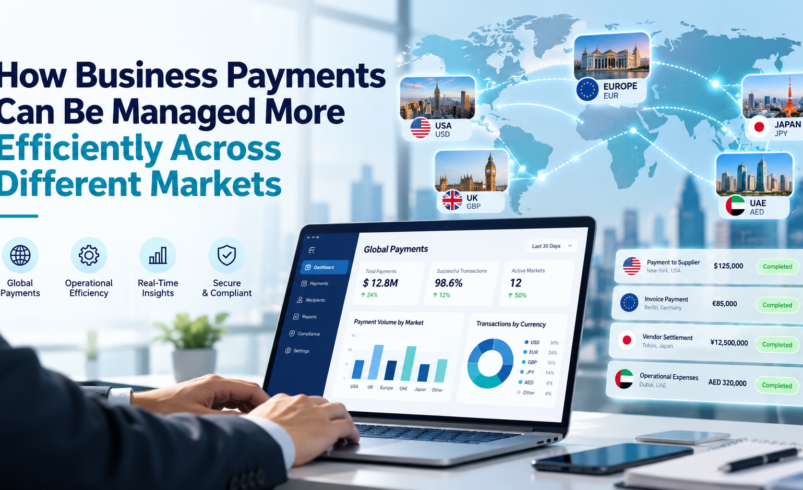
Business expansion creates new opportunities, but it also makes financial operations more complex.
A company operating in one market may use a relatively simple payment process. Once it expands into several countries or regions, the same approach may no longer work.
Different markets can involve:
- Different currencies
- Different payment methods
- Different customer expectations
- Different banking systems
- Different regulatory requirements
- Different settlement timelines
Businesses need payment infrastructure that can handle these variations without creating disconnected financial processes.
Modern payment solutions can help companies manage transactions across several markets while maintaining better control.
Centralize Payment Operations
One of the first steps toward efficient multi-market payment management is centralization.
When every region uses completely separate systems, finance teams may struggle to maintain a complete view of transaction activity.
A centralized business payment solution can help businesses organize transaction data.
This may allow finance teams to monitor:
- Incoming payments
- Outgoing transactions
- International settlements
- Transaction status
- Customer payments
- Supplier payments
Centralized information makes financial management easier.
Understand Local Payment Preferences
Payment preferences differ from one market to another.
Businesses should understand which methods customers and partners expect.
Flexible online payment solutions can make it easier to offer suitable digital payment methods in different regions.
Businesses should avoid assuming that one payment experience will work equally well everywhere.
Studying local customer behaviour can help companies create more effective payment experiences.
Organize Cross Border Payments
International expansion naturally increases the number of cross border payments a company manages.
These transactions may involve:
- Customer collections
- Supplier payments
- Distributor settlements
- Service provider payments
- Intercompany transactions
Businesses should have clear processes for monitoring these transactions.
Better tracking reduces uncertainty and helps finance teams manage cash flow more accurately.
Improve B2B Cross Border Payments
Companies operating in several markets often have international suppliers and corporate customers.
Efficient b2b cross border payments help businesses maintain stronger commercial relationships.
B2B payment systems should provide detailed transaction information.
Finance teams should be able to identify which invoice or business partner relates to each transaction.
This makes reconciliation easier and improves financial reporting.
Use Pay-in Services for Customer Collections
Businesses need efficient ways to collect money in every market.
Pay-in services can support incoming payment management.
They can help companies receive customer payments and organize transaction information.
Businesses may use Pay-in services to improve:
- Payment collection
- Transaction monitoring
- Settlement tracking
- Reconciliation
- Cash flow visibility
This becomes especially important when a business handles a large number of transactions.
Standardize Financial Processes
Global companies often benefit from standardizing payment processes.
For example, they can use consistent procedures for:
- Payment approval
- Reconciliation
- Reporting
- Transaction monitoring
- Financial record keeping
Standardization reduces operational confusion.
At the same time, businesses should maintain enough flexibility to adapt to specific market requirements.
The objective is to create one overall payment framework with local adjustments where necessary.
Automate Repetitive Tasks
Manual payment management becomes difficult when a business operates across several markets.
Automation can reduce the administrative burden.
Companies may automate:
- Transaction recording
- Invoice updates
- Reconciliation
- Payment notifications
- Settlement monitoring
- Reporting
Automation improves consistency and helps finance teams manage higher transaction volumes.
It can also reduce data-entry errors.
Improve Reporting Across Markets
Management teams need a clear view of payment performance.
Businesses should be able to compare transaction activity across different locations.
Useful payment data may include:
- Transaction volume
- Transaction value
- Payment method
- Currency
- Failed payment rate
- Settlement status
This information can help businesses identify operational issues and improve financial planning.
Manage Multiple Currencies Carefully
Operating in several markets often means working with multiple currencies.
Finance teams should monitor currency-related costs and settlement information carefully.
They need to understand:
- Transaction currency
- Settlement currency
- Conversion costs
- Fees
- Payment value
Better currency visibility can improve budgeting and profitability analysis.
Create Better Customer Payment Experiences
Payment efficiency affects customer satisfaction.
Businesses should provide payment experiences that are easy to understand and convenient to use.
Flexible online payment solutions can support different customer preferences across markets.
A strong payment experience should be:
- Simple
- Secure
- Clear
- Mobile-friendly
- Appropriate for the market
Making payments easier can improve transaction completion.
Improve Supplier Payment Management
Suppliers expect predictable payments.
Global companies should maintain clear processes for international supplier transactions.
Efficient business payments can improve supplier confidence and reduce payment-related communication.
Businesses should maintain accurate records and provide clear payment information when necessary.
Strong supplier relationships support long-term operational stability.
Strengthen Payment Security
Multi-market operations create additional security requirements.
Businesses should protect payment information and control access to financial systems.
Useful safeguards may include:
- Authentication
- User permissions
- Secure transaction processing
- Payment monitoring
- Approval controls
Businesses should also understand applicable legal and regulatory requirements in each market.
Integrate Payment Systems
Payment technology becomes more useful when it integrates with wider business infrastructure.
Companies may connect payment systems with:
- Accounting software
- ERP platforms
- CRM systems
- Billing platforms
- E-commerce systems
Integration helps ensure that transaction data flows efficiently between departments.
It also reduces duplicate work.
Choose Scalable Payment Infrastructure
Companies should consider future growth when selecting payment technology.
A payment system should support:
- Higher transaction volumes
- New markets
- Additional currencies
- More payment methods
- Increasing reporting needs
A scalable business payment solution allows businesses to expand without rebuilding their entire payment infrastructure.
How Uniteller Can Be Considered
Organizations assessing multi-market payment infrastructure may consider providers such as Uniteller as part of their evaluation.
Businesses should assess whether a provider supports their requirements for digital payments, international transactions, Pay-in services, B2B transactions, integration, and reporting.
The most suitable solution depends on the company’s markets, transaction volume, customer base, and business model.
Build a Multi-Market Payment Strategy
An effective payment strategy should address both global consistency and local requirements.
Businesses should define:
- Target markets
- Payment methods
- Currency requirements
- Customer payment preferences
- Supplier payment processes
- Cross-border transaction needs
- Reporting standards
- Security controls
A structured strategy makes it easier to manage payment operations as the company grows.
Conclusion
Managing payments across several markets requires more than simply processing transactions.
Businesses need organized processes for customer collections, supplier payments, international settlements, currency management, and financial reporting.
Modern payment solutions can bring these activities into a more structured environment.
Reliable cross border payments and b2b cross border payments help companies manage international transactions, while online payment solutions and Pay-in services support customer collections.
A scalable business payment solution can help companies centralize business payments, improve transaction visibility, and reduce administrative work.
Businesses evaluating providers such as Uniteller should focus on scalability, integration, security, reporting, and international payment requirements to build payment infrastructure that supports growth across multiple markets.