

The rapid expansion of digital technology has transformed the way individuals communicate, conduct financial transactions, store information, and manage professional activities. Alongside these advantages, however, the digital environment has generated a sophisticated spectrum of cyber-related offences. Online fraud, identity theft, phishing, hacking, unauthorized transactions, cyberstalking, impersonation, data theft, social-media offences, and digital payment fraud can cause substantial financial and reputational harm.
When such an incident occurs, legal assistance must extend beyond merely filing a complaint. Cybercrime matters frequently involve electronic evidence, banking records, transaction trails, device information, digital communications, platform records, and coordination with investigative authorities. The evidentiary architecture of such cases can therefore be considerably more intricate than that of conventional disputes.
For individuals seeking a Best Cyber Crime Advocate in Agra, the objective should be to obtain structured legal guidance suited to the circumstances of the particular matter. A well-informed legal approach can help a complainant understand available remedies, preserve relevant evidence, communicate appropriately with authorities, and assess the legal implications of financial or digital activity.
Advocate Ayush Garg is associated with legal assistance concerning cybercrime-related matters in Agra. The broader objective of professional cyber-law assistance is to provide an organized pathway through complicated legal and technological circumstances while ensuring that the rights and interests of the affected person remain central to the process.
Understanding Cyber Crime in the Modern Digital Environment
Cybercrime refers broadly to unlawful conduct involving computers, smartphones, networks, digital platforms, electronic communications, online accounts, or digital financial systems. Some offences are specifically directed at technological infrastructure, while others use technology as a vehicle for traditional forms of fraud, deception, harassment, or unauthorized access.
The distinction is important because every cyber incident has a different factual matrix.
A fraudulent investment scheme may involve digital advertisements, messaging applications, bank transfers, payment gateways, and multiple accounts. A hacking allegation may revolve around unauthorized access, login records, device information, and authentication credentials. An impersonation case may involve social-media profiles, manipulated images, email accounts, or fraudulent communications.
Consequently, cybercrime litigation often requires a hybrid understanding of law and technology.
Common forms of cybercrime include:
- Online financial fraud
- Phishing and deceptive links
- Unauthorized bank transactions
- UPI and digital-payment fraud
- Credit and debit card fraud
- Identity theft
- Account takeover
- Hacking and unauthorized access
- Social-media impersonation
- Cyberstalking
- Online harassment
- Data theft
- Extortion involving digital material
- Malware-related offences
- Fake websites and fraudulent online services
- E-commerce fraud
- Cryptocurrency-related disputes
- Business email compromise
- Digital document manipulation
The legal consequences can vary substantially depending on the facts, the nature of the alleged conduct, the financial impact, the evidence available, and the provisions of applicable law.
Why Cybercrime Matters Require a Structured Legal Strategy
A common misconception is that a cybercrime complaint is simply an online formality. In reality, the effectiveness of a complaint can depend upon the quality and preservation of information supplied to the investigating authorities.
Digital evidence is inherently vulnerable to alteration, deletion, loss of access, or technological obsolescence. A message may disappear. An account may be suspended. A fraudulent website may vanish. A transaction trail may become difficult to reconstruct without timely records.
This creates an evidentiary imperative.
A person affected by cybercrime should therefore consider preserving relevant material as soon as possible. Such material may include:
- Screenshots
- Emails
- Chat conversations
- Transaction statements
- UPI references
- Bank statements
- Phone numbers
- Email addresses
- Website addresses
- Social-media profile links
- Payment receipts
- Digital invoices
- Call records where lawfully available
- Relevant documents
- Device information
- Photographs or recordings
- Correspondence with banks or platforms
The original electronic material should be retained wherever possible. Screenshots can be useful, but they may not always tell the complete story. Context, metadata, timestamps, URLs, transaction identifiers, and original communications can become consequential when the matter proceeds further.
The Role of a Cyber Crime Advocate
A cybercrime advocate can assist in understanding the legal dimensions of an incident and in organizing the available factual and documentary material.
The role may include legal consultation, assessment of the incident, assistance in preparing representations, guidance concerning complaints, communication regarding financial restrictions, and representation in appropriate legal proceedings.
The precise scope of legal assistance depends on the circumstances of the case.
For a victim, legal guidance may help answer questions such as:
- What legal remedy may be available?
- Where should the complaint be submitted?
- What documents should accompany the complaint?
- How should electronic evidence be preserved?
- What should be communicated to the bank?
- What happens after a cybercrime complaint is registered?
- How can a person respond to a disputed transaction?
- What options may exist when an account has been frozen?
- How should a person respond if their identity or account has allegedly been misused?
- What legal steps may be appropriate if the matter escalates?
These questions are rarely answered effectively through generic assumptions. Every matter must be evaluated according to its factual circumstances.
Cyber Financial Fraud and Unauthorized Transactions
Financial cybercrime has become particularly consequential because digital payment systems allow money to move rapidly across accounts and institutions.
A victim may discover an unauthorized transaction only after receiving a bank alert. In other cases, the fraud begins with a deceptive call, message, website, application, or social-media interaction.
Fraudsters may employ persuasive pretexts. They can impersonate bank representatives, customer-service executives, law-enforcement personnel, delivery companies, investment advisers, employers, or acquaintances.
The psychological dimension of such fraud is often underestimated.
A person may be pressured to disclose information, click a malicious link, install an application, approve a transaction, or transfer money to another account. Once the transaction occurs, the victim may have to act quickly to reduce further loss.
Legal assistance can become relevant when the matter involves substantial financial damage, complicated transaction trails, disputed liability, banking restrictions, or difficulties in communicating with investigating authorities.
A coherent chronology is particularly valuable. The timeline should ideally establish:
- When the suspicious communication occurred.
- How the victim was contacted.
- What representations were made.
- What information was exchanged.
- When the transaction occurred.
- Which account or payment instrument was used.
- What amount was transferred.
- When the fraud was discovered.
- What immediate action was taken.
- What communication followed with the bank or authorities.
Such chronology transforms a fragmented collection of messages and receipts into a comprehensible factual narrative.
Bank Account Freezes and Cybercrime Investigations
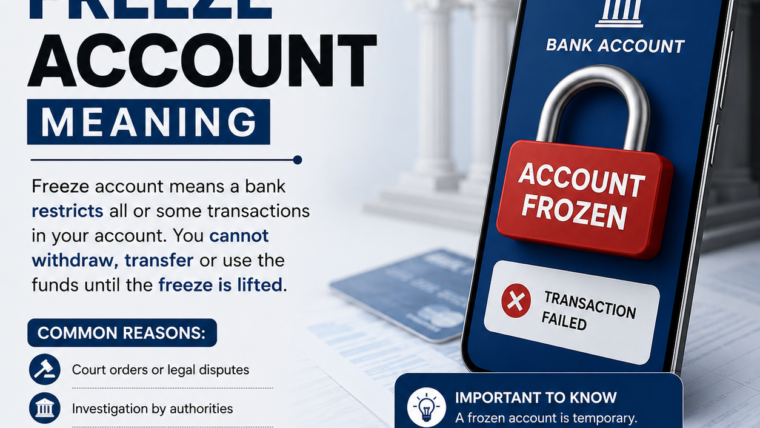
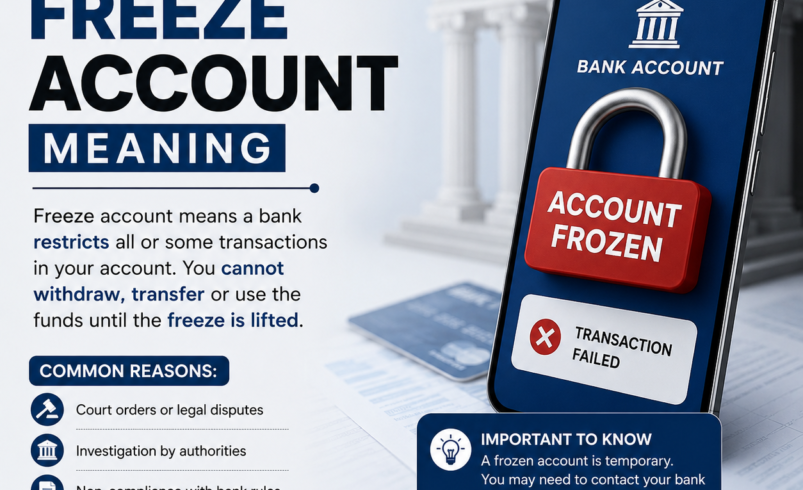
One of the most difficult consequences of cybercrime investigations can arise when a bank account becomes subject to a debit restriction, lien, hold, or freeze.
An account holder may discover that funds cannot be withdrawn or transferred. The person may then face difficulty paying employees, meeting business expenses, handling household obligations, or completing legitimate financial transactions.
Importantly, an account restriction can arise in different circumstances. An account may be connected to a disputed transaction, identified in an investigative trail, or subjected to restrictions during an inquiry.
The legal response depends on the reason for the restriction.
This is where specialized legal assistance can become particularly significant. Someone searching for a Bank Account Unfreeze Lawyer in Agra may require assistance in understanding the nature of the restriction, identifying the relevant authority, preparing appropriate representations, and considering available legal remedies.
The phrase Bank Account Unfreeze Lawyer in Agra reflects a practical legal need, but account-unfreezing matters should never be approached through a one-size-fits-all formula. The appropriate procedure can depend upon the investigating agency, the underlying complaint, the nature of the alleged transaction, the amount involved, and the legal basis for the restriction.
Understanding the Difference Between a Lien and a Freeze
The terminology used in banking disputes can sometimes be confusing.
A lien may involve a restriction over a specified amount, whereas a broader debit freeze may prevent transactions from an account. However, the exact implications depend upon the circumstances and the instructions issued to the financial institution.
An account holder should therefore obtain clarity concerning:
- The nature of the restriction
- The amount affected
- The authority requesting the restriction
- The complaint or investigation associated with it
- Whether the entire account or a particular amount is restricted
- Whether withdrawals or credits are permitted
- What documentation the bank requires
- Whether any formal communication has been received
Assuming that every restricted account has the same legal status can lead to ineffective action.
A careful legal assessment should begin with facts rather than assumptions.
Legal Assistance for Frozen Bank Accounts
When an account has been frozen or restricted in connection with a cybercrime inquiry, an advocate may assist in evaluating the available documents and determining an appropriate course of action.
The process may involve examining bank communications, transaction statements, complaint references, notices, correspondence with authorities, and other relevant material.
Depending upon the circumstances, legal steps may include:
- Preparing a representation
- Communicating with the concerned authority
- Clarifying the source and nature of disputed funds
- Producing supporting documents
- Establishing the legitimacy of transactions
- Seeking appropriate clarification from the bank
- Assessing whether judicial intervention may be appropriate
- Preparing documents for proceedings where necessary
The central objective is not simply to demand that a restriction disappear. It is to demonstrate, through legally relevant information, why the account holder’s position requires consideration.
This distinction is crucial.
The Importance of Transaction Documentation
Financial records often constitute the backbone of a cyber-financial dispute.
A bank statement can establish dates, amounts, transaction references, and counterparties. Payment confirmations can provide additional corroboration. In business matters, invoices, contracts, purchase orders, delivery records, and tax documentation may further explain the commercial rationale behind a payment.
For this reason, individuals should avoid deleting financial records merely because they appear unrelated to the immediate dispute.
A seemingly innocuous transaction can acquire significance when viewed alongside another event.
The evidentiary mosaic may consist of numerous small pieces.
Cybercrime Complaints and Digital Evidence
Electronic evidence occupies a distinctive position in cybercrime matters because digital information can be replicated, transmitted, manipulated, or deleted with relative ease.
Relevant evidence may include:
- Emails
- Digital photographs
- Audio files
- Video recordings
- Chat histories
- Browser records
- Login notifications
- Device information
- Transaction logs
- Digital documents
- Social-media communications
- Website information
- Cloud records
The preservation of evidence should be undertaken carefully. Original devices should not be unnecessarily altered, and important material should be retained in its original form whenever feasible.
Where technical examination is required, appropriate forensic procedures may become relevant.
Social-Media Crime and Online Impersonation
Social-media platforms have created new opportunities for both legitimate communication and malicious conduct.
Fake profiles can be created using another person’s name or photograph. Fraudulent accounts may then contact friends, colleagues, customers, or family members. In other situations, defamatory or threatening material may be published publicly.
Such matters can have consequences beyond immediate embarrassment.
A fraudulent profile may be used to solicit money. A stolen photograph may be combined with misleading information. Private messages may be used to intimidate or extort an individual.
A cybercrime lawyer can help assess the legal dimensions of such conduct and advise on appropriate documentation and complaint mechanisms.
Preserving the profile URL, username, screenshots, timestamps, messages, and relevant communications can be particularly useful.
Cyberstalking and Online Harassment
Persistent unwanted digital communication can become distressing and disruptive.
Cyberstalking may involve repeated messages, monitoring, threats, impersonation, publication of private material, or attempts to intrude into an individual’s online life.
The legal response should be proportionate to the circumstances and supported by evidence.
Victims should consider maintaining a chronological record of incidents rather than relying solely on memory. Each occurrence can be documented with the date, platform, account identifier, communication, and any resulting impact.
A pattern can sometimes be more informative than a single isolated incident.
Hacking and Unauthorized Access
Unauthorized access to an email account, social-media profile, cloud account, business system, or other digital resource can create serious consequences.
The affected individual may lose access to essential information while the unauthorized person gains control over communications, files, or financial accounts.
Immediate steps may include:
- Securing remaining accounts
- Changing passwords through trusted channels
- Enabling multi-factor authentication
- Preserving security notifications
- Recording suspicious login information
- Contacting relevant service providers
- Preserving evidence before deleting suspicious material
- Considering appropriate legal remedies
Where a business account is compromised, the consequences can be especially extensive because attackers may manipulate invoices, redirect payments, obtain confidential data, or impersonate company representatives.
Data Theft and Confidential Information
Information has become a valuable digital commodity.
Customer databases, business records, identification documents, photographs, credentials, financial records, intellectual property, and confidential communications can all be targeted.
A data-theft matter may therefore involve several dimensions simultaneously: technological security, contractual obligations, privacy considerations, evidence preservation, and legal remedies.
Businesses should consider maintaining appropriate records concerning access privileges, employee permissions, security incidents, system logs, and communications following a suspected breach.
Online Investment and Cryptocurrency Fraud
Digital investment fraud can be particularly difficult to investigate because perpetrators may use fabricated platforms, anonymous accounts, misleading dashboards, or rapidly changing digital identities.
Victims may initially see apparently profitable returns. The platform may then demand additional deposits under the guise of taxes, withdrawal charges, verification fees, or account upgrades.
Once additional money is transferred, withdrawal may become impossible.
The documentation generated during the interaction can become important. Victims should retain promotional material, platform URLs, chat messages, payment details, transaction records, and communications with alleged advisers.
The sophistication of the deception does not necessarily determine the legal validity of the victim’s complaint. Facts and evidence remain paramount.
The Importance of Early Legal Consultation
Time can be consequential in cybercrime matters.
Digital accounts can disappear. Money can move through multiple accounts. Fraudulent websites can be modified. Communications can be deleted. Evidence can become harder to obtain.
Early consultation can therefore help establish priorities.
A preliminary legal assessment may focus on:
- Identifying the incident
The first task is to determine precisely what happened.
- Preserving evidence
Relevant digital and financial records should be retained.
- Establishing the chronology
A clear timeline can reduce ambiguity.
- Identifying financial exposure
The amount, transaction routes, and affected accounts should be documented.
- Determining the appropriate legal forum
Different matters may require different complaint or legal mechanisms.
- Assessing immediate protective measures
Account security, password changes, device protection, and communication with relevant institutions may be necessary.
- Considering further legal proceedings
Where appropriate, an advocate can explain potential procedural options.
Advocate Ayush Garg and Cybercrime Legal Assistance in Agra
For individuals searching for Advocate ayush garg in connection with cybercrime-related legal assistance in Agra, the underlying requirement is generally a clear understanding of the legal and procedural dimensions of the matter.
Cybercrime cases can involve more than a single event. A financial fraud may also result in a bank restriction. A hacked account may subsequently be used for impersonation. A fraudulent transaction may lead to an investigative inquiry involving another account holder.
Each situation requires contextual evaluation.
Legal assistance can be particularly valuable where an individual is uncertain about how to communicate with a bank, cybercrime authority, investigating officer, or court. The objective is to replace confusion with a structured legal response.
Professional legal representation may also help prevent inadvertent statements or incomplete documentation from creating avoidable complications.
Choosing a Cyber Crime Advocate in Agra
Selecting legal counsel for a cybercrime matter should involve more than searching for a prominent title.
Several considerations can be useful.
Understanding of Cyber-Related Disputes
Cybercrime requires familiarity with both legal principles and digital evidence. An advocate should be able to understand the technological context sufficiently to identify legally relevant facts.
Ability to Examine Documentation
The lawyer should be willing to examine transaction records, messages, screenshots, notices, and other relevant material.
Clear Communication
Legal terminology can be dense. Clients should receive explanations that are comprehensible and appropriately grounded in the facts.
Procedural Awareness
Cybercrime matters can involve banks, platforms, police authorities, cybercrime units, and courts. Understanding procedural pathways is important.
Evidence-Centred Approach
A strong case generally depends upon evidence rather than rhetoric.
Case-Specific Strategy
No two cybercrime matters are identical. The strategy should reflect the actual facts rather than rely upon generic templates.
How Clients Can Prepare Before Consulting a Lawyer
A consultation becomes more productive when the relevant information has already been organized.
A useful preparation file may contain:
- A written summary of the incident
- Chronological dates
- Names and contact details of relevant parties
- Bank statements
- Transaction IDs
- Screenshots
- Emails
- Chat records
- Complaint numbers
- Bank correspondence
- Notices received
- Social-media URLs
- Relevant contracts or invoices
- Identification documents where necessary
It is also helpful to write down questions before the consultation.
For example:
- What legal remedies may be available?
- Is the bank restriction connected to a particular transaction?
- What evidence should be preserved?
- Should communication with the bank be made immediately?
- What authority is handling the matter?
- Is further legal representation required?
A well-organized factual record can save considerable time.
Common Mistakes in Cybercrime Matters
Victims sometimes make avoidable mistakes immediately after an incident.
Deleting Messages
Deleting suspicious messages may destroy potentially valuable evidence.
Communicating Aggressively With the Suspected Fraudster
Confrontational communication can sometimes complicate the situation and may provide little practical benefit.
Sharing One-Time Passwords or Credentials Again
Victims should be cautious about further disclosure of sensitive information.
Ignoring Bank Communications
If a financial restriction or transaction dispute exists, ignoring formal communication can make the matter more complicated.
Relying Only on Screenshots
Screenshots can help, but original electronic records and supporting documents may provide greater evidentiary value.
Waiting Too Long
Delays can make digital investigation more difficult.
Assuming Every Freeze Is Permanent
A bank restriction should be understood through its actual legal and factual basis rather than assumed to be irreversible.
Cybercrime and Business Organizations
Cybercrime is not limited to individuals.
Businesses can face:
- Payment diversion
- Employee-account compromise
- Email spoofing
- Customer-data theft
- Website attacks
- Ransomware
- Unauthorized access
- Invoice manipulation
- Vendor impersonation
- Intellectual-property theft
A business should maintain an internal incident-response protocol. Employees should know whom to notify when suspicious activity occurs.
Financial fraud can sometimes move quickly through multiple transactions, making immediate documentation and communication essential.
Legal assistance may also become necessary where a business must communicate with financial institutions, authorities, employees, customers, or counterparties.
The Intersection of Technology and Law
Cyber law sits at an unusual intersection.
It requires an appreciation of conventional legal principles while also confronting technological systems that can be opaque to non-specialists.
An IP address, transaction ID, authentication log, device identifier, email header, blockchain transaction, or metadata field may appear technical, yet each can potentially contribute to understanding an incident.
The lawyer’s role is not necessarily to become a software engineer. Rather, effective legal analysis requires the ability to distinguish technically relevant information from incidental digital noise.
This is where disciplined case preparation becomes valuable.
Legal Representation and Investigative Cooperation
A cybercrime advocate does not replace investigating authorities or forensic professionals.
Instead, legal representation can help an affected person navigate the procedural environment surrounding an investigation.
Depending on the matter, an advocate may assist in preparing communications, organizing documentary material, explaining procedural developments, and protecting the client’s legal interests.
Cooperation with legitimate investigative processes is generally important. At the same time, individuals should understand their legal rights and responsibilities throughout the process.
The objective is balanced representation: cooperation where required, caution where necessary, and evidence-based legal action throughout.
When a Bank Account Is Connected to a Cybercrime Complaint
An innocent account holder may sometimes become involved in an investigation because funds associated with a disputed transaction passed through the account.
This situation can be unsettling.
The account holder may have no knowledge of the alleged fraud. Nevertheless, the financial institution may receive instructions restricting transactions while the matter is examined.
In such circumstances, documentation concerning the source of funds can become important.
Depending on the facts, useful records may include:
- Sale invoices
- Purchase records
- Contracts
- Salary records
- Loan documents
- Payment receipts
- Tax records
- Communication with the counterparty
- Proof of delivery
- Bank statements
A legal professional can assess which documents are relevant and how they should be presented.
For someone searching for a Bank Account Unfreeze Lawyer in Agra, this evidentiary aspect is often central. The goal is to establish the factual legitimacy of the account holder’s position and pursue an appropriate remedy based on the circumstances.
Maintaining Digital Security After a Cyber Incident
Legal action addresses the incident, but preventive security remains important.
Individuals should consider:
- Using strong, unique passwords
- Enabling multi-factor authentication
- Updating devices regularly
- Avoiding suspicious links
- Checking website addresses carefully
- Limiting unnecessary app permissions
- Reviewing banking alerts
- Monitoring account activity
- Keeping secure backups
- Avoiding disclosure of authentication credentials
Businesses should adopt more structured controls, including access management, employee training, backup procedures, incident reporting, and security monitoring.
Cybersecurity and legal preparedness are complementary disciplines.
Why Documentation Creates Legal Clarity
A cybercrime incident can initially feel chaotic.
There may be dozens of messages, numerous transactions, different phone numbers, several accounts, and multiple digital platforms.
Documentation creates order.
A chronological dossier can reveal:
Event → Communication → Transaction → Discovery → Complaint → Bank action → Investigation → Legal response
This sequence can help an advocate identify inconsistencies, missing information, evidentiary gaps, and potential remedies.
The process is almost cartographic: a complicated digital landscape is reduced into a navigable factual map.
The Broader Importance of Cyber-Law Awareness
Digital literacy should increasingly include legal literacy.
Individuals should understand that:
- Digital transactions leave records.
- Electronic communications can have evidentiary significance.
- Online identities can be manipulated.
- Financial fraud can cross institutional boundaries.
- A compromised account can affect other people.
- Prompt reporting can matter.
- Evidence should be preserved carefully.
- Legal remedies depend upon the facts.
Cybercrime prevention therefore begins before an incident occurs.
Nevertheless, when an incident does happen, informed legal action can help transform an uncertain situation into a structured process.
A Practical Checklist for Cybercrime Victims
The following checklist can serve as a preliminary guide:
Immediately After the Incident
- Secure affected accounts.
- Change compromised credentials through legitimate channels.
- Contact the relevant financial institution where appropriate.
- Preserve communications and transaction records.
- Record important dates and times.
- Avoid deleting relevant evidence.
- Maintain copies of complaint acknowledgements.
- Document communications with banks and platforms.
- Consider professional legal advice.
- Avoid making unsupported allegations publicly.
For Financial Fraud
Record:
- Transaction amount
- Transaction date
- Transaction ID
- Bank account information
- UPI reference
- Recipient details
- Relevant messages
- Telephone numbers
- Website addresses
- Payment receipts
For Social-Media Offences
Record:
- Profile URL
- Username
- Screenshots
- Messages
- Publication date
- Comments
- Relevant communications
- Any financial solicitation
For Frozen Accounts
Collect:
- Bank communication
- Account statements
- Restriction details
- Relevant transaction records
- Source-of-funds documents
- Identity documents
- Complaint references
- Notices from authorities
A Balanced Approach to Cybercrime Litigation
Cybercrime litigation should not be driven solely by urgency or emotion.
Victims may understandably experience anger, fear, or financial distress. Yet legal strategy benefits from composure.
The strongest approach is generally methodical:
Identify the facts. Preserve the evidence. Understand the legal issue. Determine the appropriate forum. Prepare the documentation. Pursue the available remedy.
This methodology can be particularly important where several institutions are involved.
Conclusion
Cybercrime has become an increasingly complex legal phenomenon, combining technology, finance, communication, evidence, and procedural law. From online financial fraud and unauthorized transactions to identity theft, hacking, social-media impersonation, and frozen bank accounts, each matter requires careful factual examination.
Individuals searching for the Best Cyber Crime Advocate in Agra – Comprehensive Assistance for Cyber Crime Matters should consider the importance of evidence-focused legal analysis, procedural awareness, clear communication, and case-specific strategy.
For matters involving restricted or frozen bank accounts, the role of a Bank Account Unfreeze Lawyer in Agra may become particularly relevant where the account holder needs to understand the basis of the restriction and evaluate appropriate legal remedies.
Similarly, individuals seeking legal assistance associated with Advocate ayush garg may benefit from organizing all available documents, transaction records, communications, and notices before pursuing a legal course of action.
Cybercrime disputes can be intricate, but complexity does not make them impossible to address. A disciplined legal approach can provide structure, preserve important evidence, clarify procedural options, and help affected individuals pursue appropriate remedies.
In an era where a single digital interaction can trigger substantial financial or legal consequences, informed legal assistance is no longer merely advantageous. It can be an essential component of responsible cyber-risk management.