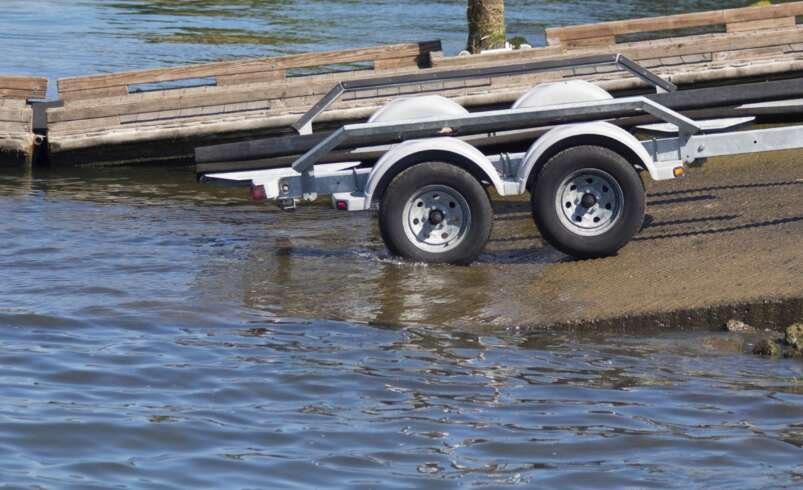

For Australian boat owners, saltwater is part of the experience, but it is also one of the biggest maintenance challenges for a boat trailer. Every time a trailer is backed into a coastal ramp, seawater can reach the frame, wheels, suspension, hubs, brakes, rollers, winch components, lights and fasteners. Although aluminium has strong natural corrosion resistance, it is not completely immune to the effects of salt, trapped moisture and contact between different metals. Regular care is therefore essential if you want your trailer to remain safe, reliable and good-looking for years.
The good news is that maintaining an aluminium trailer after saltwater use does not need to be complicated. A thorough freshwater rinse, followed by inspection, cleaning and appropriate protection, can significantly reduce the amount of salt and grime left behind. The most important factor is consistency: cleaning the trailer soon after each saltwater trip is far better than allowing salt deposits to dry and remain on the trailer for days or weeks.
Why Saltwater Requires Extra Trailer Care
Saltwater creates a particularly demanding environment for boat trailers because salt deposits can remain behind after the water evaporates. These deposits can collect around joints, fittings, fasteners, suspension components and other areas where water and debris are easily trapped. Aluminium naturally develops a thin oxide layer that helps protect its surface, but saltwater and electrochemical activity can contribute to localised corrosion, particularly where dissimilar metals and moisture are present.
It is also important to remember that an aluminium trailer is not necessarily made entirely from aluminium. Depending on its construction, components such as bearings, brakes, springs, axles, fasteners, wiring connections and other hardware may use different materials. These components can be affected by saltwater even when the main trailer frame remains in excellent condition.
For this reason, cleaning should never focus only on the visible aluminium surfaces. A proper post-trip routine should include the complete trailer, with particular attention given to areas where saltwater can remain hidden.
How to Clean an Aluminium Boat Trailer After Saltwater Use
The best time to clean your trailer is as soon as practical after returning from the water. Allowing saltwater to dry completely means the water evaporates while salt and other contaminants remain behind. A prompt freshwater wash helps remove these deposits before they have an extended opportunity to affect the trailer and its components.
Begin by parking the trailer somewhere that gives you access to the frame, wheels and underside. Use clean freshwater to rinse the entire trailer. Work around the frame, suspension, wheels, rollers, winch area, coupling, safety chains, lights and other exposed components. Do not concentrate only on the top surfaces because salt can remain underneath and around components that are not immediately visible.
A gentle rinse is often enough to remove loose salt and dirt, while stubborn grime may require a suitable mild cleaner and soft brush. If you use a cleaning product, make sure it is suitable for aluminium and marine applications. Avoid assuming that a strong household or acidic cleaner is automatically better. Some aggressive chemicals can damage finishes or affect aluminium surfaces.
After washing, rinse the trailer again with plenty of clean freshwater. The objective is to remove both the original saltwater contamination and any cleaning residue.
Finally, allow the trailer to drain and dry properly. If the frame has drainage openings, check that they are clear. Trapped water can create an environment where corrosion and component deterioration become more likely.
How Important Is a Freshwater Rinse?
A freshwater rinse is one of the most important parts of aluminium boat trailer maintenance after saltwater use. It is also one of the easiest steps to overlook because a trailer can appear clean while still carrying salt residue in less visible areas.
Freshwater helps wash away salt deposits before they dry and accumulate. It should be considered a standard part of the post-trip routine rather than an occasional deep-cleaning task. Australian marine maintenance guidance consistently recommends rinsing the trailer, as well as the boat and other salt-exposed equipment, as soon as possible after saltwater use.
Pay particular attention to the underside of the trailer and areas where the trailer enters the water. Rinse around the wheels, suspension components, hubs, brakes and frame sections. Salt and sand can collect in these locations and may not be removed by a quick rinse of the trailer’s upper surfaces.
The same principle applies to electrical components. Trailer lights, plugs and wiring connections can be exposed to saltwater and moisture, so they should be checked and rinsed appropriately. Keeping these areas clean can help reduce the risk of corrosion-related electrical problems.
Which Areas Should You Inspect First?
After rinsing your trailer, inspection should begin with components that are exposed to the greatest combination of water, salt, movement and mechanical stress.
Start with the wheel and hub areas. Check for signs of damage, unusual movement, leaks or contamination. Bearings and hubs deserve particular attention because they operate under mechanical load and can be affected by water intrusion.
Next, inspect the brakes, suspension and axle components. Look at springs, shackles, mounting points, bolts and other hardware for corrosion, damage or unusual wear. Saltwater can remain around these areas, especially when sand and road grime are also present.
The winch, coupling and safety chains should also be checked. These components play an important role in securing and towing the boat, so they should not be overlooked simply because they are not part of the main aluminium frame.
Then inspect the rollers, skids and boat contact points. Salt, sand and debris can become trapped where the boat sits on the trailer. These areas should remain clean and correctly positioned so that the boat is properly supported.
Finally, check the lights, wiring and electrical connections. Look for damaged insulation, loose connections, corrosion or signs of water intrusion.
Early Signs of Aluminium Corrosion
Aluminium does not develop the same red rust associated with untreated steel, so recognising corrosion can sometimes be confusing. A dull or slightly oxidised appearance does not automatically mean the trailer has suffered serious structural damage. Aluminium naturally forms an oxide layer when exposed to oxygen.
However, certain changes deserve closer attention. White or powdery deposits, persistent staining, localised pitting, surface deterioration around fasteners and corrosion concentrated around joints can indicate that an area needs further inspection. Deep pitting is particularly important because it represents material loss rather than simply a change in surface appearance.
Pay special attention to areas where aluminium is in contact with other metals. Galvanic corrosion can occur when dissimilar metals are electrically connected while exposed to an electrolyte such as seawater. This is one reason corrosion may appear around particular fasteners, brackets or fittings rather than evenly across the entire trailer.
If you notice deep pits, cracking, significant material loss, damaged structural joints or corrosion that appears to be progressing, do not simply cover the affected area with a cosmetic treatment. Have the trailer properly assessed before continuing to use it.
Long-Term Protection for Aluminium Boat Trailers
Long-term protection begins with a simple principle: do not allow salt and moisture to remain on the trailer unnecessarily.
After every saltwater trip, establish a consistent cleaning routine. Rinse the trailer thoroughly, remove accumulated dirt and sand, inspect important components and allow everything to drain and dry. This routine is particularly important for boat owners who regularly launch in coastal or offshore environments.
Keep drainage points clear so that water does not remain trapped inside sections of the trailer. Check the condition of fasteners, brackets and fittings periodically, especially around areas where different metals meet.
Moving components should also be maintained according to the trailer manufacturer’s recommendations. Rollers, hinges, winch components, couplings and other moving parts can benefit from appropriate lubrication and regular inspection. Maintenance helps reduce friction, wear and the risk of components becoming stiff or seized.
Storage conditions also matter. Whenever possible, store the trailer in a clean, dry location where it can drain and dry properly. Avoid covering a wet trailer in a way that traps moisture against the frame or components.
Cleaning Mistakes to Avoid
One common mistake is assuming that aluminium requires no maintenance because it is naturally corrosion resistant. Aluminium is highly suitable for marine environments, but corrosion resistance does not mean corrosion immunity.
Another mistake is cleaning only the parts that can be seen easily. The underside, suspension, hubs, brakes, wiring, winch and fittings may require just as much attention as the visible frame.
Using excessively aggressive cleaning chemicals is another potential problem. Always select products appropriate for aluminium and follow their instructions. A stronger chemical is not necessarily a better maintenance solution.
Pressure washing should also be used sensibly. High-pressure water can force moisture into seals, electrical connections and sensitive components if it is directed too closely. Cleaning should remove salt without creating a new maintenance problem.
Finally, do not wait until the trailer looks dirty before washing it. Salt residue may be present even when the trailer appears reasonably clean.
A Practical Post-Saltwater Maintenance Routine
For Australian boat owners, a simple routine can make trailer care much easier. After retrieving the boat, rinse the trailer with clean freshwater as soon as practical. Concentrate on the frame, underside, wheels, hubs, suspension, brakes, rollers, winch area, coupling, chains and electrical components.
Once the loose salt has been removed, inspect the trailer while it is still accessible. Look for corrosion, damaged components, loose hardware, unusual wear and areas where sand or salt has accumulated.
Clean stubborn dirt with a suitable mild cleaning solution and a soft brush where necessary. Rinse thoroughly afterwards and allow the trailer to drain and dry.
Before the next trip, carry out a quick safety inspection. Check the tyres, lights, coupling, safety chains, winch, rollers and other important components. Regular inspections can identify relatively small problems before they become expensive repairs or towing hazards.
This routine is particularly worthwhile for owners who regularly compare or purchase aluminium boat trailer prices, because the initial investment in a quality trailer is only part of its overall value. Proper maintenance helps protect the trailer you already own and can support better resale value over time.
Maintenance Frequency for Australian Conditions
How frequently you should perform deeper maintenance depends on how often the trailer is used and how frequently it enters saltwater.
For regular saltwater users, freshwater rinsing should be performed after every trip. A more detailed inspection can then be carried out periodically, with particular attention to bearings, brakes, suspension, electrical connections and fasteners.
Owners who use their trailer less frequently should not assume that inactivity eliminates maintenance requirements. A trailer sitting unused can still experience deterioration from moisture, corrosion and ageing components. Before a long trip, inspect the trailer carefully rather than assuming it is ready simply because it has not been used recently.
A seasonal inspection is also a useful habit for Australian boat owners, particularly before periods when boating activity increases. The goal is to identify wear and corrosion before the trailer is placed under additional towing and launching demands.
Protecting Your Investment for the Long Term
The biggest advantage of regular trailer maintenance is prevention. Replacing a small worn component or addressing early corrosion is generally easier than dealing with major deterioration after it has been ignored.
For owners of Aluminium Boat Trailers, good maintenance also helps preserve the benefits of aluminium construction. Aluminium offers a useful combination of strength, durability and corrosion resistance, making it well suited to many Australian boating conditions. However, its performance over the years still depends on how the trailer is cleaned, inspected, stored and maintained.
If you are researching Aluminium Trailers or looking at Aluminium Boat Trailers for Sale, maintenance should be considered alongside construction quality, trailer capacity, configuration and suitability for your boat. A trailer is an important part of the complete boating setup, and its condition directly affects safe launching, retrieval and towing.
Conclusion
Saltwater does not have to shorten the useful life of your trailer when proper maintenance becomes part of your normal boating routine. The most important habit is simple: rinse your trailer thoroughly with fresh water after every saltwater trip. Then inspect the hubs, brakes, suspension, frame, rollers, winch, coupling, chains and electrical components for early signs of wear or corrosion.
Remember that aluminium is corrosion resistant, not corrosion proof. Salt deposits, trapped moisture, incompatible metals and neglected components can still create problems over time. Early inspection and consistent cleaning are therefore much more effective than waiting until corrosion or mechanical problems become obvious.
Whether you already own an aluminium trailer or are researching your next boat trailer, a simple maintenance routine can protect your investment and provide greater confidence every time you head to the ramp. For more information about quality aluminium trailer solutions and Aluminium Boat Trailers for Sale in Australia, visit Alycraft Trailers.