
A new noise from your AC outdoor unit can be difficult to ignore. You might hear a metallic rattle through the bedroom wall, a grinding sound when cooling begins, or a heavy vibration that travels into the balcony floor. The system may still cool, but the change raises questions about its condition.
An outdoor AC unit contains several components that can produce sound. A loose panel, fan problem, mounting issue, or compressor-related fault can create different symptoms. Noise alone does not confirm which part needs replacement, and some changes in operating tone are normal.
If the sound is new, persistent, or accompanied by weaker cooling, arranging AC repair in Dubai can help locate its source. A useful inspection should consider the equipment, its mounting, and the conditions under which the noise occurs.
Which Outdoor AC Sounds Can Be Normal?
Outdoor units normally produce fan and compressor sounds during operation. Depending on the design, the pitch and intensity may change as cooling demand changes. An inverter system can vary its operating speed, while other equipment may switch between distinct running and stopping periods. Brief sounds associated with startup or shutdown can also differ between models.
Compare the unit with its established behaviour rather than expecting it to remain silent. A noticeable new rattle, repeated scraping, heavy knocking, or significant increase in vibration deserves attention. The manufacturer’s guidance can help explain expected sounds. However, a noise that appears alongside an error, repeated shutdown, or declining cooling should be reported for assessment.
Note When the Sound Begins
The operating stage provides useful diagnostic context. A rattle that occurs only during startup differs from grinding that continues throughout the cooling cycle. Record what you can hear from a safe position. Useful observations include:
- A brief vibration as the unit starts.
- A metallic rattle during steady operation.
- Repeated scraping or ticking.
- A hum followed by an unexpected stop.
- A noise that increases after extended running.
- Sound transmitted through a wall or supporting surface.
- A change that began after maintenance or nearby work.
Do not repeatedly restart a noisy system to reproduce the sound. Describe the sequence you have already observed and mention whether indoor cooling changed at the same time.
Loose Panels Can Create a Metallic Rattle
A panel, grille, or fitting may vibrate as the equipment operates. The surrounding surface can amplify that sound, making a relatively small movement seem much louder indoors. This possibility is particularly relevant when the noise begins immediately after maintenance. A disturbed fitting may require correction, although that timing does not establish the cause.
Inspect only what is visible from a safe location with the unit switched off. Do not remove guards or tighten unfamiliar fittings. A technician should confirm whether the noise comes from the casing or from something inside. Securing a loose panel will not resolve an underlying fan or compressor problem that also creates abnormal vibration.
Fan Blades and Motors Need Careful Assessment
The outdoor fan helps move air across the heat-exchange surfaces. A damaged blade, obstruction, worn motor, or another fault can affect its sound and performance. Scraping, repeated ticking, or grinding may prompt inspection of the fan assembly, but these descriptions do not identify the failed component by themselves.
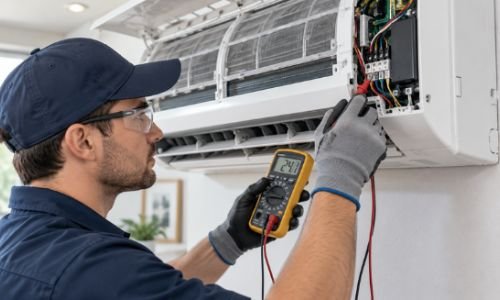
Professional AC fan motor repair should assess the motor, blades, mounting, and relevant controls. Replacing the motor without checking the complete assembly may leave the original noise unresolved. Never insert a tool through the grille or try to push a fan blade into motion. Keep clear of moving parts and leave internal inspection to a qualified technician.
Debris Around the Unit Can Affect Operation
Leaves, loose packaging, and other nearby objects can interfere with airflow or create contact noises. Stored items may also vibrate against the casing. From a safe, accessible position, note whether anything is resting against the unit or obstructing its surroundings. Remove only loose external items that can be reached without approaching moving parts or electrical connections.
Do not climb onto a roof, lean out of a window, or enter a restricted service area to investigate. If equipment is located on a high-level bracket or building platform, tell the service provider before the appointment. Safe access may require coordination with building management or appropriate equipment.
Mounting Problems Can Transmit Vibration Indoors
A unit’s support arrangement influences how vibration reaches the building. Brackets, mounting points, and vibration-control components may need inspection when noise is strongest through a wall or floor. A sound heard inside the property does not always mean the equipment itself has become dramatically louder. Changes in mounting or contact can make ordinary vibration more noticeable.
Tell the technician where the sound is strongest and whether it began after installation, relocation, or building work. Do not place loose pads or blocks beneath the equipment as an improvised solution. Supports must remain suitable for the unit’s weight, connections, and installation requirements.
Pipework Contact Can Produce Rattling
Refrigerant pipework and other connected services may transmit vibration or contact nearby surfaces. A pipe touching a panel or wall opening can create a noise that appears to come from the compressor. The technician should check relevant supports, clearances, and insulation where the symptoms suggest contact or transmitted vibration.
Do not bend pipework, pull insulation away, or wedge objects between connections. Refrigerant lines require careful handling, and forcing them can create damage. A clear description of where the sound travels helps the inspection. For example, noise concentrated around a wall penetration provides different context from a scrape heard directly at the fan grille.
Compressor Noise Requires Diagnosis Before Replacement
A compressor can develop mechanical or electrical faults that change its operating sound. However, a deep hum or vibration does not automatically mean it has failed. Starting components, supporting electronics, mounting conditions, and operating demands may affect what you hear. The appropriate checks also differ between conventional and inverter systems.
Before approving AC compressor inspection and repair, ask how the technician will distinguish compressor trouble from related faults. A major replacement recommendation should be supported by testing and a clear explanation. The location of the noise is a useful clue, but it is not sufficient evidence on its own.
Cooling Problems Make the Noise More Significant
Report any performance change alongside the sound. Weak cooling, repeated stopping, or an error message may help the technician understand whether the noise accompanies abnormal operation. Restricted heat rejection, fan faults, and refrigeration problems can overlap in their symptoms. The inspection should assess relevant operating conditions rather than treat the sound as an isolated complaint.
Useful details include whether the room still reaches its usual temperature and whether the noise becomes more pronounced during longer operation. Avoid lowering the thermostat repeatedly to compensate for deteriorating performance. A colder setting does not repair a component fault or resolve an airflow restriction around the outdoor unit.
When Should You Switch the AC Off?
Stop using the system when noise is severe, rapidly worsening, or accompanied by smoke, a burning smell, electrical tripping, or obvious damage. A fan visibly striking its guard or repeated heavy knocking also requires assessment before further use. Switch the equipment off through its normal controls if safely accessible.
Do not remove electrical covers, touch components to judge their temperature, or repeatedly reset a tripped circuit. For less dramatic but persistent noise, record the pattern and arrange inspection. Waiting until the system stops cooling completely can make the fault more disruptive and may allow associated damage to develop.
What Should the Repair Visit and Quotation Explain?
Provide the system’s model details where safely accessible, the approximate age, and any recent maintenance history. A short recording taken from a safe location can help demonstrate intermittent sound.
Ask the technician:
- Where does the noise originate?
- Is the cause mechanical, electrical, or installation-related?
- Were the fan, casing, supports, and pipework checked?
- What testing supports any major component replacement?
- Does the quotation include associated mounting or access work?
- How will the original complaint be verified after repair?
If building access or a separate mounting repair is required, clarify that scope before work begins. A specific explanation makes quotations easier to assess.
Check the Result Under Normal Operating Conditions
After repair, the system should be assessed through the stage that originally produced the noise. A quiet few seconds at startup may not verify a complaint that appeared after prolonged running. Listen from the affected indoor room as well as the safe inspection location. Sound transmitted through the building may be more noticeable indoors.
For recurring outdoor-unit noise, professional AC repair services in Dubai can assess components and installation together. Confirming the source helps restore quieter cooling and gives you a sound basis for approving repairs without assuming every rattle requires a new compressor.