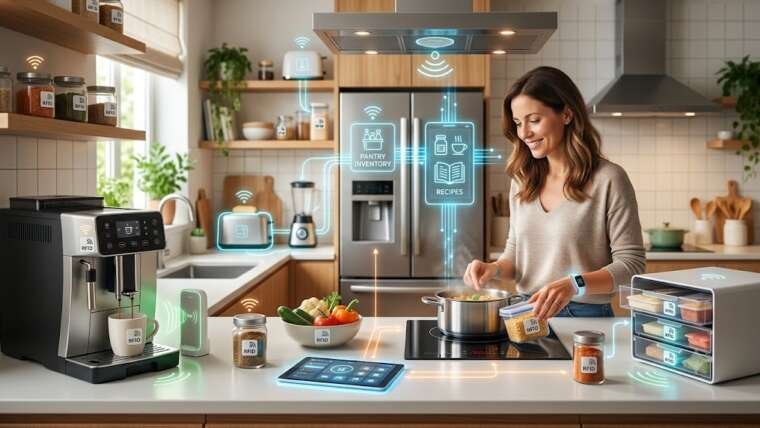

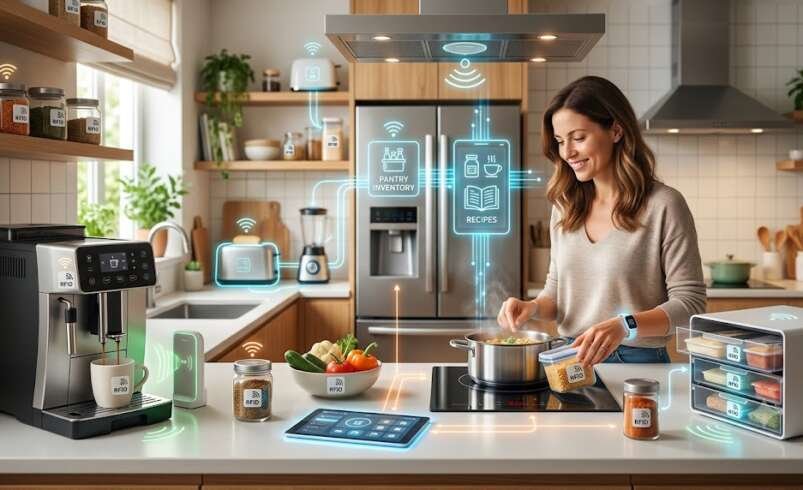

Ever wonder what is running low in the pantry, what needs to be used soon, or if you’ve already purchased another packet of rice? This kind of automation can be implemented with printable RFID pantry labels, which can integrate the daily storage of food items into smart-home systems.
[image: kitchen automation using RFID]
RFID tags can send and receive information about themselves and communicate with readers that are compatible with them, unlike traditional labels. By combining with an inventory application or home automation system, they can play a key role in making a kitchen much more hands-off. Understand the concept of RFID warehouse tracking before using it for your kitchen.
The Basic Operation of a Smart RFID Pantry
It’s basic. Label a container of food, jar, package, or storage bin with an RFID label. The reader identifies the tag, and the software reads the tag to update the inventory record associated with the item.
For instance, the cereal container has a tag, which could be read by your system and let it know that cereal is available. An automation might update your grocery list when the item is removed, replaced, or when a certain inventory limit is reached.
A connected system could be used to monitor:
- Product Name and the amount of product.
- The date when the product was bought or opened.
- Expiration or best-before date
- Storage location
- Minimum stock level
- Reorder status
Automating Grocery Lists
One of the best benefits is when it comes to repetitive household chores. Your system can keep a digital inventory of the food available in the pantry so that you don’t have to check each shelf individually before buying food.
If you have three cans of tomatoes, and you decide you’ll use at least 2, then you can use either 2 or 3. If you have three cans of tomato, and you decide you’ll use at least 2, then you can use 2 or 3. When the inventory drops below that level, the automation can place tomatoes on your grocery list.
This is especially helpful for frequently used items like:
- Rice and pasta
- Canned foods
- Coffee and tea
- Cereals
- Cooking ingredients
- Pet food
- Household supplies
The objective is not just to have your pantry scanned, but to have inventory done on the sly. Better to find an expert who can guide you regarding RFID technology in healthcare.
Tracking Expiration Dates
RFID can also aid food organization. The expiration date of an item may be recorded with its RFID identifier when it is registered.
Your smart-home setup could then be used to remind you of the expiration dates of products.
For example:
- 30 days remaining: No action needed
- 7 days remaining: Consider using the product soon
- 1 day left: Make sure to prioritize the item or ask if it is still appropriate for use.
This can help to promote the practice of “first in, first out” and minimize food waste.
Tips for Building Your Smart Pantry
1. Start small
Label frequently used items first instead of labeling all items at once.
2. Create consistent naming
Use standard measuring units (ounces, pounds, packages) and product names.
3. Record dates carefully
If dates are wrongly entered into the system, then Expiration automation will not come in handy.
4. Consider your containers
The performance of RFID systems can differ from one material to another. Special tags or positioning of tags are necessary for metal containers and liquids.
5. Establish reasonable reorder quantities
If a household drinks coffee every day, they’ll require a higher minimum stock size than one that drinks coffee occasionally.
A future without hard work is here. Hard work is over; here is the future of the Zero-EFFORT Kitchen.
Printable RFID pantry labels may be a key component to smarter kitchens. They can turn inventory management from a manual task to an automated one with RFID readers, inventory software, grocery-list applications, and home automation.
It is not just knowing what’s in the pantry that is the real benefit. It’s developing a kitchen that will know what you have, what is in short supply, and what needs your attention, without much work on your part.