
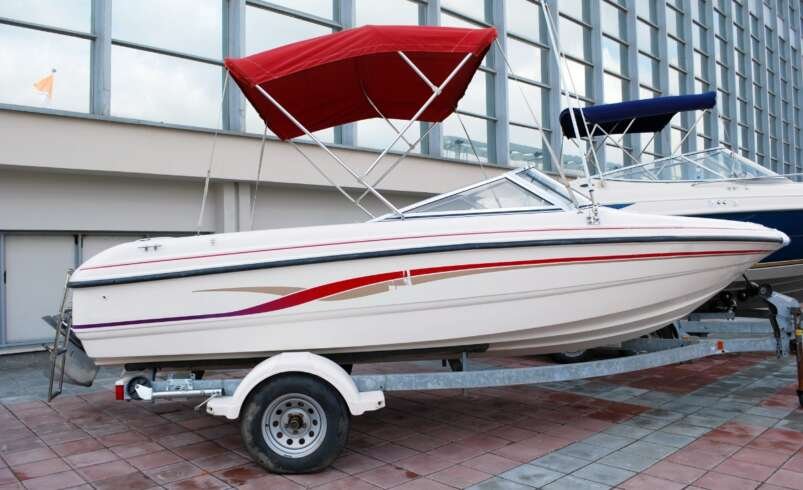

Boat trailer brakes are one of the most important safety systems on any trailer used to transport a boat. When a boat is loaded with fuel, fishing equipment, batteries, safety gear and other accessories, the total combination can become significantly heavier than the empty trailer. This additional mass affects acceleration, handling and, most importantly, stopping distance. Understanding how trailer brakes work and how they relate to your boat trailer towing capacity, boat trailer ATM, boat trailer GTM and overall boat trailer weight can help Australian boat owners choose and operate their trailer safely.
For Australian boat owners, braking requirements also depend on the trailer’s loaded mass and applicable regulations. In Queensland, for example, a trailer with a GTM over 750kg must have brakes operating on at least one wheel at each end of one or more axles, while trailers with a GTM over 2,000kg have additional requirements for driver-controlled braking and breakaway operation. Because requirements can vary according to the trailer and jurisdiction, it is important to understand the basic principles before buying, loading or towing a boat trailer.
Why Boat Trailer Brakes Matter
A boat trailer carries more than just the boat itself. The trailer, outboard motor, fuel, batteries, fishing equipment, safety equipment and other items all contribute to the loaded mass. As that mass increases, the towing vehicle has to control more weight when slowing down.
Brakes on the trailer help share the braking work between the towing vehicle and trailer. This can make the combination more controllable, particularly when travelling downhill, approaching traffic or slowing in changing road conditions. A properly maintained braking system can also reduce the amount of work required from the towing vehicle’s brakes.
Queensland’s towing guidance notes that towing can reduce acceleration and braking performance and recommends allowing a longer stopping distance, particularly with longer and heavier trailers. This is especially relevant to boat owners because the actual loaded weight of a boat trailer can be considerably different from its empty weight.
Understanding Boat Trailer ATM and GTM
Before choosing a braking system, it is important to understand the terminology used to describe trailer weights.
Boat Trailer ATM, or Aggregate Trailer Mass, is the maximum permissible mass of the trailer when it is fully loaded and standing on its own wheels. This includes the trailer, boat and the equipment being carried.
Boat Trailer GTM, or Gross Trailer Mass, is the mass transmitted to the ground through the trailer wheels when the trailer is coupled to the towing vehicle. The difference between ATM and GTM is related to the load carried by the tow ball.
These figures are important because braking requirements are commonly linked to trailer mass. A boat owner should therefore look at the trailer’s compliance information rather than judging the required braking system simply by the physical size of the boat.
For example, a trailer might look relatively compact while carrying a substantial aluminium boat, large outboard and equipment. Conversely, a larger trailer may be lightly loaded. The important consideration is the actual and permitted mass of the complete trailer combination.
Boat Trailer Weight Is More Than the Trailer
One of the most common mistakes when considering trailer brakes is looking only at the trailer’s tare weight.
The boat trailer weight can include the trailer itself, boat, motor, fuel, batteries, spare wheel, fishing equipment, safety equipment and other items carried during a trip. Even small additions can accumulate into a significant difference.
Before selecting a trailer, consider how the boat will actually be used. A boat used for long fishing trips may carry substantially more equipment than the same boat used for short recreational trips. Fuel and batteries can also add meaningful weight.
For an accurate assessment, the complete loaded combination should be considered rather than relying only on an advertised empty trailer weight. Queensland’s towing guidance recommends using a public weighbridge if you are unsure about the combined mass of a trailer and its load.
When Does a Boat Trailer Need Brakes?
The answer depends on the applicable Australian requirements and the trailer’s mass.
In Queensland, a trailer with a GTM exceeding 750kg must have brakes operating on at least one wheel at each end of one or more axles. For trailers with a GTM exceeding 2 tonnes, the braking system must allow the driver to operate the trailer brakes from the normal driving position. Additional breakaway requirements also apply.
This means boat owners should not assume that a particular brake arrangement is suitable simply because it has been used on another trailer. The correct setup depends on the trailer’s specifications, mass, design and applicable regulations.
If you are buying a new boat trailer, discuss the intended boat weight, motor, equipment and expected loaded mass with the trailer manufacturer. This helps ensure that the trailer’s braking system is appropriate for the application.
Braking Requirements for Heavier Boat Trailers
As trailer mass increases, braking becomes increasingly important.
A 2000 kg boat trailer represents a substantially different towing requirement from a lighter boat trailer. Similarly, a 3000 kg boat trailer, a 3500 kg boat trailer or a 4500 kg boat trailer needs to be considered according to its rated capacity, actual loaded mass, braking configuration and the capabilities of the towing vehicle.
The ATM figure alone should not be treated as the amount you can automatically load onto the trailer. You must also consider the towing vehicle’s rated towing capacity, towbar rating, tow-ball rating where applicable, axle capacities and other manufacturer limits.
Queensland guidance specifically states that the vehicle owner’s manual should be used to determine the maximum weight and trailer characteristics appropriate for the towing vehicle, and these limits should not be exceeded.
What Is an Override Brake System?
Override brakes are commonly associated with lighter trailer applications. With this type of system, movement between the towing vehicle and trailer during deceleration activates the trailer brakes.
The system can be relatively straightforward and can work effectively when correctly designed, installed and maintained. However, its suitability depends on the trailer’s specifications and applicable requirements.
Boat owners should not select a braking system simply because it is commonly used on another boat trailer. The trailer manufacturer should confirm that the braking system is appropriate for the trailer’s rated and expected loaded mass.
What Are Electric Trailer Brakes?
Electric trailer brakes use an electrical signal from the towing vehicle to activate the trailer’s brakes. The driver can control the trailer braking system through the appropriate brake controller and vehicle connection.
One advantage is that the driver can control trailer braking from the towing vehicle rather than relying solely on mechanical movement between the vehicle and trailer.
For heavier boat trailers, a properly designed and maintained braking system becomes particularly important because the trailer contributes a greater proportion of the overall combination mass.
The electrical connections should also be maintained carefully. Boat trailers regularly encounter water, spray and humid environments, particularly around launching ramps and coastal areas. Keeping electrical connectors protected and checking wiring regularly can help prevent brake-related problems.
Why Breakaway Brakes Are Important
A breakaway system is designed to activate the trailer brakes if the trailer becomes detached from the towing vehicle.
This is an important safety feature on heavier trailer combinations. Queensland requirements state that brakes on trailers with a GTM over 2 tonnes must operate automatically and quickly following a breakaway, remain in operation for at least 15 minutes and be capable of holding the trailer on a 12% grade while operating after the breakaway.
Boat owners should understand how their breakaway system works and ensure that it is maintained. A breakaway system is not something that should only be considered when the trailer is first purchased.
Boat Trailer Brakes and Saltwater
Boat trailers are exposed to conditions that ordinary road trailers may encounter less frequently. Launching and retrieving a boat can expose wheels, hubs, brake components and electrical connections to water.
Saltwater exposure can accelerate corrosion if components are not properly maintained. This is one reason boat trailer maintenance should include regular inspection of braking components.
After launching or retrieving a boat in saltwater, owners should follow the trailer manufacturer’s recommended cleaning and maintenance procedures. Brake components, cables, lines, electrical connections and related hardware should be inspected for corrosion, damage or unusual wear.
A brake system that appears to work normally can still contain components that require attention. Regular inspection is therefore more reliable than waiting until a braking problem becomes obvious.
Signs Your Boat Trailer Brakes Need Attention
Boat owners should pay attention to changes in braking behaviour. Problems may include unusual noises, uneven braking, excessive heat around a wheel, pulling to one side, reduced braking performance or visible damage to components.
If a trailer has been sitting unused for an extended period, it is particularly important to inspect the brakes before taking it onto the road. Queensland’s towing guidance specifically highlights the importance of checking trailer wheel bearings, suspension and brakes, particularly for boat trailers or trailers that have not been used for some time.
Do not ignore changes in braking performance. A qualified trailer professional should inspect the system if you are unsure about its condition.
How Trailer Loading Affects Braking
Correct loading is essential for safe towing.
Adding equipment to a boat trailer increases its mass. If the load is poorly distributed, it can also affect trailer stability and handling. The position of the boat, motor, fuel, batteries and equipment should be considered when loading the trailer.
Avoid treating the trailer’s maximum rating as a target weight. The objective should be to carry the required load while remaining within all applicable limits.
Queensland guidance states that overloading a trailer is unsafe and illegal and that loads must be properly secured.
Matching the Trailer to Your Boat
Choosing the correct trailer starts with understanding the boat’s actual requirements.
Consider the boat’s length, width, hull design and loaded weight, along with the outboard motor and equipment you normally carry. The trailer should then be selected with sufficient capacity and an appropriate braking system.
For example, someone searching for a Tinny Trailer for Sale should not make the decision based solely on price or the trailer’s appearance. The trailer needs to suit the actual tinny, its loaded weight and the towing vehicle.
The same principle applies to larger aluminium boats. A trailer should be selected as a complete towing system rather than as an isolated piece of equipment.
Choosing a Boat Trailer for Australian Conditions
Australian boating conditions vary significantly. Coastal boat owners may regularly deal with saltwater, while inland boaters can encounter different launching surfaces, road conditions and travel distances.
Regardless of location, the trailer should be correctly rated and maintained for the intended application.
For Queensland boat owners, this includes paying attention to the applicable mass, braking and towing requirements. New trailers also need to meet the relevant Australian Design Rules requirements; Queensland states that from 1 July 2023, new trailers need to meet full compliance with the relevant ADRs rather than using Vehicle Standards Bulletin 1 as an alternative compliance pathway.
Boat Trailer Brake Maintenance Checklist
Regular maintenance can help identify problems before they become serious. Before a trip, inspect the trailer brakes and look for obvious wear, damage, corrosion or leaks where applicable.
Check the electrical connections on electrically operated systems and ensure cables are secure. Inspect mechanical components for excessive wear and make sure moving parts operate correctly.
Wheel hubs and bearings should also be checked as part of general trailer maintenance. If the trailer has been exposed to saltwater, follow the manufacturer’s cleaning and inspection recommendations.
It is also sensible to have the complete trailer inspected periodically by a competent professional, especially when the trailer is heavily used or carries a high-value boat.
Don’t Forget the Towing Vehicle
Good trailer brakes cannot compensate for an unsuitable towing vehicle.
The towing vehicle must be capable of safely controlling the loaded combination. Its rated towing capacity and other relevant limits need to be considered alongside the trailer’s ATM and GTM.
Remember that the vehicle itself may already be carrying passengers, luggage, accessories and other equipment. These loads can affect the overall towing combination.
Queensland advises drivers to consider passengers, vehicle equipment and modifications when assessing towing loads.
Final Thoughts on Boat Trailer Brakes
Boat trailer brakes play an important role in safe towing, particularly as the size and loaded mass of a boat trailer increase. Understanding Boat Trailer ATM, Boat Trailer GTM, Boat Trailer Weight and Boat Trailer Towing Capacity helps Australian boat owners make more informed decisions when choosing and loading a trailer. Whether you are considering a 2000 kg boat trailer, 3000 kg boat trailer, 3500 kg boat trailer or 4500 kg boat trailer, the braking system should always be appropriate for the trailer’s design, load and applicable requirements.
A properly matched trailer, suitable towing vehicle, correct loading and regular brake maintenance all contribute to safer boat transportation. If you are looking for an aluminium boat trailer designed around your boat and towing requirements, visit Alycraft Trailers to explore Alycraft’s trailer options and learn more about choosing the right setup for Australian boating conditions.