
Quick Summary
Smiling is a natural part of facial expression, but repeated muscle movements can contribute to the development of facial wrinkles over time. The muscles surrounding the mouth contract during smiling, laughing, and speaking, creating repeated skin folds that may eventually become visible even when the face is at rest. Aging, collagen loss, sun exposure, and changes in facial volume can make these lines more noticeable. Understanding the difference between muscle-related wrinkles and volume-related folds is important when considering Botox for laugh lines in Pembroke Pines or other facial rejuvenation treatments.
How Repeated Smiling Contributes to Wrinkle Formation
Facial expressions involve coordinated movements of several muscles. When someone smiles, muscles around the cheeks and mouth contract, changing the position of the skin and creating temporary folds.
Over many years, repeated facial movements can contribute to dynamic wrinkles. These lines initially appear during expressions but may gradually become more noticeable when the face is relaxed.
Several factors influence this process:
- Repeated muscle contractions: Frequent smiling and laughing create recurring skin folds.
- Reduced collagen production: Collagen helps maintain skin strength and elasticity. Its natural production decreases with age.
- Loss of skin elasticity: Aging skin may become less capable of returning to its original position after repeated movement.
- Sun exposure: Ultraviolet radiation contributes to collagen breakdown and premature skin aging.
- Changes in facial volume: Age-related fat redistribution can make folds around the mouth appear deeper.
It is important to understand that smiling itself does not cause premature aging. Rather, natural facial movements interact with changes in skin structure over time.
Understanding the Difference Between Laugh Lines and Other Facial Wrinkles
The term laugh lines is commonly used to describe the folds that become visible around the mouth during smiling. However, several different types of wrinkles can develop in this area.
Nasolabial folds: These lines extend from the sides of the nose toward the corners of the mouth. They are influenced by facial anatomy, soft tissue movement, and age-related volume changes.
Marionette lines: These lines extend downward from the corners of the mouth toward the chin. Changes in skin elasticity and lower-face support can contribute to their appearance.
Perioral wrinkles: These are small vertical lines that develop around the lips. Repeated lip movements, sun exposure, smoking, and collagen loss may contribute to their formation.
This distinction matters because not all lines around the mouth respond to the same treatment. Botox primarily reduces targeted muscle activity, while dermal fillers can restore selected areas of lost volume.
Botox for Laugh Lines in Pembroke Pines: How the Treatment Works
Botox is a purified form of botulinum toxin type A. It works by temporarily blocking nerve signals that trigger muscle contractions in the treated area.
When administered by a qualified medical professional, Botox can reduce the activity of selected facial muscles, helping soften certain expression-related wrinkles.
For patients considering botox for laugh lines in Pembroke Pines, the first step should be identifying which muscles contribute to the visible lines.
However, there is an important clinical distinction: traditional nasolabial folds are generally caused by a combination of facial anatomy, soft tissue movement, and volume changes rather than excessive muscle contraction alone. Botox is not typically the first-line treatment for these folds.
In selected cases, carefully planned treatment of specific muscles around the mouth may improve certain dynamic lines. Treatment must be conservative because these muscles contribute to speaking, smiling, drinking, and controlling lip movement.
Why Some Wrinkles Become Visible Even When You Are Not Smiling
In younger skin, temporary folds created during smiling usually disappear when facial muscles relax. As collagen and elastin gradually decline, the skin may become less resilient.
Eventually, repeated folding can contribute to lines that remain visible even without facial movement.
Other structural changes can make these wrinkles more noticeable, including:
- Reduced volume in the cheeks.
- Changes in the distribution of facial fat.
- Thinning skin around the mouth.
- Reduced natural hydration.
- Cumulative ultraviolet exposure.
This is why patients exploring botox for laugh lines in Pembroke Pines should receive an assessment that considers both muscle activity and the underlying condition of the skin.
When Botox May Not Be the Right Treatment
Botox is not suitable for every type of wrinkle around the mouth. For example, deep nasolabial folds caused primarily by volume loss may respond more appropriately to other treatments.
Depending on individual anatomy and concerns, a provider may discuss:
Dermal fillers: Hyaluronic acid fillers can restore selected areas of volume and soften certain facial folds.
Skin rejuvenation: Treatments that support skin texture and collagen production may help improve the appearance of fine lines.
Preventive skin care: Daily broad-spectrum sunscreen, appropriate moisturizers, and avoiding smoking can help reduce premature skin aging.
A personalized treatment plan may involve one approach or a combination of treatments. Not every patient needs injectables.
Safety and What to Expect Before Treatment
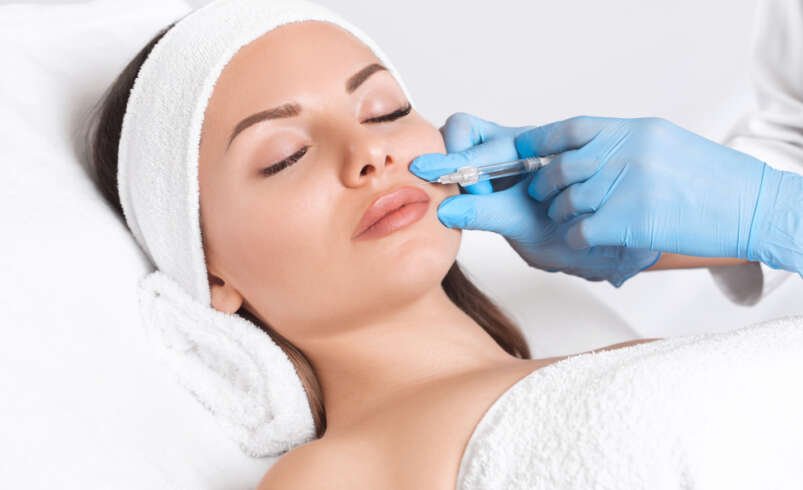
Botox injections are medical procedures and should be performed by an appropriately qualified and experienced healthcare professional.
Temporary effects can include bruising, swelling, tenderness, and headache. When injections around the mouth are performed improperly or affect unintended muscles, patients may experience an uneven smile, difficulty speaking clearly, or problems controlling lip movements.
Before considering botox for laugh lines in Pembroke Pines, patients should discuss their medical history, medications, previous cosmetic procedures, allergies, and treatment expectations.
Results generally begin appearing within several days, with the full effect commonly developing over approximately 10 to 14 days. Effects typically last around three to four months, although individual results vary by treatment area and patient.
A Personalized Approach to Natural-Looking Facial Rejuvenation
Wrinkles around the mouth develop through a combination of repeated facial movements, collagen changes, skin aging, and shifting facial volume. Understanding these contributing factors is essential before choosing an aesthetic treatment.
At Stellar Health and Skin, patients can discuss their facial concerns and explore appropriate aesthetic options based on their individual needs and treatment goals.
Choosing botox for laugh lines in Pembroke Pines should begin with understanding whether the visible lines are primarily dynamic wrinkles, volume-related folds, or a combination of both. A careful assessment helps avoid unnecessary treatment and supports more balanced, natural-looking outcomes.