

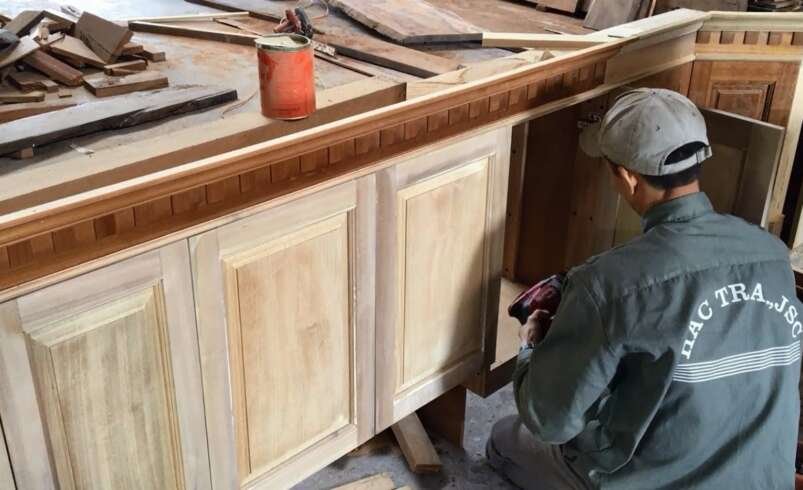

Cabinet wood finishing protects wood surfaces and improves their appearance. A quality finish helps cabinets resist moisture, stains, scratches, and daily wear. It also highlights the natural grain and gives cabinets a clean, polished look that lasts for years.
Many homeowners choose cabinet wood finishing to refresh older cabinets instead of replacing them. It is also an important step for new cabinet installations because it extends the life of the wood. The right finish depends on the type of wood, the desired appearance, and how the cabinets will be used.
What Is Cabinet Wood Finishing?
Cabinet wood finishing is the process of preparing, staining, sealing, and protecting wooden cabinets. Each step plays an important role in creating a durable surface.
The process often begins with cleaning and sanding. Sanding smooths the wood and removes old finishes when refinishing existing cabinets. Once the surface is ready, stain or paint may be applied to achieve the desired color. A protective topcoat then seals the surface and adds durability.
Wood finishing is not only about appearance. It also helps prevent damage caused by moisture, heat, grease, and everyday use.
Why Cabinet Wood Finishing Matters?
Kitchen and bathroom cabinets face constant exposure to humidity, spills, and frequent handling. Without a protective finish, wood can absorb moisture, fade, or develop stains over time.
A proper finish offers several benefits.
- It protects cabinets from moisture, scratches, and daily wear.
- It improves the overall appearance while making cleaning easier.
Finished cabinets also require less maintenance because dirt and grease do not penetrate the wood as easily.
Common Types of Cabinet Wood Finishes
Several finishing options are available for wood cabinets. Each one creates a different look and level of protection.
Stained Finish
A stained finish adds color while allowing the natural wood grain to remain visible. This option works well for hardwood cabinets because it enhances their natural beauty.
Stains come in light, medium, and dark shades. Homeowners often choose stain when they want a timeless appearance.
Painted Finish
Paint completely covers the wood grain and creates a smooth, solid color. White, gray, black, and navy remain popular choices for modern kitchens.
Painted cabinets can brighten a room and match many design styles.
Clear Finish
A clear finish protects the wood without changing its natural color very much. Polyurethane, lacquer, and water based finishes are common examples.
This option suits homeowners who want to showcase the original wood.
Glazed Finish
Glazing adds depth by applying a tinted layer over paint or stain. It highlights cabinet details and creates a more decorative appearance.
This finish often appears in traditional and rustic kitchen designs.
Choosing the Right Finish
Several factors influence the best finish for your cabinets.
Wood species plays a major role because different woods absorb stain differently. Oak, maple, cherry, and walnut each produce unique results.
Room conditions also matter. Kitchens and bathrooms need finishes that resist moisture and frequent cleaning.
Color preference should match the overall style of the home. Light finishes create an open appearance, while darker finishes add warmth and richness.
Maintenance requirements deserve attention as well. Some finishes require occasional touch ups, while others remain durable for many years.
The Cabinet Wood Finishing Process
Professional cabinet finishing follows a careful sequence to achieve lasting results.
Surface Preparation
Every project begins with a thorough inspection. Dirt, grease, and old residue must be removed before any work starts.
Next, sanding smooths the wood and prepares it for stain or paint. Proper sanding also helps the finish bond evenly.
Repairs
Small dents, cracks, or holes are repaired before finishing begins. Filling damaged areas creates a smoother final appearance.
Loose cabinet parts are also tightened or repaired when necessary.
Staining or Painting
Once the surface is prepared, stain or paint is applied in thin, even coats. Professionals allow each coat to dry before adding another layer.
This approach creates consistent color and better durability.
Protective Topcoat
The final protective coating seals the cabinet surface. It guards against scratches, water damage, and everyday wear.
After curing, the cabinets are ready for regular use.
Popular Cabinet Finish Options
Homeowners often choose finishes based on their design goals.
Natural finishes remain popular because they preserve the wood’s original character.
Matte finishes reduce glare and create a soft appearance.
Satin finishes provide a slight sheen while hiding fingerprints better than glossy finishes.
Gloss finishes reflect more light and create a sleek, modern appearance. They also make colors appear more vibrant.
Water Based and Oil Based Finishes
Both water based and oil based products offer advantages.
Water based finishes dry faster and produce less odor during application. They also resist yellowing over time and help preserve lighter wood colors.
Oil based finishes provide excellent durability and rich color depth. They usually require longer drying times but offer strong protection in high use areas.
The right choice depends on the cabinet material, appearance goals, and project requirements.
Cabinet Refinishing vs Cabinet Replacement
Many homeowners wonder whether they should refinish or replace their cabinets.
Refinishing works well when cabinet boxes remain strong and structurally sound. The process updates the appearance without installing completely new cabinetry.
Replacement becomes necessary when cabinets have severe water damage, broken frames, or major structural issues.
Refinishing often costs less than replacement while giving kitchens and bathrooms a fresh, updated appearance.
Caring for Finished Cabinets
Proper maintenance helps preserve cabinet finishes for many years.
Clean cabinet surfaces with a soft cloth and mild soap when needed. Dry the surface after cleaning to prevent excess moisture.
Avoid abrasive scrubbers because they can scratch protective coatings.
Place exhaust fans in kitchens and bathrooms to reduce humidity levels.
Address spills quickly before liquids have time to sit on cabinet surfaces.
Regular care keeps cabinets looking clean and extends the life of the finish.
Signs Your Cabinets Need Refinishing
Cabinet finishes naturally wear over time. Several signs indicate it may be time for refinishing.
Fading color often appears after years of sunlight exposure.
Peeling or cracking finishes expose the wood underneath.
Scratches and worn areas become more noticeable with heavy daily use.
Water stains may develop around sinks and dishwashers.
When these issues appear, refinishing restores both protection and appearance before further damage occurs.
Why Professional Cabinet Wood Finishing Is Worth It?
Professional finishing delivers consistent results that are difficult to achieve with basic tools alone.
Experienced finishers understand how different wood species respond to stains and protective coatings. They also use proper preparation techniques that improve durability.
Professionals apply finishes evenly and reduce common problems such as brush marks, uneven color, bubbles, or peeling. Their work also saves time and helps avoid costly mistakes that may require additional repairs later.
A quality cabinet finish increases the value of the cabinets while extending their useful life for many years.
Conclusion
Cabinet wood finishing in Las Vegas, NV protects wood, improves appearance, and extends the life of kitchen and bathroom cabinets. The right finish enhances natural beauty while creating a durable surface that stands up to everyday use. Proper preparation, quality materials, and regular maintenance all contribute to long lasting results.
For homeowners seeking reliable cabinet wood finishing services, Custom Wood Finishes and More is the best company providing these services in Las Vegas, NV and the surrounding areas. Their experience, attention to detail, and commitment to quality help homeowners achieve beautiful, durable cabinet finishes that last.
FAQs
How long does cabinet wood finishing last?
A professionally applied cabinet finish can last 10 to 20 years with proper care and regular cleaning.
Can old cabinets be refinished instead of replaced?
Yes. Cabinets with solid construction can often be refinished, making them look updated without the cost of full replacement.
What is the best finish for kitchen cabinets?
The best finish depends on your needs. Water based finishes dry quickly and resist yellowing, while oil based finishes provide excellent durability and rich color.
How long does cabinet wood finishing take?
Most cabinet finishing projects take several days, depending on the number of cabinets, the type of finish, and the drying time required between coats.
How should I clean finished wood cabinets?
Use a soft cloth with mild soap and water. Wipe cabinets dry after cleaning and avoid abrasive cleaners that can damage the protective finish.
Does cabinet wood finishing increase home value?
Quality cabinet finishing improves the appearance and durability of cabinets, which can enhance the overall appeal of a home and contribute to its value.