
Custom Teamwear: How Matching Sports Apparel Supports Team Identity and Professionalis
Introduction
Every sports team has its own identity, history and goals. Whether it is a local football club, a school basketball team or a professional training academy, clothing is one of the most visible ways to express that identity.
Custom teamwear gives organisations the freedom to develop coordinated apparel that reflects their colours, logos and overall style. Unlike standard sports clothing, customised garments can be designed according to the specific needs of individual teams.
Today, teamwear includes much more than match-day uniforms. It can involve training shirts, tracksuits, warm-up clothing, jackets, sports shorts and casual apparel.
Choosing the right materials, designs and manufacturing partner helps organisations create a consistent collection that suits their activities.
1. What Is Custom Teamwear?
Custom teamwear refers to sports clothing designed specifically for a club, organisation, school or group.
These garments can include personalised branding, colours, names, numbers and graphics.
A complete teamwear collection may contain:
- Match jerseys
- Training shirts
- Sports shorts
- Tracksuits
- Hoodies and sweatshirts
- Warm-up jackets
- Polo shirts
- Sports bags and accessories
The exact collection depends on the team’s sport, budget and intended use.
For example, a football club may require home and away kits, training apparel and tracksuits. A fitness academy may prioritise breathable training tops and flexible sportswear.
2. How Teamwear Strengthens Brand Identity
A recognisable appearance helps people identify a team.
Custom colours, logos and design details can become closely associated with a club or academy. Consistent apparel also helps create a professional visual identity across matches, training sessions and promotional events.
A team should begin by identifying its main visual elements.
These may include:
Primary Colours: Select colours that reflect the club’s existing identity.
Logo: Ensure the emblem is clear and suitable for the selected printing or embroidery method.
Typography: Use readable fonts for player names, numbers and other details.
Graphic Style: Choose patterns and design elements that complement the team’s identity.
Keeping these elements consistent across garments creates a coordinated collection.
3. Selecting Fabrics for Different Team Activities
Fabric selection should be based on the intended use of each garment.
Different teamwear products have different requirements.
Match Apparel
Match shirts and shorts generally require lightweight materials that allow comfortable movement.
Polyester is commonly used because it is durable and compatible with various printing techniques.
Training Clothing
Training apparel should be suitable for repeated physical activity and washing.
Breathable fabrics and appropriate garment construction can support comfort during regular sessions.
Tracksuits
Tracksuits are often used for travel, warm-ups and cooler weather.
The fabric weight and construction should be selected according to climate and intended use.
Casual Teamwear
Polo shirts, hoodies and sweatshirts may be used for travel, events and everyday activities.
Cotton blends and selected synthetic fabrics can be considered depending on the preferred appearance and comfort.
A supplier should explain the available materials before the final design is approved.
4. Important Customisation Techniques
Customisation allows teams to create clothing that reflects their own visual identity.
Several techniques are commonly used.
Sublimation Printing
This process is suitable for polyester garments and allows complex designs, gradients and multiple colours.
It is particularly useful for match jerseys and training shirts that require full-colour graphics.
Embroidery
Embroidery creates stitched logos and decorative elements. It can provide a distinctive finish for tracksuits, jackets and polo shirts.
Heat Transfer
Heat transfer can be used for names, numbers and selected graphic applications.
Screen Printing
Screen printing is suitable for various graphic applications, particularly where repeated designs are required.
The correct technique depends on the garment material and artwork.
5. Creating a Coordinated Teamwear Collection
A successful teamwear collection should maintain visual consistency without making every garment identical.
For example, a football club can use the same logo and colour palette across its match jerseys, tracksuits and training shirts.
However, each product can have a different layout and construction to suit its purpose.
A practical collection should consider:
- Match-day clothing
- Training apparel
- Travel clothing
- Warm-up garments
- Casual team merchandise
Planning all these categories together can make it easier to maintain consistent branding.
6. Comfort and Fit Should Come First
Teamwear should support the activities for which it is designed.
Players need clothing that allows them to run, stretch, jump and move without unnecessary restrictions.
Fit requirements vary by sport and garment category.
A relaxed fit may be suitable for some training tops, while other athletic products may require a closer fit.
Teams should review sizing charts and, where possible, approve samples before bulk manufacturing.
It is also useful to consider different size requirements for adults, youth players and coaching staff.
7. Budget Planning for Teamwear Orders
Budgeting helps teams select suitable products without compromising essential requirements.
The total cost may depend on fabric type, garment design, printing, embroidery, quantity and packaging.
Ordering several product categories together may help simplify sourcing, although the actual cost advantage depends on the supplier and order specifications.
A detailed quotation should explain what is included in the price.
Teams should also account for shipping costs and production schedules.
It is better to establish a realistic budget before finalising the collection.
8. How to Organise a Bulk Teamwear Order
Bulk ordering requires accurate information.
Start by preparing a list of all required products and quantities.
For each garment, specify:
- Product category.
- Fabric preference.
- Colour combination.
- Logo and branding requirements.
- Size breakdown.
- Personalised names or numbers.
- Required delivery date.
The supplier should provide artwork or digital mock-ups for approval.
Once the sample and final specifications are confirmed, the bulk order can proceed.
Maintaining a record of the approved design helps with future replacement orders.
9. Choosing the Right Custom Teamwear Manufacturer
A suitable manufacturer should offer relevant product categories and understand the requirements of sports teams.
Buyers should evaluate fabric quality, customisation methods, stitching, sample availability and communication.
For international organisations, production capacity and shipping arrangements are also important.
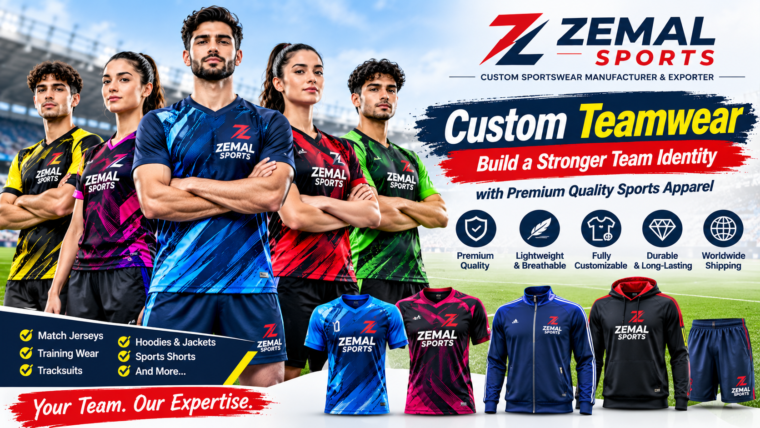
Zemal Sports, based in Sialkot, Pakistan, provides customised sportswear solutions for teams, clubs, academies, schools and clothing brands. Its product range includes football jerseys, team uniforms, activewear, casual clothing and yoga wear.
The company offers personalised designs, printing, embroidery and bulk sportswear production.
As with any manufacturing partnership, buyers should review samples and confirm specifications before placing an order.
Conclusion
Custom teamwear allows sports organisations to build a recognisable identity through coordinated clothing.
From match jerseys and training apparel to tracksuits and casual garments, every product should be designed according to its purpose.
Careful fabric selection, consistent branding, accurate sizing and reliable manufacturing are essential for creating a successful collection.
By planning requirements in advance and selecting an appropriate supplier, teams can develop professional apparel that represents their identity both on and off the field.