

Introduction
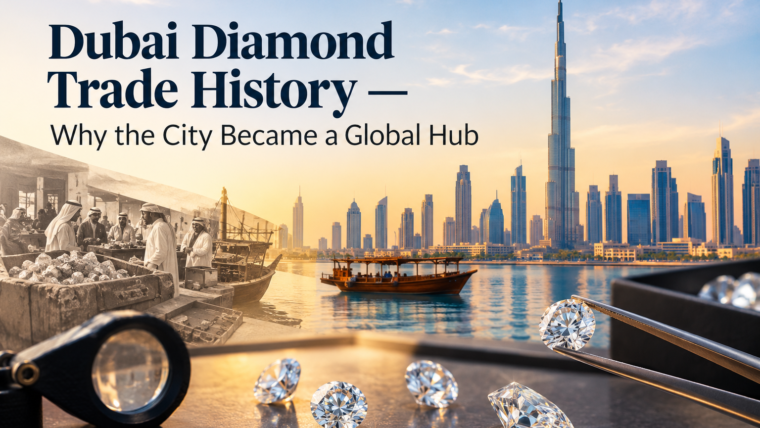
Diamonds have shaped fortunes, alliances, and even cities for centuries, but few places have absorbed the trade as completely as Dubai. In just over two decades, a city once known primarily for pearls and oil has become one of the world’s top three centers for diamond trading, sitting alongside Antwerp and Mumbai. Today, billions of dollars in rough and polished stones pass through Dubai every year, feeding everything from wholesale exchanges to the glittering display cases of local jewellers. Understanding how this happened says a lot about Dubai itself, a city built on the idea that the right infrastructure, policy, and ambition can turn a desert trading post into a global commercial capital.
Historical Overview
Dubai’s rise as a diamond hub is a relatively recent story, but it didn’t happen by accident. The turning point came in 2002, when the Dubai government established the Dubai Multi Commodities Centre, known as the DMCC, as part of a broader push to diversify the economy beyond oil. Diamonds were identified early as a strategic commodity, and within a year, the UAE became the first Arab nation to join the Kimberley Process, the international system designed to keep conflict diamonds out of the legitimate trade.
That single step mattered enormously. It gave international buyers and sellers a reason to trust Dubai as a serious, ethically screened marketplace rather than just another transit point. In 2003, the total trade of rough and cut natural diamonds through Dubai was valued at roughly $3.6 billion. A year later, the DMCC launched the Dubai Diamond Exchange, giving the city its own dedicated trading floor and admitting it into the World Federation of Diamond Bourses. The Almas Tower followed, purpose-built to house diamond companies, banks, polishing facilities, and secure vaulting under one roof.
From there, growth was steady and then dramatic. By 2011, annual trade had swelled past $39 billion. By 2016, it topped $26 billion in a single year on its own measure. And in the most recent figures, Dubai’s total diamond trade hit a record $417 billion in 2025, with natural diamond trade alone growing 246% since the pandemic. What started as a single free zone experiment is now one of the most connected diamond marketplaces on earth.
Factors Leading to Success
Dubai didn’t become a diamond hub through luck. A handful of deliberate advantages came together at the right time.
- Geographic advantages: Dubai sits almost exactly between the major diamond-producing regions of Africa and the major cutting and polishing centers of India, with direct flight connections to both. A stone can leave a mine, get cut in Surat, and pass through Dubai on its way to a buyer in Europe or the US, all within days.
- Economic policies and trade regulations: The DMCC free zone offers 100% foreign ownership, long-term exemptions from corporate and income tax, and no restrictions on repatriating profits. For diamond traders used to operating across borders, this removed most of the friction that comes with doing business internationally.
- Investment in infrastructure: Almas Tower alone brought together polishing and boiling facilities, secure vaulting for both diamonds and gold, and financing partnerships with international banks, all designed specifically around the needs of diamond businesses rather than generic commercial tenants.
- Political stability: In a region where instability can disrupt trade routes overnight, Dubai’s consistency became a selling point in itself. Buyers and sellers could commit to long-term operations in the city without worrying about sudden regulatory or political shocks.
Together, these factors did something simple but powerful: they made Dubai the easiest place in the world to move a diamond from one hand to another.
Current Landscape
Today, the numbers tell their own story. Since 2020, total diamond trade through Dubai has grown 139% in value and doubled in physical volume. Over the past decade alone, trade has increased 63% by value and 44% by volume. More than 600 companies now operate within the DMCC’s diamond ecosystem, ranging from rough and polished traders to major names like Rosy Blue and Diarough.
The market has also diversified. Coloured gemstone trade recently hit an all-time high, and laboratory-grown diamonds have become a significant part of the picture, with synthetic and industrial stones now accounting for roughly 39% of total diamond carat volume passing through the city. Dubai isn’t just holding onto its position as a wholesale trading hub, it’s actively expanding into new categories that the traditional diamond capitals have been slower to embrace.
At street level, this global trading infrastructure translates into something much more personal: one of the widest, most competitively priced diamond jewellery markets in the world, concentrated in areas like the Gold Souq and DMCC-adjacent retail districts.
Types of Diamond Jewellery Available
Dubai’s retail diamond market reflects the scale of its wholesale trade. Because so much diamond supply moves directly through the city, shoppers have access to a range and depth of choice that’s hard to find elsewhere.
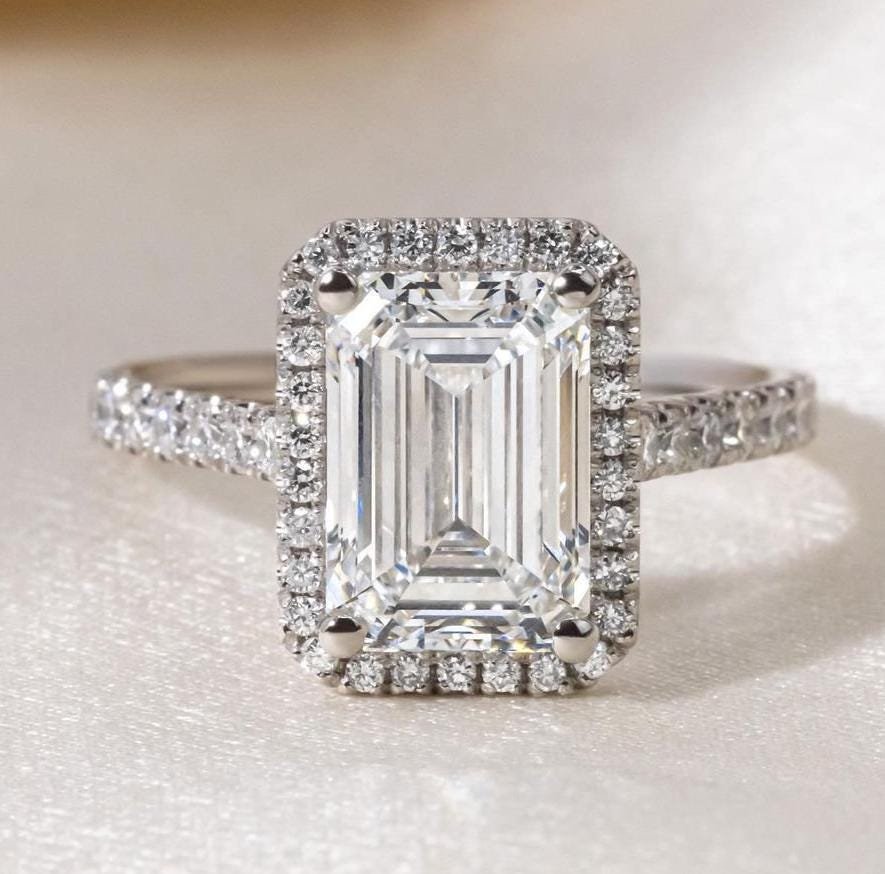
- Diamond Rings in Dubai: From classic solitaire engagement rings to elaborate halo and cluster settings, ring options span nearly every budget and style, often with access to certified stones that would cost significantly more in other markets.
- Diamond Necklace in Dubai: Necklaces range from delicate everyday pendants to statement pieces designed for weddings and formal occasions, with both classic and contemporary designs widely available.
- Diamond Bracelet in Dubai: Tennis bracelets, bangle-style pieces, and layered designs are popular choices, often bought as standalone pieces or as part of a matched set.
- Diamond Jewellery for Men: A growing category in Dubai, covering diamond-set cufflinks, rings, and bracelets designed with heavier, more understated settings suited to daily wear.
- Diamond Jewellery for Women: The largest and most varied category, spanning bridal sets, everyday pieces, and investment-grade jewellery bought for both personal wear and long-term value.
- Diamond Jewellery as a whole in Dubai benefits directly from the city’s trading infrastructure. Because so many stones are cut, certified, and sold within the same ecosystem, buyers often get better pricing and more certified options than in markets further from the supply chain.
Prominent Dealers
Dubai’s diamond retail scene includes everything from large multinational names to smaller, trusted family-run jewellers, particularly concentrated in the Gold Souq in Deira, where diamond retail has deep historical roots.
Tajvi Gold & Diamonds is a good example of how this works at the retail level. Based in the Gold Souq, the brand has built its reputation on certified diamond jewellery, transparent pricing, and a focus on helping customers understand exactly what they’re buying, from cut quality to certification standards. As Dubai’s wholesale diamond trade has grown, retailers like Tajvi Gold & Diamonds have benefited directly, offering customers access to competitively priced, properly certified diamond jewellery backed by a market with far more supply and price transparency than most cities can offer. For many buyers, working with an established local jeweller who understands both the product and the certification process is what turns a good deal into a confident purchase.
Conclusion
Dubai’s diamond trade history is really a story about timing and infrastructure. A government-backed free zone, an early commitment to ethical sourcing, purpose-built facilities, and a genuinely useful geographic position combined to turn a two-decade-old initiative into one of the largest diamond marketplaces on the planet. With trade volumes still climbing and new categories like lab-grown diamonds and coloured gemstones expanding fast, Dubai’s position looks less like a peak and more like a foundation for further growth.
For everyday buyers, this global trading power shows up in very practical ways, wider selection, more competitive pricing, and easier access to certified stones, all backed by jewellers like Tajvi Gold & Diamonds who translate that wholesale strength into a trustworthy retail experience. As the global diamond industry continues to shift, Dubai’s combination of scale, policy, and trust looks well positioned to keep it at the center of the trade for years to come.