

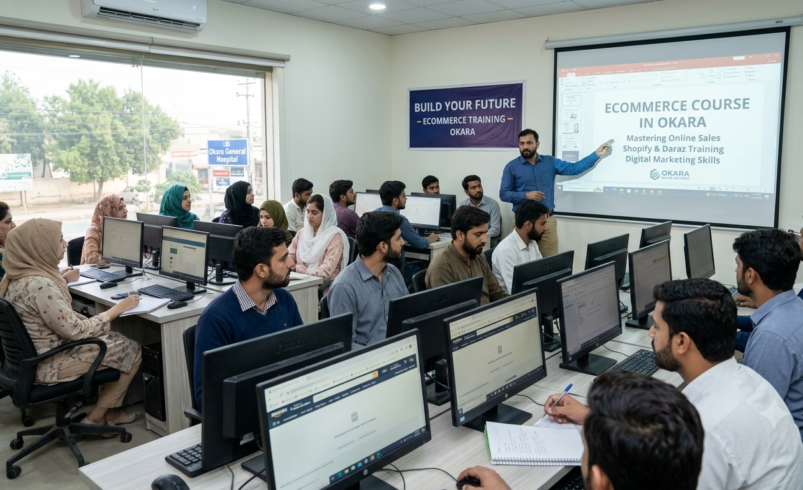

The world of business has changed dramatically over the past decade. With the rapid growth of online shopping, digital marketing, and social media platforms, e-commerce has become one of the most profitable industries worldwide. Whether you are a student, entrepreneur, freelancer, or job seeker, learning e-commerce can open the door to countless opportunities.
In Okara, the demand for e-commerce education is increasing as more people recognize the potential of earning online. An e-commerce course provides practical knowledge about setting up, managing, and growing an online business. From selling products on international marketplaces to creating your own online store, the skills learned in an e-commerce course can help individuals achieve financial independence.
This article explains why an E-commerce course in Okara is a smart investment, what students can expect to learn, career opportunities, and how to choose the right training institute.
What is E-commerce?
E-commerce, short for electronic commerce, refers to buying and selling products or services over the internet. It includes online stores, digital marketplaces, mobile shopping apps, and social commerce platforms. Instead of relying on traditional physical shops, businesses use websites and online platforms to reach customers worldwide.
Popular e-commerce business models include:
- Business-to-Consumer (B2C)
- Business-to-Business (B2B)
- Consumer-to-Consumer (C2C)
- Consumer-to-Business (C2B)
Today, businesses of every size are investing in online selling because it allows them to reach a much larger audience while reducing operational costs.
Why Learn E-commerce in Okara?
Okara is becoming a hub for digital education and online business training. Many students and professionals are interested in learning practical skills that help them earn online without leaving their hometown.
Here are some reasons why enrolling in an e-commerce course in Okara is beneficial:
1. Growing Demand
The e-commerce industry continues to expand every year. Companies need skilled professionals to manage online stores, marketing campaigns, customer service, and logistics.
2. Global Business Opportunities
With e-commerce knowledge, you can sell products not only in Pakistan but also in international markets such as the USA, UK, Canada, Australia, and Europe.
3. Affordable Learning
Compared to major cities, training institutes in Okara often offer quality education at more affordable fees.
4. Freelancing Opportunities
E-commerce skills allow you to work as a freelancer by offering services such as store management, product listing, digital marketing, and virtual assistance.
5. Entrepreneurship
Instead of searching for jobs, students can launch their own online businesses and build long-term income streams.
What Will You Learn in an E-commerce Course?
A comprehensive e-commerce course covers both theoretical concepts and practical training. Students gain hands-on experience through real-world projects.
Introduction to E-commerce
Students learn the fundamentals of online business, different business models, and how digital commerce works.
Product Research
Finding profitable products is one of the most important parts of e-commerce. Students learn how to identify trending products with high demand and low competition.
Supplier Hunting
A good course teaches how to find reliable suppliers locally and internationally while maintaining product quality and competitive pricing.
Store Creation
Students learn how to build professional online stores using platforms like Shopify or WooCommerce without requiring advanced programming skills.
Marketplace Selling
Training includes selling products on popular online marketplaces while understanding account management, listing optimization, and order processing.
Digital Marketing
Marketing is essential for business success. Students learn:
- Facebook Marketing
- Instagram Marketing
- Google Ads
- Email Marketing
- Content Marketing
- SEO (Search Engine Optimization)
Order Management
Students understand how to process customer orders, manage inventory, communicate with suppliers, and ensure timely deliveries.
Customer Support
Building customer trust requires excellent communication. Courses teach how to handle customer inquiries, complaints, returns, and refunds professionally.
Payment Gateways
Students learn about secure online payment systems and methods for accepting payments from local and international customers.
Business Scaling
Once a business becomes profitable, students learn strategies for increasing sales, expanding product lines, and automating operations.
Skills You Will Develop
An e-commerce course helps students develop valuable business and technical skills, including:
- Online business management
- Product sourcing
- Market research
- Digital marketing
- Branding
- Customer relationship management
- Communication skills
- Sales strategy
- Data analysis
- Business planning
These skills remain valuable even as technology continues to evolve.
Career Opportunities After Completing an E-commerce Course
One of the biggest advantages of learning e-commerce is the wide range of career options available.
E-commerce Manager
Manage online stores, product listings, inventory, and sales operations for companies.
Shopify Expert
Create, customize, and manage Shopify stores for businesses worldwide.
Amazon Virtual Assistant
Help online sellers manage product listings, customer support, inventory, and advertising.
Digital Marketing Specialist
Promote brands using social media, search engines, and paid advertising campaigns.
Freelance E-commerce Consultant
Offer online services to clients across different countries through freelancing platforms.
Online Business Owner
Launch your own brand and sell products directly to customers using your website or marketplaces.
Dropshipping Business
Operate an online store without maintaining inventory by working directly with suppliers.
Who Should Join an E-commerce Course?
An e-commerce course is suitable for:
- Students
- Fresh graduates
- Housewives
- Freelancers
- Business owners
- Shopkeepers
- Job seekers
- Professionals looking for additional income
No advanced technical background is required. Basic computer knowledge is usually enough to get started.
Benefits of Practical Training
The best e-commerce courses focus on practical learning instead of only theoretical lectures.
Students receive experience in:
- Creating real online stores
- Product listing
- Running advertisements
- Managing customer orders
- Working with suppliers
- Optimizing product pages
- Tracking business performance
Hands-on training prepares students for real business challenges.
Choosing the Right E-commerce Institute in Okara
Before enrolling in any course, consider the following factors:
Experienced Trainers
Choose instructors who have real-world experience in running successful online businesses.
Updated Curriculum
The e-commerce industry changes rapidly, so the course should include the latest strategies and tools.
Practical Projects
Hands-on assignments help students build confidence and practical expertise.
Student Support
Good institutes provide mentorship even after course completion.
Affordable Fees
Compare different institutes to find one that offers quality education at a reasonable price.
Certificates
A recognized certificate adds value to your professional profile and increases job opportunities.
Challenges in E-commerce
Like every business, e-commerce also presents certain challenges.
Some common issues include:
- High competition
- Changing market trends
- Customer expectations
- Product returns
- Advertising costs
- Inventory management
However, with proper education, planning, and consistent effort, these challenges can be managed effectively.
Tips for Success in E-commerce
To succeed in the e-commerce industry, students should follow these best practices:
- Keep learning new market trends.
- Focus on excellent customer service.
- Choose high-quality products.
- Build a trustworthy brand.
- Invest in digital marketing.
- Analyze sales data regularly.
- Stay patient and consistent.
- Improve your skills continuously.
Success rarely happens overnight, but dedication and continuous learning produce long-term results.
Future of E-commerce in Pakistan
Pakistan’s digital economy is growing rapidly. Increasing internet access, smartphone usage, online payment solutions, and digital logistics are encouraging more consumers to shop online.
This growth creates exciting opportunities for individuals who possess e-commerce skills. Businesses are actively searching for trained professionals, while entrepreneurs can build profitable online brands serving both local and international customers.
For students in Okara, learning e-commerce today can provide a competitive advantage in tomorrow’s digital economy.