

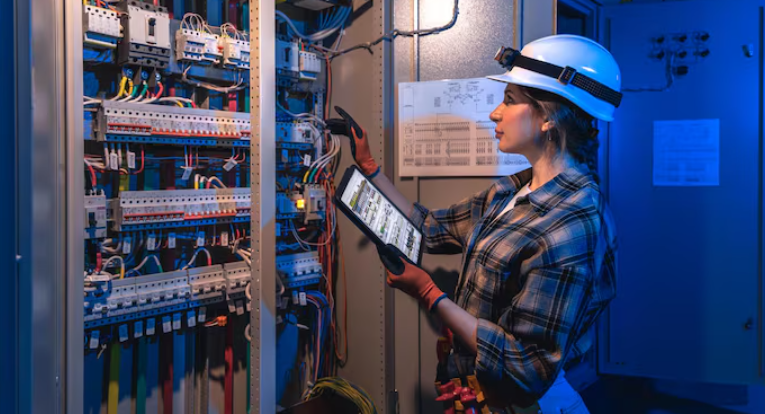

Dubai’s skyline stands as a global benchmark for modern architecture, urban planning, and cutting-edge infrastructure. Behind these impressive glass towers, expansive commercial centers, and sprawling luxury villas lies an intricate power framework that demands absolute reliability, safety, and energy efficiency. As electrical engineers working directly on complex infrastructural upgrades across the emirate, we recognize that power distribution is not merely about pulling wires and mounting distribution boards. It requires engineering resilient systems capable of handling high thermal stress, stringent local government compliance, and rapid technological integration.
Whether you are developing a commercial property in Business Bay, retrofitting an industrial facility in Jebel Ali, or automating a residential estate in Palm Jumeirah, securing robust electrical systems is paramount. In this guide, we break down the critical technical standards, regulatory frameworks, smart automation strategies, and safety protocols essential for executing world-class electrical projects in Dubai.
DEWA Regulations and Compliance for Commercial and Residential Projects
How do DEWA regulation standards impact electrical system designs in Dubai?
DEWA regulations mandate strict adherence to local safety, load management, and energy conservation protocols. Every installation must pass rigorous engineering reviews, insulation testing, and inspection schedules before grid connection, ensuring that all commercial and residential power infrastructure operates securely without endangering public safety or grid stability.
Navigating Dubai Electricity and Water Authority (DEWA) regulations is the cornerstone of any successful building project. DEWA’s guidelines are among the most stringent in the region, designed to protect occupants and preserve the integrity of the main power grid. From cable sizing and circuit protection selection to consumer unit layouts, every element must strictly comply with the DEWA Regulations for Electrical Installations.
Navigating the Approval and Inspection Workflow
Achieving full compliance requires a structured, multi-stage engineering approach. Before any physical wiring begins, engineered schematic diagrams, load schedules, and single-line diagrams (SLDs) must be submitted through DEWA’s digital portal for initial technical approval. Once installed, the entire system undergoes physical site inspections where DEWA auditors inspect panel wiring, containment separation, and circuit tagging.
Key compliance steps include:
- Load Assessment & Calculation: Estimating connected load and maximum demand to specify accurate transformer capacities and main distribution boards (MDBs).
- Protection Coordination: Selecting calibrated circuit breakers (MCCBs, ACB, and RCDs) that isolate faults locally without causing cascading power outages.
- Mandatory Testing: Executing insulation resistance tests, continuity checks, and polarity verification prior to requesting power connection.
Working alongside an accredited Dewa approved contractor streamlines this approval process, ensuring all documentation matches local municipal standards and avoiding costly project delays.
Smart Power Management and Automation for Modern Dubai Structures
How does smart power management enhance energy efficiency in Dubai buildings?
Smart power management integrates automated lighting, intelligent sub-metering, and dynamic load-balancing controllers into the building’s electrical architecture. These systems monitor consumption in real time, minimize operational waste, optimize HVAC runtimes, and seamlessly lower utility expenses while supporting Dubai’s overarching sustainability targets.
Modern power systems in Dubai have evolved far beyond passive electricity delivery. To meet the ambitious goals of the Dubai Clean Energy Strategy, building managers and property owners are actively integrating intelligent energy management systems (EMS) that actively control power distribution based on real-time occupancy and environmental conditions.
Integrating IoT and Automation into Main Distribution Infrastructure
Building automation relies on a robust power foundation. By integrating smart meters, Modbus/BACnet-compatible circuit breakers, and centralized control panels, facility managers gain granular visibility over power quality and demand peaks. This level of control allows for automatic load shedding during non-peak hours, predictive fault diagnostics, and targeted energy conservation.
Standard automation features in smart installations include:
- Dynamic Lighting Controls: Utilizing DALI (Digital Addressable Lighting Interface) and occupancy sensors to regulate illumination levels dynamically.
- Automated Sub-Metering: Tracking energy usage across individual departments, tenants, or mechanical zones to pinpoint inefficiencies instantly.
- Power Factor Correction (PFC): Installing automated capacitor banks near main switchboards to maintain power factors close to unity, eliminating DEWA low-power-factor penalties.
High-Load Infrastructure Design and HVAC System Integration
Why is specialized high-load infrastructure critical for Dubai’s extreme climate?
Dubai’s extreme summer temperatures create continuous, high-load demand primarily driven by heavy-duty HVAC systems. Custom electrical infrastructure prevents conductor overheating, minimizes voltage drops across long runs, and ensures uninterrupted operation during periods of peak thermal and electrical stress.
In the Middle East, environmental factors dictate electrical engineering practices. Ambient summer temperatures frequently exceed 45°C, causing significant thermal buildup inside electrical switchrooms, cable trays, and conduit runs. Because electrical conductor resistance increases with heat, standard wiring capacity must be derated according to ambient temperature correction factors.
Mitigating Thermal Stress and Voltage Drop
When designing high-capacity power systems for hotels, high-rises, and industrial sites, cooling loads often account for over 60% of total electrical demand. The power distribution network must be engineered with generous thermal margins and heavy-duty busbar risers to handle these heavy inductive loads without voltage instability.
Essential engineering considerations for high-load designs:
- Conductor Derating: Applying strict temperature correction multipliers to select oversized copper or aluminum conductors capable of carrying continuous full loads safely.
- Busbar Trunking Systems (BTS): Utilizing pre-fabricated sandwich busway systems instead of traditional multi-core cable bundles for high-rise risers to improve heat dissipation and simplify installation.
- Dedicated HVAC Starters and VFDs: Equipping large chillers and air handling units with Variable Frequency Drives (VFDs) and soft starters to suppress massive current spikes during motor startup.
Implementing custom-tailored solutions for Electrical Installations in Dubai guarantees that major mechanical systems operate at peak efficiency throughout the summer without risking unexpected breaker trips or thermal isolation failures.
Electrical Safety Protocols, Earthing, and Surge Protection
What earthing and surge protection standards prevent electrical hazards in Dubai?
Dubai electrical standards require low-resistance earthing networks, comprehensive equipotential bonding, and multi-stage Surge Protection Devices (SPDs). Together, these measures divert dangerous fault currents and atmospheric lightning surges safely into the ground, safeguarding human life and sensitive digital equipment.
Electrical safety is an absolute priority in modern power engineering. In a region where lightning strikes on tall structures can trigger severe transient overvoltages and dry soil conditions complicate earth-ground pathways, robust grounding networks are non-negotiable.
Building a Resilient Grounding and Protection Framework
A complete safety framework combines direct earth grounding, residual current protection, and structured surge suppression across every level of the power hierarchy. Earth electrode systems must consistently achieve earth resistance values below the mandatory 1-ohm threshold required for main installations.
Key safety components include:
- Equipotential Bonding: Uniting all metallic structural elements, water piping, and cable trays into a continuous earth loop to prevent dangerous potential differences between conductive surfaces.
- Residual Current Devices (RCDs): Installing high-sensitivity 30mA RCDs on all general-purpose socket outlets and wet-area circuits to provide instant life-safety shock protection.
- Type 1 and Type 2 Surge Protection: Mounting heavy-duty SPDs inside Main Distribution Boards (MDBs) and Sub-Main Distribution Boards (SMDBs) to absorb high-energy voltage spikes caused by switching operations or atmospheric discharge.
Modernizing Legacy Wiring and Retrofitting Older Buildings
How do you safely retrofit electrical systems in older Dubai properties?
Retrofitting older properties requires conducting exhaustive thermal imaging assessments, evaluating existing conductor degradation, replacing outdated fuse panels with modern breaker protection, and upgrading distribution boards to accommodate modern high-power appliances and smart digital infrastructure.
As older commercial districts in Dubai undergo urban renewal, modernizing aging electrical infrastructure has become a priority for facility owners. Legacy installations built two decades ago often struggle to support modern power densities, electric vehicle (EV) charging stations, and sensitive electronic hardware.
Overcoming Challenges in Brownfield Upgrades
Upgrading an active facility requires meticulous planning to prevent operational downtime. Legacy installations often suffer from deteriorated insulation, overloaded neutrals, and unorganized wiring additions made over time. We perform non-destructive testing to evaluate existing infrastructure before recommending partial rewiring or full panel replacements.
Practical steps in an electrical retrofit project:
- Thermographic Testing: Using infrared cameras to detect loose connections, overloaded phases, and hot spots within live switchgear without interrupting power.
- Neutral Conductor Upgrades: Replacing undersized neutral cables to safely manage harmonic currents generated by non-linear electronic loads.
- Panelboard Upgrades: Removing legacy fuse units and installing modern, compartmentalized distribution boards equipped with integrated arc-fault and surge protection.
Selecting the Right Electrical Contracting Partner in Dubai
What qualifications should you verify before hiring an electrical contractor in Dubai?
You must verify that the contractor possesses valid DEWA licensing, relevant category certifications, verified engineering expertise, and a proven track record of successful project completions. Ensuring the firm maintains strict quality assurance and safety management protocols guarantees full regulatory compliance.
The success of any power infrastructure project relies on the competence of the engineering team executing it. Selecting a contractor who understands local authority protocols, international IEC standards, and field-level execution prevents costly mistakes and ensures long-term system performance.
Key Evaluation Criteria for Power Infrastructure Projects
When evaluating potential engineering partners for major installations, look beyond competitive pricing. Focus on technical capability, health and safety management systems, and post-commissioning maintenance support.
When choosing a partner, verify the following credentials:
- DEWA Grade Certification: Ensure the contractor holds the appropriate license classification corresponding to your required power capacity (e.g., Low Voltage, Medium Voltage).
- In-House Engineering Team: Confirm they employ qualified electrical engineers capable of producing accurate CAD drawings, load schedules, and short-circuit calculations.
- Quality Assurance & Safety Standards: Verify ISO 9001 (Quality Management) and ISO 45001 (Occupational Health and Safety) certifications to ensure consistent work standards on-site.
- Post-Installation Support: Choose contractors that offer comprehensive testing, commissioning, and preventive maintenance contracts to protect your investment long after initial power turn-on.
Building a safe, smart, and fully compliant power infrastructure in Dubai requires an uncompromised commitment to engineering precision. By combining strict adherence to DEWA standards with forward-thinking smart automation and robust safety protocols, property owners and developers can secure energy-efficient systems designed to perform reliably for decades.