

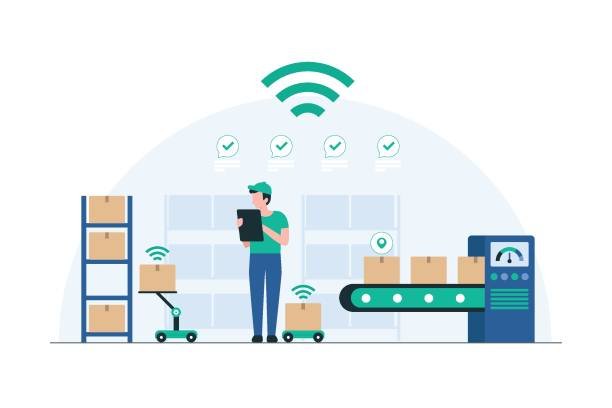

Modern businesses are under constant pressure to reduce costs, improve delivery performance, manage inventory efficiently, and respond faster to market disruptions. End-to-end logistics provides an integrated approach to managing the complete movement of goods, information, and resources from suppliers and manufacturing facilities to distribution centers and final customers. When supported by strategic Logistics Consulting, this approach can transform a fragmented Supply Chain into a connected, measurable, and resilient operating network.
What Is End-to-End Logistics?
End-to-end logistics is the coordinated management of logistics activities across the entire supply chain lifecycle. It typically includes inbound transportation, supplier flows, warehousing, inventory management, distribution, transportation planning, order fulfillment, last-mile delivery, and reverse logistics.
Instead of optimizing individual functions independently, businesses analyze how decisions in one area affect the entire Supply Chain Network. For example, reducing warehouse inventory may appear beneficial from a working-capital perspective, but insufficient safety stock can increase stockouts, expedited transportation costs, and customer service failures. End-to-end optimization evaluates these trade-offs before operational decisions are made.
Why Does Supply Chain Network Design Matter?
A Supply Chain Network determines how products flow between suppliers, plants, warehouses, distribution centers, fulfillment locations, and customers. An inefficient network can create unnecessary transportation miles, excess inventory, poor asset utilization, longer lead times, and higher cost-to-serve.
Effective Supply Chain Network Design uses demand patterns, transportation costs, warehouse capacity, service requirements, inventory policies, supplier locations, and customer geography to determine the optimal configuration.
Advanced network modeling can also evaluate scenarios such as opening or closing distribution centers, changing transportation modes, shifting production volumes, consolidating facilities, or introducing regional fulfillment hubs. This allows organizations to understand potential financial and operational impacts before making major infrastructure investments.
How Logistics Consulting Improves Supply Chain Performance
Professional Logistics Consulting helps organizations identify inefficiencies that may not be visible when transportation, inventory, warehousing, and fulfillment are analyzed separately. Logistics experts combine operational data with network modeling, process analysis, and scenario planning to identify opportunities across the complete logistics ecosystem.
A typical engagement may analyze freight spend, shipment profiles, carrier performance, warehouse throughput, SKU velocity, inventory positioning, order patterns, delivery lead times, facility capacity, and customer service requirements.
The objective is not simply to reduce logistics costs. The stronger approach is to determine the right balance between cost, inventory, capacity, service level, resilience, and speed.
Using Data to Optimize End-to-End Logistics
Data-driven decision-making is becoming central to modern logistics operations. Transportation management systems, warehouse management systems, ERP platforms, order management systems, IoT technologies, and analytics platforms generate significant operational data.
When these datasets are connected, organizations can monitor KPIs such as transportation cost per shipment, on-time-in-full performance, warehouse utilization, inventory turnover, order cycle time, forecast accuracy, cost-to-serve, and perfect-order performance.
Predictive analytics can take this further by identifying potential capacity constraints, demand fluctuations, inventory risks, and transportation disruptions before they significantly affect operations.
Building a Resilient Supply Chain
Supply chain optimization must also account for uncertainty. Supplier disruptions, transportation capacity constraints, geopolitical changes, demand volatility, and unexpected operational events can quickly expose weaknesses within a network.
A resilient Supply Chain therefore requires scenario-based planning. Organizations can model alternative suppliers, transportation routes, inventory strategies, facility locations, and distribution structures to understand how the network would respond under different conditions.
This approach enables businesses to move from reactive logistics management toward proactive supply chain decision-making.
When Should a Business Consider Logistics Consulting?
Organizations should consider Logistics Consulting when logistics costs are increasing, service levels are declining, inventory is growing faster than sales, warehouse capacity is constrained, transportation networks have become complex, or the business is preparing for expansion, acquisition, consolidation, or new market entry.
A structured logistics assessment can identify where operational complexity is creating unnecessary cost and determine which improvements can deliver measurable business value.
Turn Your Logistics Network Into a Competitive Advantage
Optimizing end-to-end logistics requires more than improving individual transportation or warehouse processes. It requires a connected view of the entire Supply Chain Network, supported by reliable data, advanced analytics, scenario modeling, and practical operational expertise.
With the right Logistics Consulting strategy, businesses can build a supply chain that reduces cost-to-serve, improves inventory productivity, strengthens delivery performance, and adapts more effectively to changing market conditions.
If your logistics network is experiencing rising costs, capacity challenges, inventory imbalance, or inconsistent service levels, an end-to-end supply chain assessment can reveal where the greatest optimization opportunities exist—and provide a practical roadmap for turning those opportunities into measurable results.