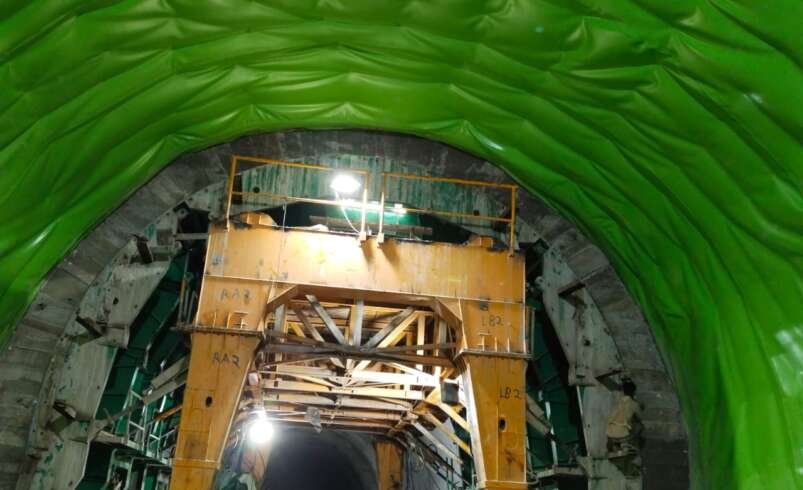

Water conservation and seepage management are important considerations in dam construction and reservoir development. Uncontrolled water seepage can affect water storage efficiency and create challenges for the long-term maintenance of hydraulic structures. A suitable geomembrane system can help reduce water movement through designated surfaces when it is incorporated into a properly engineered design.
Geomembrane for dams is used in selected water containment and seepage-control applications, depending on the dam structure, foundation conditions, water pressure, exposure, and project specifications. PVC geomembrane sheets are one option considered for waterproofing systems where flexibility and low permeability are required. D L Millar and Company Limited, operating under the Dr. Millars brand, supplies PVC geomembrane solutions for industrial and infrastructure applications.
What Is a Geomembrane for Dams?
A geomembrane is a synthetic, low-permeability membrane designed to act as a barrier against the movement of water and other liquids. In suitable dam and reservoir designs, it may be installed as part of a lining or seepage-control system to limit water loss through selected surfaces.
The geomembrane is not a substitute for proper dam engineering. Its performance depends on the overall design, including foundation preparation, anchoring, drainage, protective layers, joints, and connections to adjoining structures. Engineers must assess whether a geomembrane is appropriate for the specific dam type and operating conditions.
PVC geomembrane is one possible material for certain applications. Other membrane materials may be more appropriate in different conditions, so product selection should always follow the project’s technical requirements rather than a general assumption that one material suits every dam.
Importance of Geomembrane Systems in Dam Projects
Seepage Control
Seepage management is an important part of water infrastructure planning. A suitably designed geomembrane barrier can help limit water passing through a lined surface. This can be valuable in applications where reducing seepage is a project objective.
The required system depends on the type of dam, foundation characteristics, groundwater conditions, water levels, and the intended location of the membrane. Qualified engineers should determine how the geomembrane will work alongside other seepage-control measures.
Water Conservation
Water stored in reservoirs may be intended for irrigation, industrial use, municipal supply, or other purposes. Where seepage through a particular surface is a concern, a properly specified lining system may help reduce water loss through that surface.
The actual benefit depends on site conditions and the quality of the complete installation. A geomembrane should be considered as part of a broader water-management strategy rather than as a standalone solution.
Protection of Lined Surfaces
Geomembranes can provide a barrier layer over prepared surfaces in suitable applications. However, construction materials beneath and above the membrane must be carefully selected. Rough substrates, sharp stones, concentrated loads, and damage during construction can affect membrane integrity.
Protective geotextiles or other suitable layers may be specified to help reduce the risk of mechanical damage. The design team should determine the appropriate protection based on the substrate, installation method, and expected service conditions.
Applications of Geomembrane for Dams
Reservoir Lining
Reservoir lining is one application where a geomembrane may be considered to limit seepage through selected surfaces. The design must address water levels, slope stability, substrate preparation, anchoring, and the need for protective layers. The membrane’s suitability should be verified against the reservoir’s operating conditions and engineering requirements.
Earthen Dams
For certain earthen dam designs, a geomembrane may be incorporated into an engineered seepage-control arrangement. Its location and function depend on the design and site conditions. The system may require specialized drainage, filters, protection, and monitoring to manage seepage safely.
A membrane alone cannot ensure dam stability or replace the need for appropriate internal drainage and seepage-control engineering. The complete system should be designed and reviewed by qualified dam engineers.
Irrigation and Water Storage Structures
Water storage structures associated with irrigation may use lining systems to reduce seepage where appropriate. Geomembranes can be considered for selected storage ponds, balancing reservoirs, and related infrastructure. Material selection should take account of water characteristics, environmental exposure, installation details, and the project’s expected service conditions.
Canal and Water Conveyance Systems
Geomembranes are also used in suitable canal lining systems where reducing water loss is important. Although canals differ from dams in their structural and hydraulic requirements, both applications require attention to substrate preparation, membrane protection, seams, and connections.
A PVC geomembrane sheet may be evaluated for canal lining when its documented properties meet the project specification.
PVC Geomembrane Sheet for Dam Waterproofing
PVC geomembrane sheets are flexible synthetic membranes that can be considered for selected waterproofing applications. Their suitability for dam projects depends on the product formulation, thickness, physical properties, exposure conditions, and installation requirements.
Thickness is an important part of product selection, but it should not be the only deciding factor. Dr. Millars product information has listed PVC geomembrane options in 1.5 mm and 2.0 mm thicknesses. Current availability and suitability for a particular dam or reservoir project should be confirmed directly with the supplier.
Engineers should also evaluate tensile and tear properties, puncture resistance, flexibility, seam performance, chemical compatibility, and environmental exposure as relevant to the project. Current technical data and test reports should support these assessments.
Where a geomembrane will be covered or protected, the complete system should be designed to avoid excessive stress, abrasion, or damage during construction and operation. Where it may be exposed, resistance to the relevant environmental conditions must be verified.
How to Select the Right Geomembrane for a Dam
The selection process should begin with the engineering design and the function the membrane is expected to perform. The project team should identify whether the membrane is intended for reservoir lining, upstream face protection, seepage control, or another defined application.
Foundation and surface conditions must then be assessed. Uneven surfaces, sharp materials, settlement, and construction movement may influence the required preparation and protection. Anchoring details and connections around structures should be designed to suit the site’s geometry and hydraulic conditions.
The material specification should state the required thickness, performance properties, joining method, inspection procedures, and applicable standards. If a project requires a specific certification or Indian Standard, request current documentation and confirm that it applies to the exact product being supplied.
Finally, review the installation and quality-control plan. This may include checking incoming materials, verifying seam quality, documenting repairs, and carrying out the tests required by the project specification. Qualified installers and independent inspection may be appropriate for critical infrastructure projects.
Installation Considerations for Dam Geomembranes
Proper installation is essential to the performance of any geomembrane system. The substrate should be prepared according to the design, with unsuitable materials and potential damage sources addressed before the membrane is placed.
Sheets must be positioned and joined using a method suitable for the selected material. Seams, edges, penetrations, transitions, and anchoring points deserve particular attention because they can be vulnerable areas in a waterproofing system. Installation teams should follow approved procedures and record inspection results.
Protection during subsequent construction is also important. Equipment movement, material placement, and other site activities can damage an installed membrane if appropriate precautions are not taken. The design should specify any required protective geotextile, cover layer, drainage component, or other system element.
For dam infrastructure, installation should be carried out under the supervision of appropriately qualified professionals and in accordance with the approved engineering documents. The membrane and associated components should be inspected before the system is accepted.
Why Consider Dr. Millars for Geomembrane Solutions?
D L Millar and Company Limited, operating under the Dr. Millars name, has a company history dating back to 1929 and supplies products for industrial and infrastructure-related applications, including PVC geomembrane solutions.
When evaluating a geomembrane manufacturer or supplier in India, project owners and contractors should review current product specifications, technical support, available thicknesses, quality documentation, and suitability for the intended application. These checks help ensure the supplied material aligns with the project’s requirements.
For dam and reservoir projects, product selection should be based on the approved engineering specification and relevant performance evidence. Buyers can contact Dr. Millars to discuss the application, required dimensions, thickness, technical documentation, and current product availability.
Conclusion
Geomembrane for dams can be an important component of a properly engineered seepage-control or water containment system. Depending on the project design, geomembranes may be considered for reservoirs, selected earthen dam applications, irrigation storage structures, and related water infrastructure.
Successful performance requires more than selecting a membrane. The material must be appropriate for the site, supported by technical documentation, installed on a suitable substrate, joined correctly, and protected against damage. Engineering review and quality control are especially important for critical hydraulic structures.
D L Millar and Company Limited, through Dr. Millars, offers PVC geomembrane solutions for consideration in suitable infrastructure applications. Contact the company to discuss your project requirements and confirm current product specifications.
Frequently Asked Questions
1. What is geomembrane for dams used for?
Geomembranes may be used in suitable dam and reservoir designs to help limit seepage through designated surfaces and support water containment objectives.
2. Can PVC geomembrane be used in dam projects?
PVC geomembrane may be suitable for certain dam-related applications, depending on the design, exposure conditions, water pressure, material properties, and project specifications. The suitability should be confirmed by qualified engineers.
3. What thickness of geomembrane is suitable for dams?
The required thickness depends on the dam design, substrate, installation conditions, mechanical stresses, and specified performance criteria. Dr. Millars product information has listed 1.5 mm and 2.0 mm PVC geomembrane options; confirm current availability and suitability with the supplier.
4. Does a geomembrane replace other dam seepage-control measures?
No. A geomembrane is one potential component of a complete engineering system. Drainage, filters, foundation treatment, structural design, and monitoring may also be required.
5. What should buyers check before purchasing geomembrane for dams?
Review the current technical data, required thickness, material properties, joining method, test reports, applicable standards, installation guidance, and compatibility with the project design.
6. How can I contact Dr. Millars for geomembrane requirements?
Contact D L Millar and Company Limited using the details below to discuss product specifications and project requirements.
Company Contact Details
D L MILLAR AND COMPANY LIMITED
Flat No. 303, 3rd Floor, Elite House-36, Community Center, Zamroodpur, New Delhi-110048, India.
Phone: +91 8700518400
Email: dlmillars@gmail.com
Website: https://drmillars.co.in/