

Quick answer: Before buying any hair loss treatment, confirm the active ingredient has clinical backing, the seller requires a real medical consultation, the dosage matches your needs, and the refund policy is clearly stated. Asking these ten questions before you check out protects your money and your health, and helps you avoid products that promise results they can’t deliver.
Hair loss treatment is a crowded market, and not every product on the shelf, or in your search results, deserves your money. Some formulations are backed by decades of clinical research. Others are marketing dressed up as science. The difference between the two isn’t always obvious from the packaging, the price tag, or even the reviews section.
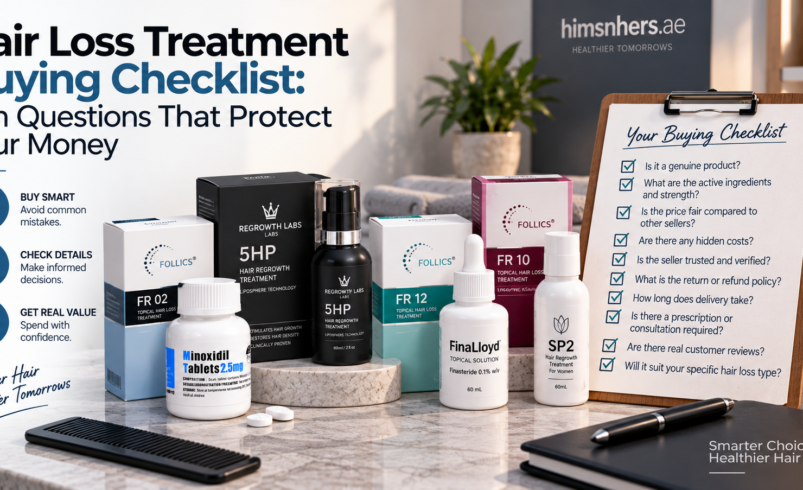
That’s the problem this checklist solves. Before you commit to a hair loss treatment, whether it’s a topical solution, an oral tablet, or a combination formula, there are ten questions worth asking. Each one is designed to protect your money from products that overpromise, and to protect your health from treatments that aren’t right for your body. This isn’t about fear. It’s about making an informed purchase instead of an impulsive one.
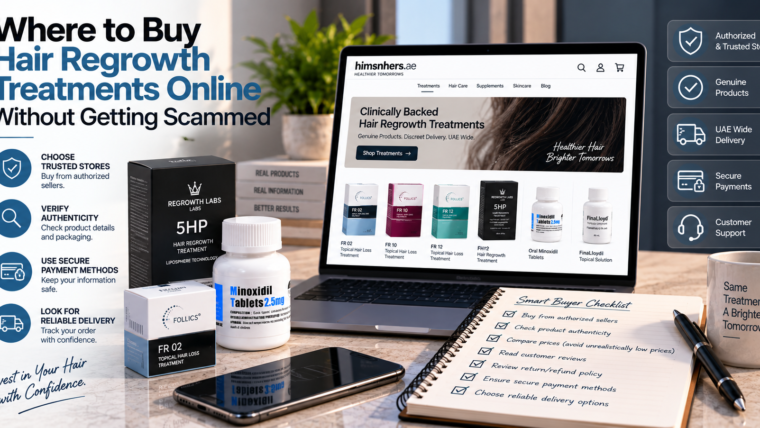
Whether you’re just starting to notice thinning at the crown or you’ve been managing hair loss for years, the questions below apply. They work whether you’re shopping locally or browsing hair loss treatment options online, and they apply equally to men and women. Use this checklist as a filter. If a product or seller can’t answer these questions clearly, that’s information too.
Why a Buying Checklist Matters Before You Choose a Hair Loss Treatment
Hair loss treatment purchases carry more weight than most everyday buying decisions. You’re not just spending money. You’re introducing an active ingredient into your body, or applying one directly to your scalp, often for months before you see any measurable change. That combination of financial commitment and biological effect is exactly why a structured checklist matters.
Without one, it’s easy to be swayed by aggressive marketing, before-and-after photos that lack context, or a subscription model that locks you into recurring charges before you’ve confirmed the treatment even works for your hair loss pattern. A checklist forces you to slow down and evaluate the product on its merits, not on how persuasive the packaging is.
The Ten Questions to Ask Before Buying Hair Loss Treatment
1. Is the Active Ingredient Backed by Clinical Evidence?
Every effective hair loss treatment starts with an active ingredient that has demonstrated results in clinical settings. Minoxidil and finasteride remain the two most researched options, available in topical and oral forms depending on the treatment. Ingredients like azelaic acid, adenosine, and biotin often appear in supporting roles within broader formulations. Before purchasing, confirm the active ingredient, its concentration, and whether the seller can point to clinical studies rather than testimonials alone.
2. Does the Seller Require a Medical Consultation?
A hair loss treatment that skips the consultation step is a warning sign, not a convenience. Reputable sellers screen for contraindications, underlying conditions, and suitability before dispensing treatment, particularly for oral options that affect the body systemically rather than just the scalp. If a seller lets you complete a purchase with no medical review at all, ask why.
3. What Concentration and Dosage Are You Actually Getting?
Concentration matters as much as the ingredient itself. Minoxidil, for example, is available in a wide range of strengths, from 2% topical solutions to 15% or 16% formulations, and oral tablets in 2.5mg, 5mg, and 10mg doses. Higher concentration isn’t automatically better for every person, and dosage often needs to increase gradually under supervision. Confirm the exact strength you’re buying, and ask whether it matches what a consultation would typically recommend for your level of hair loss.
4. Is the Product Suited to Your Specific Type of Hair Loss?
Hair loss treatment isn’t one-size-fits-all. Hormonal pattern loss, stress-related shedding, and other causes each respond differently to treatment. Some formulations combine multiple active ingredients, such as minoxidil paired with dutasteride or finasteride, specifically to target more advanced or hormonally driven hair loss. Before buying, make sure the product is designed for your situation rather than a generic case.
5. What Is the Seller’s Refund and Cancellation Policy?
This is where many buyers get caught off guard. Most sellers won’t refund opened medication for safety reasons, but policies still vary significantly on unopened product returns, cancellation windows, and store credit options. A trustworthy seller states these terms clearly, in writing, before you complete your purchase. If you can’t find the refund policy without contacting support directly, treat that as a signal worth noting.
6. Is This a One-Time Purchase or a Subscription?
Hair loss treatment is often sold either as a fixed one-time purchase or as a recurring subscription. A one-time purchase limits your financial exposure while you evaluate whether the treatment works for you. A subscription can offer better long-term value if you’re already committed to ongoing use, but it also carries the risk of unwanted charges if you miss a cancellation deadline. Choose the model that matches how confident you already are in the treatment.
7. Are There Contraindications or Safety Warnings You Should Know?
Ingredients like oral minoxidil affect blood pressure and cardiovascular function, meaning they’re not suitable for everyone, including individuals with low blood pressure, heart disease, kidney disease, or liver dysfunction. Topical treatments carry their own set of precautions. Before buying, confirm the product’s safety profile and whether it requires disclosure of your medical history first.
8. Does the Seller Disclose Full Ingredient Lists and Sourcing?
Transparency about ingredients extends beyond the active compound. Many hair loss treatment formulations include supporting ingredients such as procapil blends, azelaic acid, or biotin, and some buyers have specific sensitivities or preferences, including formulations free from certain additives like titanium dioxide. A seller who lists every ingredient clearly, without vague terms like “proprietary blend,” is easier to trust.
9. What Do Verified Reviews Say About Real Results?
Star ratings alone don’t tell the full story. Look for reviews that describe specific timelines, side effects, and outcomes rather than generic praise. A hair loss treatment with a handful of vague five-star reviews deserves more scrutiny than one with detailed, mixed feedback that reads as authentic.
10. Is Customer Support Available If You Have Questions?
Hair loss treatment often requires adjustments over time, whether that’s a dosage change, a side effect concern, or a question about combining products. Confirm that the seller offers accessible customer support, not just a purchase confirmation email, before you commit your money.
How to Use This Checklist Before You Buy
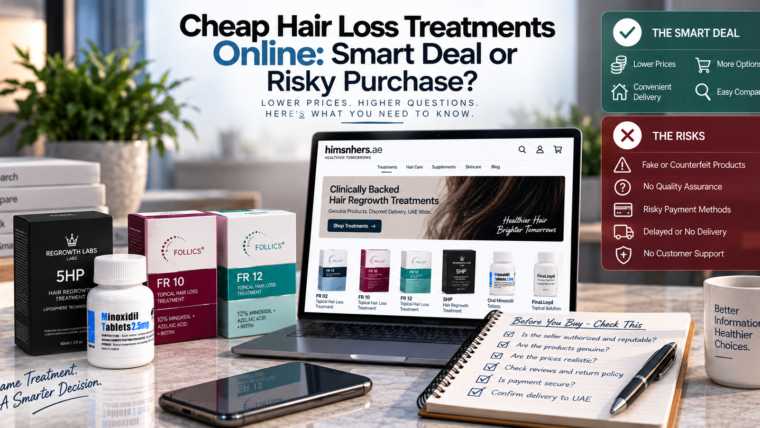
Treat these ten questions as a filter rather than a formality. Go through them in order before adding any hair loss treatment to your cart, and pay particular attention to questions two and five, the consultation requirement and the refund policy, since these two factors do the most to protect both your health and your money. If a seller answers all ten questions clearly and in writing, that’s a strong indicator you’re buying from a legitimate, trustworthy source rather than taking an expensive gamble.
Protect Your Investment With the Right Hair Loss Treatment
Buying hair loss treatment is as much a financial decision as it is a medical one. The sellers worth trusting are the ones who make consultations, ingredient lists, dosage information, and refund terms easy to find, not buried in fine print or hidden behind a completed purchase.
Hims N Hers UAE offers a full range of hair loss treatments, including topical solutions, oral tablets, and combination formulations, each selected to address different causes of hair loss with clear ingredient information and dosage guidance. Before you buy your next hair loss treatment, run it through this checklist. The extra few minutes spent confirming these ten answers is a small step that can spare you from wasted money and disappointing results.
Frequently Asked Questions
What is the most important question to ask before buying a hair loss treatment?
Whether the seller requires a medical consultation before dispensing the product. This single factor reduces the risk of buying a treatment that isn’t suitable for your health profile or hair loss type.
Are subscription-based hair loss treatments a better value than one-time purchases?
Subscriptions can offer better long-term value for buyers already committed to ongoing treatment, but one-time purchases limit financial exposure for those still evaluating whether a treatment works for them.
Can I get a refund on hair loss treatment if I’ve already opened it?
Most sellers won’t refund opened medication for safety and regulatory reasons, though some offer store credit, particularly when the return is due to a side effect rather than dissatisfaction.
Is a higher concentration of minoxidil always more effective?
Not necessarily. Higher concentrations aren’t automatically better for every user, and dosage increases should typically happen gradually under medical guidance rather than starting at the highest available strength.
How do I know if a hair loss treatment seller is trustworthy?
Look for clearly published ingredient lists, dosage information, refund policies, and a genuine consultation requirement before purchase. Vague or hard-to-find policies are a sign to look elsewhere.