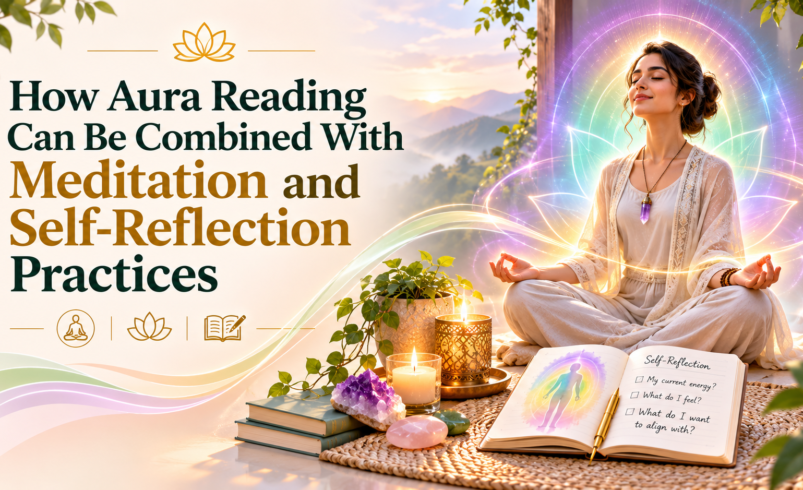

Introduction
Many people explore spiritual practices because they want opportunities to reflect on their experiences and understand their personal priorities.
Meditation, journaling, and quiet reflection are common ways to create this space.
Some individuals also include aura reading within their spiritual interests.
Aura reading involves interpreting a person’s supposed energy field through spiritual or symbolic frameworks.
Although the existence of measurable human auras has not been scientifically established, some people find the associated symbolism useful for personal reflection.
Combining aura-related discussions with meditation and journaling can offer a structured way to explore these ideas.
The aim should be thoughtful self-observation rather than expecting guaranteed spiritual or emotional outcomes.
Understanding the Different Practices
Before combining these activities, it helps to understand their purposes.
Aura Reading
Aura reading is a spiritual practice in which a practitioner interprets symbolic colours, impressions, or patterns associated with a person’s aura.
These interpretations vary between practitioners and traditions.
They should be understood as subjective spiritual perspectives.
Meditation
Meditation includes practices that involve directing attention or observing present experiences.
Different approaches may focus on breathing, bodily sensations, sounds, or thoughts.
Meditation can be practiced independently of aura-related beliefs.
Self-Reflection
Self-reflection involves examining thoughts, experiences, decisions, and personal responses.
It may take place through journaling, conversation, or quiet contemplation.
Unlike an aura consultation, self-reflection does not require a practitioner.
Why People Combine Aura Reading With Meditation
Some people use spiritual consultations to identify themes they want to explore further.
For example, an aura reader may discuss symbolic ideas associated with communication or personal balance.
The individual may then choose to reflect on those themes during meditation.
This does not establish that the practitioner has detected an objective energy pattern.
Instead, the symbolism provides a starting point for personal exploration.
Using Meditation Before an Aura Session
A short meditation before a consultation may help someone settle into the experience.
A simple approach is to sit comfortably, notice natural breathing, and allow attention to return gently when distracted.
There is no need to force a particular mental state.
The purpose is simply to create a moment of quiet before the conversation begins.
An aura reader online may also suggest a brief introductory reflection before a remote session.
Participation should remain optional.
Preparing Reflection Questions
Before booking an aura consultation, consider which aspects of life you want to reflect on.
You might ask yourself:
- What has occupied most of my attention recently?
- Which activities help me feel calm or focused?
- Have my priorities changed?
- Are there recurring themes in my personal reflections?
- What would I like to understand better about my routines?
These questions can make the subsequent conversation more relevant.
Exploring Aura Colours as Symbols
Aura colours are commonly used in spiritual interpretations.
For example, a practitioner may associate blue with communication, green with balance, or yellow with creativity.
These associations are not universal or scientifically validated.
However, individuals may use them as symbols during reflection.
Someone who encounters the theme of communication might consider whether they have been expressing their needs clearly.
The interpretation becomes a prompt for thought rather than a factual statement about an invisible energy field.
Journaling After an Aura Reading
Journaling can help organize observations after a consultation.
Instead of attempting to verify every interpretation, write down the themes you found interesting.
You may record what the practitioner discussed, how you responded, and whether the ideas connect with your experiences.
Over time, these notes can help you recognize changes in perspective.
A journal also allows you to revisit earlier reflections without relying on repeated consultations.
Creating a Simple Meditation Routine
A meditation routine does not need to be complicated.
Begin with a comfortable position and a manageable amount of time.
Focus on natural breathing or another preferred point of attention.
When thoughts arise, notice them and return attention gently.
Consistency may be more useful than trying to achieve a particular experience during every session.
People should adapt meditation practices to their comfort and preferences.
Using Self-Reflection to Explore Personal Themes
An aura reading expert may introduce broad themes such as creativity, confidence, relationships, or change.
After the consultation, individuals can explore whether these themes relate to their lives.
For example, the theme of creativity might lead someone to reflect on their hobbies or interests.
The theme of communication might encourage reflection on how they express opinions.
These exercises do not require treating the aura interpretation as a verified assessment.
Combining Meditation and Journaling
Meditation and journaling can complement each other.
Meditation provides an opportunity to notice thoughts as they arise.
Journaling allows individuals to describe those experiences afterward.
A person might meditate briefly and then write about what they noticed.
The process can remain flexible.
There is no requirement to produce a specific insight every time.
Developing a Personal Spiritual Routine
People interested in combining these practices may prefer a simple routine.
For example, they might:
- Set aside a few minutes for quiet reflection.
- Practice a comfortable form of meditation.
- Write down any themes they want to explore.
- Attend an occasional aura consultation if interested.
- Review which interpretations feel personally meaningful.
- Continue independent reflection between sessions.
This approach keeps the individual in control of their spiritual activities.
How an Aura Reader Can Support Reflection
An aura reader may provide a different perspective through symbolic interpretation.
The practitioner can explain the concepts used in their tradition and allow the individual to discuss their experiences.
However, the practitioner should not claim exclusive knowledge of the client’s emotions, personality, or future.
The individual’s own understanding remains central.
Combining Online Sessions With Personal Practices
An aura reader online may offer remote consultations for people who prefer to participate from home.
This format can fit conveniently alongside meditation or journaling routines.
The practitioner may discuss themes that individuals later explore independently.
Before booking, clients should confirm the format, duration, and cost.
They should also understand that online aura interpretations are spiritual practices rather than scientifically validated energy assessments.
Avoiding Dependence on Consultations
Personal spiritual routines should support independent reflection.
An ethical aura reading expert should not suggest that clients must book frequent appointments to remain balanced or make everyday decisions.
Individuals should feel free to take breaks, question interpretations, or stop participating.
Meditation and journaling can be practiced without any paid consultation.
Maintaining Realistic Expectations
Aura reading, meditation, and journaling are different activities with different foundations.
Meditation has been studied in relation to attention and well-being, although individual experiences vary.
Aura reading remains a spiritual interpretation without scientific validation as a method of measuring personal energy.
Combining these practices does not establish that aura interpretations are objectively accurate.
Understanding these distinctions helps people make informed choices.
Respecting Individual Preferences
Not everyone connects with the same spiritual practices.
Some prefer meditation without consultations.
Others enjoy journaling or discussing symbolic ideas with a practitioner.
There is no single method that everyone must follow.
The most appropriate routine is one that respects personal beliefs, comfort, time, and budget.
Conclusion
Aura reading can be explored alongside meditation and self-reflection as part of a personal spiritual practice.
An aura reader may introduce symbolic themes that individuals choose to consider through journaling or quiet contemplation.
However, these interpretations should not be confused with scientifically verified energy measurements.
By maintaining realistic expectations and emphasizing independent reflection, individuals can explore spiritual traditions without placing unnecessary pressure on themselves.
The purpose of combining these practices is to create space for personal exploration while respecting individual preferences and boundaries.