

Introduction
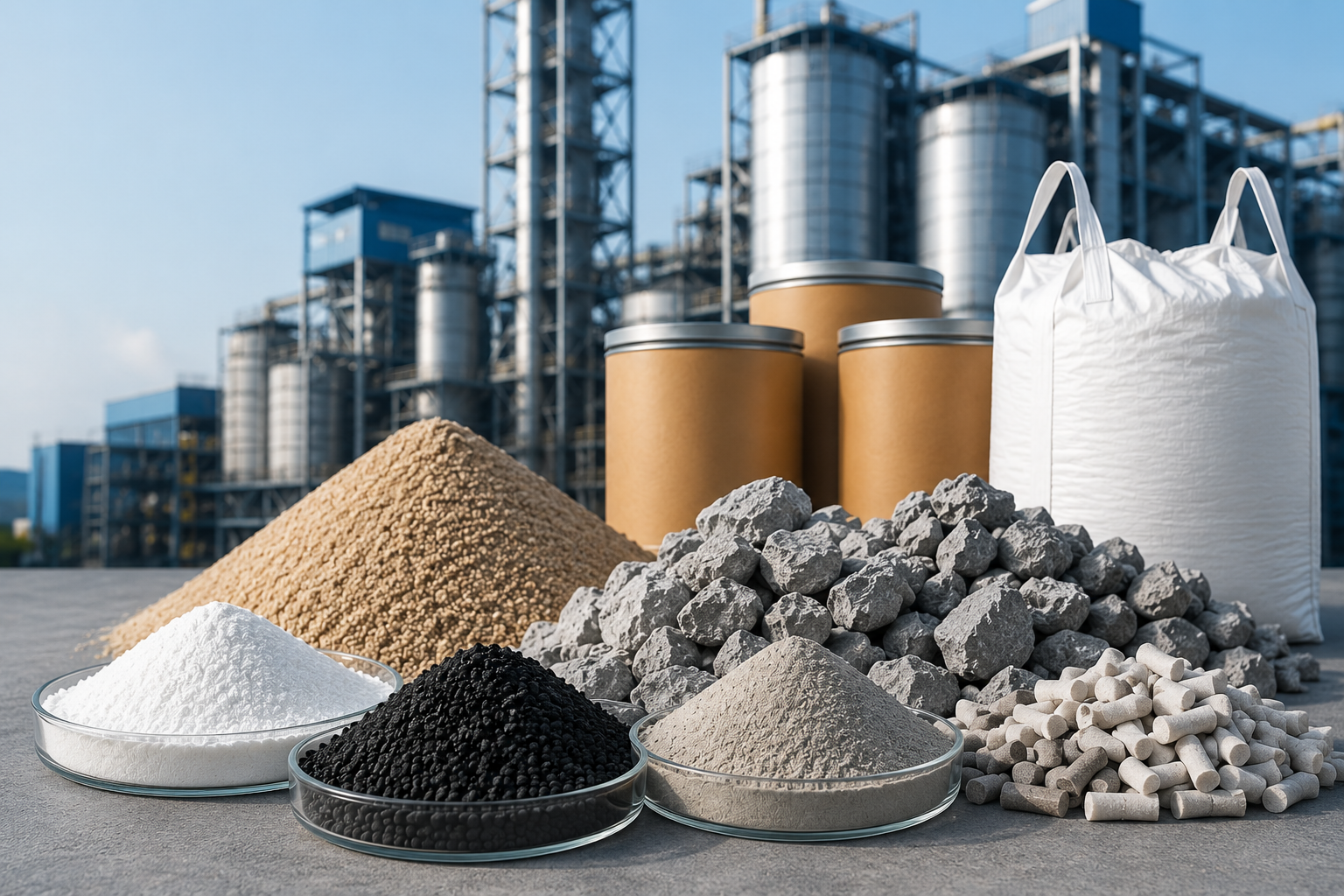
Products within the Pharmaceutical Excipients According to EXCiPACT Standard category can support pharmaceutical manufacturers seeking stronger quality control, documented supply-chain practices and more consistent material performance.
Excipients may influence tablet strength, dissolution, stability, appearance, viscosity and manufacturing efficiency. Their selection should therefore consider both chemical quality and the supplier systems used to manufacture, store and distribute them.
Why Should Excipient Assessment Be Risk-Based?
Not every excipient presents the same level of risk. The assessment should reflect its function, quantity, route of administration and effect on the finished medicine.
A risk-based review may consider:
- Excipient function
- Daily patient exposure
- Manufacturing complexity
- Potential contamination
- Material variability
- Supplier history
- Storage sensitivity
- Detectability of quality defects
An excipient used in a small amount for colour adjustment may require different controls from a material forming most of a tablet or liquid formulation.
What Does the EXCiPACT Framework Support?
The EXCiPACT certification scheme includes requirements related to Good Manufacturing Practices, Good Distribution Practices and Good Warehousing Practices for pharmaceutical excipient suppliers. Its current standard also includes requirements for certification bodies and auditor competency.
These systems can support control of:
- Manufacturing processes
- Cross-contamination risks
- Documentation
- Material traceability
- Storage and transportation
- Deviation handling
- Change management
- Supplier communication
Certification does not remove the pharmaceutical manufacturer’s responsibility to qualify the material and supplier. The certificate, site, activities and approved scope should be reviewed carefully.
Why Must Critical Material Attributes Be Identified?
An excipient can meet its basic chemical assay while still behaving differently during processing. Critical material attributes are the properties most likely to influence the formulation or manufacturing process.
They may include:
- Particle size
- Moisture content
- Bulk density
- Viscosity
- Flowability
- Crystal form
- Solubility
- Oxidation level
These characteristics should be connected to measurable effects such as blending performance, tablet compression, coating quality or product stability.
How Can Fats and Oils Affect Formulation Performance?
Products within Fats, Oils Ph. Eur., DAB may support ointments, creams, capsules and other pharmaceutical formulations.
Their performance may be affected by:
- Fatty acid composition
- Oxidative stability
- Melting range
- Consistency
- Storage temperature
- Exposure to light and air
Oxidation can alter odour, appearance and chemical stability. Suitable packaging and controlled storage are therefore important throughout the material’s lifecycle.
A change in source or manufacturing process may also alter physical behaviour, even when the material continues to meet its main chemical specification.
How Should Other Pharmacopoeial Chemicals Be Evaluated?
The Other Chemicals Ph. Eur., USP, BP, DAB category includes materials that may perform varied roles across pharmaceutical production and testing.
Before approval, users should confirm:
- Exact chemical identity
- Applicable pharmacopoeial specification
- Intended formulation function
- Impurity limits
- Required physical properties
- Packaging compatibility
- Certificate of analysis details
A material should not be approved only because it complies with a recognised pharmacopoeia. Its specification must also match the needs of the formulation and process.
Why Is Accurate Weighing Essential?
Excipient quantity can affect dosage-form weight, hardness, viscosity, stability and processing behaviour.
Suitable Premium Balances can support accurate material dispensing during formulation development, quality control and manufacturing preparation.
Weighing controls should include:
- Approved calibration status
- Suitable balance capacity
- Required readability
- Clean weighing surfaces
- Controlled environmental conditions
- Independent verification where necessary
- Complete batch records
Hygroscopic materials should be weighed promptly because exposure to air may change their mass and handling characteristics.
How Can Contamination Be Reduced?
Excipient contamination may occur during sampling, transfer, repackaging or storage. Clean tools and dedicated handling procedures can help reduce this risk.
Products within Safety Containers may support controlled storage and transfer when compatible with the material.
Container selection should consider:
- Chemical resistance
- Closure integrity
- Moisture protection
- Light protection
- Cleaning requirements
- Labelling space
- Transport conditions
Material should not be transferred into an unlabelled temporary container. Every container should remain traceable to the original product and batch.
Why Are Temperature and Moisture Controls Important?
Some excipients absorb water, soften, oxidise or change physical form when stored under unsuitable conditions.
Suitable Cabinets, Incubators and Drying Cabinets can support controlled laboratory procedures, sample conditioning and drying where appropriate.
Storage and conditioning records should document:
- Temperature
- Humidity where required
- Duration
- Equipment identification
- Material batch
- Operator
- Any observed changes
Excipient drying should only be performed when an approved procedure permits it. Uncontrolled heating may alter the material rather than restore its original quality.
How Does Filtration Support Excipient Testing?
Liquid excipient solutions or prepared samples may contain particles that interfere with analysis.
Suitable Filtration Devices and Filter Holders can support controlled sample preparation before instrumental testing.
The selected filter should be evaluated for:
- Pore size
- Chemical compatibility
- Extractable substances
- Sample loss
- Adsorption
- Required filtration volume
Filtration should not remove or change the substance being measured. Method suitability should be confirmed before routine use.
How Should Supplier and Material Changes Be Managed?
Changes to the supplier, manufacturing site, raw materials, specification or packaging may affect excipient performance.
A formal change assessment should determine whether additional testing, process trials or regulatory review is required.
The assessment should consider:
- Reason for the change
- Affected material attributes
- Previous batch history
- Formulation impact
- Analytical comparability
- Stability risk
- Required approvals
Changes should be approved before the new material enters routine production.
Conclusion
Pharmaceutical excipients according to the EXCiPACT standard can support risk-based manufacturing by combining defined material requirements with stronger supplier-quality and supply-chain controls.
Reliable use depends on identifying critical material attributes, verifying accurate quantities, preventing contamination and controlling storage conditions. Manufacturers should also evaluate analytical preparation and manage supplier changes through documented procedures.
When excipient function, material quality and supplier controls are assessed together, pharmaceutical teams can improve process consistency and reduce risks to the finished product.