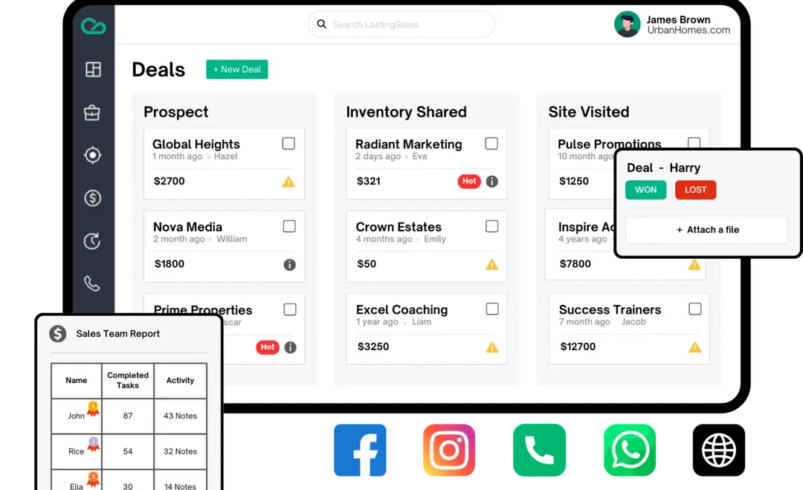

CRM for solar companies is becoming increasingly useful as solar businesses manage larger numbers of inquiries, consultations, site assessments, quotations, and customer follow-ups. Unlike many simple sales processes, solar sales can involve several stages before a customer makes a final decision. Prospects may need information about system size, installation requirements, expected costs, financing options, and potential savings.
When these activities are managed manually through spreadsheets, emails, phone notes, and separate messaging applications, it can become difficult for sales teams to maintain an accurate view of every opportunity. A centralized CRM can bring customer information and sales activities into one organized system.
Understanding the Solar Sales Journey
The solar customer journey can begin with a simple online inquiry and develop into a detailed consultation. A prospect may first ask whether solar is suitable for their property. Later, they may request an assessment, system recommendation, quotation, or financing information.
A typical solar sales pipeline can include:
- New inquiry
- Initial contact
- Lead qualification
- Consultation
- Property or site assessment
- System recommendation
- Proposal prepared
- Quote sent
- Follow-up
- Deal approved
- Installation planning
Each company can customize these stages based on its own workflow.
Why Solar Businesses Need Structured Lead Management
Solar companies can generate leads through websites, advertisements, social media, referrals, online forms, and local marketing campaigns. When inquiries come from different sources, sales teams need a reliable way to organize them.
Without a structured system, important information can become scattered across different platforms. A salesperson may have customer details in one application, notes in another, and follow-up reminders somewhere else.
A centralized system can bring these activities together and provide a clearer view of each opportunity.
Capturing Solar Leads From Multiple Sources
Lead generation is an important part of solar sales. Businesses may receive inquiries from website forms, advertising campaigns, landing pages, social media, phone calls, and referrals.
A CRM can help capture these inquiries and create individual lead records.
Each record can contain useful information such as:
- Customer name
- Contact details
- Lead source
- Property location
- Project requirements
- Sales stage
- Assigned representative
- Notes
- Follow-up dates
Keeping these details together can make it easier for sales representatives to understand a prospect before beginning the next conversation.
What Is Lead Management Software?
Lead management software helps businesses capture, organize, qualify, assign, and track potential customers throughout the sales process.
For a solar company, this can be particularly useful because leads may require several interactions before they become customers.
Instead of treating a new inquiry as a simple contact record, lead management technology can help track its complete journey.
For example, a new prospect can move from initial inquiry to qualification, consultation, proposal, follow-up, and eventually a completed sale.
Qualifying Solar Prospects
Not every solar inquiry has the same requirements. Some prospects may already understand solar technology and be ready for a quotation, while others may still be researching their options.
A structured qualification process can help sales representatives collect relevant information.
Qualification questions may include:
- What type of property is involved?
- Where is the property located?
- What are the customer’s energy requirements?
- Is the customer looking for a residential or commercial system?
- What is the expected project timeframe?
- Has the customer already received other quotations?
The exact questions can be customized according to the company’s sales model.
Keeping Customer Information Accessible
Solar sales representatives may need to review customer information several times throughout the sales journey.
For example, before preparing a proposal, an agent may need to check the customer’s previous requirements and notes. Before a follow-up call, they may want to review what was discussed during the consultation.
A CRM provides a central location for this information.
This can reduce the need to search through separate spreadsheets, emails, or messaging histories.
Managing Quotations and Follow-Ups
A quotation does not always result in an immediate decision. Customers may need time to compare options, discuss the project with family members, or review financing arrangements.
This makes follow-up an important part of solar sales.
A CRM can help sales representatives create reminders and organize prospects according to their current status.
For example, the sales team can identify customers who have received quotations but have not yet responded. This makes it easier to maintain communication throughout longer sales cycles.
Connecting Sales Teams With the Pipeline
A sales pipeline provides a visual overview of active opportunities.
Sales managers can see how many leads are currently being qualified, how many consultations are scheduled, how many proposals have been sent, and how many opportunities are approaching a final decision.
This visibility can be useful for both individual sales representatives and managers.
Instead of looking at a long list of contacts, teams can understand where opportunities are located within the sales process.
Improving Team Collaboration
Solar sales can involve several employees. One person may qualify the lead, another may perform a consultation, and another team member may become involved in installation planning.
If customer information is not shared properly, these handovers can become difficult.
A centralized CRM allows authorized team members to access relevant customer information, notes, activities, and pipeline stages.
This can help maintain continuity when an opportunity moves from one employee to another.
Managing Field Sales Activities
Solar representatives often work outside the office. They may visit properties, meet customers, attend consultations, or perform site-related activities.
Mobile CRM access can help representatives update customer records while working in the field.
After meeting a prospect, a salesperson can add notes, update the opportunity stage, and schedule the next follow-up without waiting until they return to the office.
Keeping information updated can help the rest of the team stay informed.
Automating Repetitive Tasks
Solar sales teams may spend considerable time performing administrative tasks such as updating records, sending reminders, assigning leads, and checking follow-up dates.
Automation can reduce some of this repetitive work.
For example, when a new lead enters the system, it can be assigned to an appropriate salesperson. Follow-up reminders can then be created according to the sales stage.
Automation allows sales representatives to spend more time communicating with prospects and less time managing repetitive administrative activities.
Connecting Marketing and Sales
Marketing campaigns generate the leads that sales teams ultimately work with. Understanding the connection between marketing and sales can therefore be useful for solar companies.
A CRM can record the source of incoming leads, allowing businesses to organize prospects according to where they originated.
For example, leads may come from:
- Google advertising
- Social media
- Website forms
- Referral programs
- Local campaigns
- Organic search
Tracking these sources can help businesses understand their overall lead-generation process.
Using Customer Data to Understand Sales Performance
A CRM can provide businesses with information about their sales activity.
Managers can review metrics such as:
- New leads received
- Qualified opportunities
- Consultations completed
- Quotations sent
- Follow-ups completed
- Active opportunities
- Closed deals
- Lead sources
This information can help businesses understand how prospects move through the pipeline.
For example, if many leads are generated but only a small number reach the quotation stage, the company may want to examine its qualification or consultation process.
Building a Scalable Solar Sales Operation
As solar businesses grow, the number of incoming leads and active projects can increase significantly. Relying entirely on manual processes can make it harder to maintain consistency.
A structured CRM can provide repeatable workflows for capturing leads, assigning opportunities, organizing customer information, managing follow-ups, and monitoring pipeline progress.
This can help businesses handle increasing lead volumes without making every administrative task dependent on individual employees.
Conclusion
Solar businesses often manage customer journeys that involve multiple conversations, assessments, quotations, and follow-ups. Without a centralized system, maintaining accurate information across all these stages can become challenging.
Using CRM for solar companies can help businesses organize customer records, manage sales pipelines, coordinate teams, and maintain communication throughout longer sales cycles.
At the same time, lead management software can provide a structured way to capture new inquiries, qualify prospects, assign opportunities, and track leads as they progress through the sales process.
When CRM, lead management, automation, and pipeline tracking are combined, solar companies can create a more organized sales operation that supports both growing lead volumes and long-term customer relationships.