

Robotics is fundamentally reshaping the manufacturing landscape, and the production of fasteners is no exception. This transformation is particularly significant for the custom fastener manufacturer, who must now deliver unparalleled precision and efficiency. Automated systems are replacing outdated methods, enabling the creation of high-quality custom metal fasteners with incredible speed. This shift is crucial for meeting the exacting demands of industries in global hubs like New York, London, Sydney, and Berlin. By integrating robotics, the process of making everything from hex bolts to socket head cap screws has become more reliable and cost-effective .
The Rise of Automation in Fastener Production
Automation in fastener production is being driven by the need for flexibility and precision in manufacturing large-scale, small-batch components. Traditional manual labor is often inflexible and costly, creating a significant gap that modern robotics can fill. Advanced systems, such as mobile robotic workstations, are now being deployed to handle high-precision screw-fastening operations. These systems combine an Automated Guided Vehicle (AGV) for mobility, a collaborative robot (cobot) for manipulation, and a machine vision system for precise guidance . This allows a precision fastener manufacturer to adapt quickly to new designs without extensive retooling.
Precision and Accuracy Through Robotics
The demand for precision machined fasteners is higher than ever, and robotics delivers the required accuracy consistently. Vision systems are a critical component, using algorithms to ensure robust screw hole localization even under varying lighting conditions. For example, a two-stage visual positioning strategy might first use custom QR codes for coarse-to-fine robot pose correction, followed by a detection model for precise location . This level of accuracy ensures that custom threaded fasteners fit perfectly every time, reducing waste and rework. This is especially vital for OEM fastener manufacturers who supply components for critical assemblies in automotive and aerospace industries.
Enhancing Efficiency and Quality Control
Robotic systems have proven to significantly enhance operational efficiency and consistency in fastening processes. Tests have shown that a visual module can achieve a high recognition rate for unfastened holes, with mean positioning errors measured in fractions of a millimeter . This precision enables fastening cycle times of just a few seconds per screw, a speed unattainable by manual labor. The integration of human-robot collaborative systems further improves quality by validating that the correct types of fasteners are used for each model. Human operators can receive real-time notifications, allowing for rapid corrective actions . This demonstrates how robotics supports a custom fastening solutions provider in maintaining the highest quality standards.
Meeting Diverse Industry Standards
A key advantage of robotic production is the ability to consistently meet international standards. A reputable industrial fastener manufacturer must often comply with ISO, ASTM, ANSI, and DIN specifications. Robotics ensures that stainless steel fasteners, alloy steel fasteners, and carbon steel fasteners are produced to exacting tolerances. This capability is crucial for a fastener supplier serving the USA, UK, Australia, and Europe, as clients in these regions demand strict adherence to standards like ASTM A193 for high-tensile bolts . The shift towards automation allows for the reliable production of high tensile fasteners and corrosion resistant fasteners for marine and infrastructure projects.
Key Applications in Major Industries
The adoption of robotics is transforming fastener production for various high-stakes industries. For the aerospace sector, a fastener manufacturer must produce aerospace fasteners with flawless precision. Automotive applications benefit from automated systems for tasks like door trim assembly, ensuring automotive fasteners are correctly installed to prevent costly warranty issues . In construction and infrastructure, anchor bolts manufacturer and foundation bolts manufacturer can utilize robotics for heavy-duty components. This technology is vital for producing custom flange bolts, U bolts, J bolts, and eye bolts that are critical for safety and structural integrity in projects across Los Angeles, Frankfurt, and Melbourne.
The Role of Customization and Flexibility
Robotics provides a custom bolt manufacturer or custom nut manufacturer with the flexibility to produce a wide variety of bespoke fasteners on demand. This includes everything from custom machine screws to special purpose fasteners. Technologies like cold forming and CNC machining are being integrated into automated workflows to create complex geometries. For instance, cold-formed special fasteners with diameters ranging from 2 mm to 14 mm and lengths from 4 mm to 160 mm can be efficiently produced . This capability allows a company to act as a true custom fastener company, offering made-to-order fasteners with high repeatability and short lead times.
Advanced Materials and Coatings
Robotic production lines are not limited to standard steel grades; they can handle advanced materials like Inconel, Monel, titanium, and various superalloys . This allows an industrial fastener exporter to supply marine grade fasteners that withstand corrosive environments. Furthermore, robotic systems can integrate with automated coating and heat treatment processes, providing finished products with the required mechanical properties and corrosion resistance. This ensures that the final product is not only dimensionally accurate but also meets the functional requirements for its application.
The Future of Fastening Solutions
The trend towards automation is set to continue, making the role of the fastener exporter India or a supplier in Mumbai or Navi Mumbai increasingly important in the global market. The adoption of robotics and collaborative systems is a testament to the industry’s commitment to precision fastening solutions. By investing in these technologies, manufacturers can guarantee export quality fasteners and heavy duty fasteners that stand up to the most demanding conditions. This positions them as leaders in the B2B space, ready to serve clients from Chicago to Manchester.
Conclusion
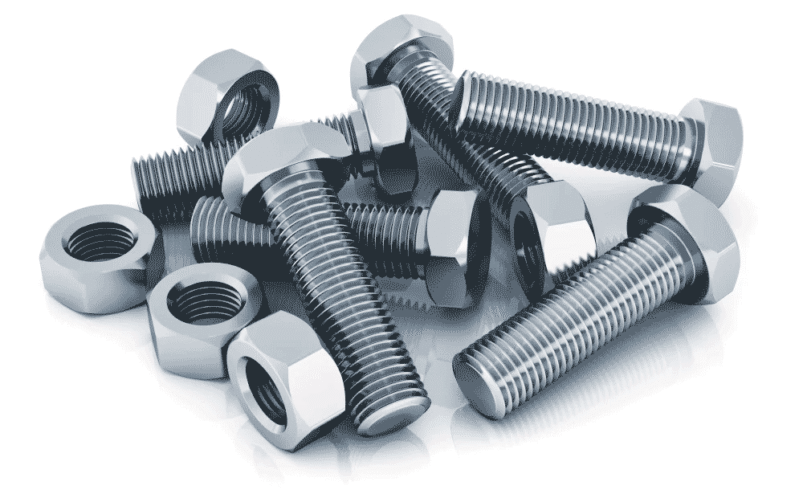
In conclusion, robotics is revolutionizing fastener production by delivering superior precision, efficiency, and consistency. From a custom screw manufacturer to a precision fastener manufacturer, automation is now essential for meeting the rigorous demands of global markets, including the USA, UK, Australia, and Europe. The integration of intelligent systems enables a custom fastener manufacturer to produce a vast range of products, from hex nuts and socket screws to stud bolts and threaded rods, with unmatched quality. As the industry evolves, those who embrace these technologies will lead the way in providing high-quality custom fasteners for diverse applications. By choosing a modern custom fastener manufacturing company, clients in cities like Paris, Tokyo, and Toronto benefit from precision engineering and reliable industrial fastening products that drive innovation and success.
FAQs
What materials can be used for custom fasteners?
A custom fastener manufacturer can work with a wide variety of materials to meet specific application requirements. This includes various grades of stainless steel, alloy steel, and carbon steel. For more demanding environments, materials like Inconel, Monel, titanium, brass, and copper are also frequently used . The choice of material affects the fastener’s strength, corrosion resistance, and suitability for high-temperature or marine applications.
How does a custom bolt manufacturer ensure quality control?
Quality control for a custom bolt manufacturer involves a combination of automated and manual inspection processes. Robotic systems with integrated vision modules check dimensional accuracy to ensure each bolt meets specified tolerances . Additionally, comprehensive testing protocols, including material certifications, are standard practice. Many manufacturers, like an ISO certified fastener manufacturer, follow strict guidelines to maintain consistent quality .
What is a non-standard fastener?
Non-standard fasteners, also known as special fasteners, are components that do not conform to general industry standards like DIN or ANSI. They are designed to meet specific project requirements not covered by standard sizes, thread pitches, or head styles. A custom fastener manufacturer can produce these bespoke fasteners based on customer drawings or samples, serving unique applications in various industries .