

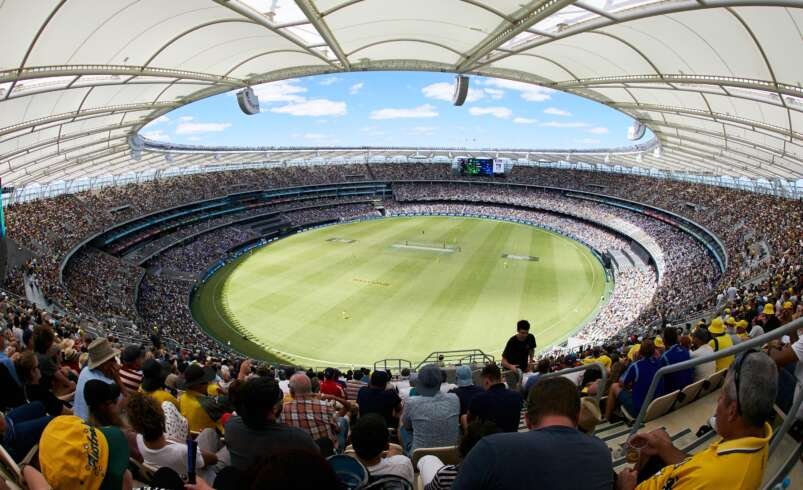

A modern sports venue is no longer judged only by what happens on the field. Fans now notice how quickly they can enter, whether the Wi-Fi works, how easily they can find their seats, how long they wait for food, and whether the entire experience feels worth the money.
That shift is changing stadium design around the world.
A match may still last two or three hours, but the fan experience begins much earlier and continues long after the final whistle. People want convenience, comfort, entertainment, safety, connectivity, and memorable moments alongside the sporting action.
This is particularly relevant in India, where the growth of digital sports consumption is changing expectations around live events. Younger audiences are accustomed to accessing information instantly, sharing content online, and switching between multiple forms of entertainment.
For venue operators, the challenge is clear: how can a physical stadium provide something that fans cannot get from watching at home?
The answer increasingly involves technology, hospitality, accessibility, better infrastructure, and a stronger understanding of what fans actually value.
How Modern Sports Venues Are Changing the Fan Experience
The biggest change is that stadiums are being designed around the complete customer journey rather than just the seating bowl.
Think about a typical match day. A fan travels to the venue, finds parking or public transport, passes security, enters the stadium, locates a seat, buys refreshments, watches the event, uses their phone, interacts with friends, and eventually leaves.
Every one of those stages affects their perception of the venue.
A spectacular match can create a great memory, but a two-hour traffic jam afterward or an excessively long queue for food can quickly change how someone remembers the day.
Faster Entry and Smarter Stadium Operations
One of the first expectations modern fans have is convenience.
Digital ticketing, QR-code entry, automated gates, better security layouts, and clearly marked entrances can reduce friction before the event even begins.
This matters because queues create stress. A fan who spends 30 minutes waiting outside may enter the stadium already frustrated.
Venue operators are therefore investing in systems that can improve crowd movement without compromising security.
Useful improvements include:
- Mobile ticketing
- Clearly separated entry zones
- Real-time crowd information
- Digital wayfinding
- Automated access gates
- Better security screening layouts
- Dedicated entrances for different ticket categories
- Accessible routes for people with disabilities
The objective is simple: make the boring parts of match day as invisible as possible.
Connectivity Is Now Part of the Venue
A decade ago, poor mobile connectivity inside a stadium might have been an inconvenience.
Today, it can feel like a serious failure.
Fans use smartphones to communicate with friends, check scores, take photographs, upload videos, access tickets, order food, and participate in conversations about the match.
Research from Deloitte found that younger sports fans show strong interest in technology-enhanced stadium experiences, including live statistics, replays, interactive features, and social functionality. The research also highlighted connectivity problems as an issue at sporting venues.
Reliable Wi-Fi and strong cellular coverage therefore support the experience rather than simply providing an optional luxury.
A connected stadium can also give operators more opportunities to communicate with visitors.
For example, a fan could receive a notification about a shorter food queue, a seat-related service, or a change in stadium access arrangements.
The Stadium Is Becoming More Interactive
Watching a live match already provides something television cannot fully reproduce: atmosphere.
However, venues are increasingly adding digital features to make the experience more interactive.
Large high-definition screens can provide:
- Instant replays
- Player statistics
- Match information
- Fan messages
- Interactive competitions
- Social-media content
- Sponsorship activations
The important point is balance.
Technology should not distract fans from the actual competition. Instead, it should provide additional information or entertainment during natural breaks in play.
A cricket fan, for instance, may enjoy seeing a bowler’s recent statistics or a batter’s performance breakdown on a stadium screen. A football supporter may want tactical information, player statistics, or an immediate replay of a controversial moment.
The best technology answers a question the fan already has.

Food, Hospitality, and Comfort Matter More Than Ever
A stadium is also a hospitality environment.
Fans may forgive an average snack selection at a small local ground, but expectations rise significantly at major venues.
People increasingly expect cleaner facilities, better food choices, faster service, comfortable seating, and well-maintained washrooms.
Hospitality is becoming particularly important because it can differentiate live sport from home viewing.
At home, fans already have access to their preferred food, comfortable seating, climate control, and multiple screens. A stadium has to provide a compelling alternative.
That does not necessarily mean luxury everywhere.
Even relatively simple improvements can make a difference:
- Shorter food queues
- Cashless payments
- More varied food options
- Cleaner restrooms
- Better seating
- Shaded areas
- Drinking-water stations
- Family-friendly facilities
When fans feel looked after, the venue becomes part of the enjoyment rather than merely the place where the match happens.
Younger Fans Expect a Different Kind of Experience
Younger audiences have grown up with smartphones, streaming platforms, social media, gaming, and instant information.
That does not mean they are unwilling to watch live sport.
Instead, they often want to combine the live experience with digital interaction.
A young fan may watch the match while simultaneously sharing a photograph, checking statistics, messaging friends, and discussing a key moment online.
Research from PwC found that younger sports fans frequently combine live sports viewing with other digital activities, including social media and web browsing.
Stadiums can respond by giving these fans more opportunities to participate.
For example, venues can create photo-friendly areas, fan challenges, interactive displays, digital competitions, and social-media moments that complement the game.
The important thing is authenticity. Fans can quickly tell when an interaction feels like a forced advertising exercise.
Accessibility Is Becoming a Core Requirement
A truly modern stadium must work for different types of fans.
Accessibility includes much more than wheelchair seating.
It can involve:
- Step-free entrances
- Accessible toilets
- Suitable seating locations
- Clear signage
- Audio assistance
- Visual information
- Family facilities
- Accessible parking
- Staff trained to provide assistance
Parents with young children also have different needs from groups of teenagers or corporate guests.
Good venue design recognizes these differences instead of treating every visitor as the same customer.
Accessibility also improves the experience for everyone. Clear signage and easier movement benefit elderly visitors, families, first-time attendees, and people carrying bags.
Safety Without Creating Unnecessary Friction
Security remains essential at major sporting events.
However, fans increasingly expect safety procedures to be efficient and clearly communicated.
Long, confusing security lines can create frustration. Poorly organized exits can create dangerous crowding.
Modern stadium planning therefore focuses heavily on crowd management.
Operators can use data, CCTV, staff coordination, digital signage, and real-time monitoring to understand how people are moving through the venue.
The aim is not simply to react when something goes wrong.
It is to identify potential congestion before it becomes a serious problem.
Sustainability Is Becoming Part of Fan Expectations
Environmental responsibility is another area where expectations are changing.
Large sporting venues consume significant amounts of electricity and water and generate substantial waste.
Fans increasingly notice whether venues are taking practical steps to reduce that impact.
Potential measures include:
- LED lighting
- Solar power
- Rainwater collection
- Waste segregation
- Reusable or recyclable food packaging
- Water-saving systems
- Public transport incentives
- Energy-efficient cooling
- Sustainable construction materials
Sustainability also has a financial benefit in some cases. Energy-efficient systems can reduce long-term operating costs.
The most effective approach is therefore not sustainability as a marketing slogan, but sustainability built into everyday stadium operations.
Personalization Is Changing the Way Venues Communicate
Digital ticketing and mobile applications give venues more information about how fans interact with events.
This can allow operators to provide more relevant communication.
A regular season-ticket holder might receive different information from someone attending their first match.
Similarly, a family attending a daytime event may value different services from a group attending an evening match.
Personalization can include:
- Event reminders
- Transport information
- Seat directions
- Food recommendations
- Merchandise offers
- Venue maps
- Match statistics
- Post-event surveys
When handled responsibly, personalization makes the stadium easier to navigate without overwhelming visitors with unnecessary notifications.
For digital sports audiences, platforms such as gold365 online also demonstrate how accustomed fans have become to receiving sports-related information through convenient online channels.
The Rise of Cashless and Contactless Services
Nobody wants to miss an important passage of play while standing in a long payment queue.
Cashless systems can reduce transaction times and improve operational efficiency.
Contactless cards, mobile payments, digital wallets, and prepaid stadium accounts can all contribute to faster service.
Some venues are also experimenting with mobile food ordering, allowing fans to order without leaving their seats.
The value here is straightforward: fewer interruptions mean more attention stays on the sport.
Venues Are Competing With the Comfort of Home
This may be the biggest challenge of all.
Watching sport at home is convenient. Fans have comfortable chairs, easy access to food, multiple screens, instant replays, and no travel.
A stadium cannot beat home viewing on every measure.
Instead, it needs to provide something fundamentally different.
That means atmosphere, community, shared emotion, proximity to athletes, entertainment, and memories.
The most successful venues understand this distinction.
They are not trying to become giant television screens.
They are trying to make people feel that being physically present was worth the effort.
What Venue Operators Should Prioritize
Not every stadium needs expensive futuristic technology.
Often, the biggest improvements come from fixing basic problems first.
A practical priority list is:
- Improve entry and exit.
- Strengthen connectivity.
- Upgrade seating and sanitation.
- Reduce food and merchandise queues.
- Improve accessibility.
- Provide useful digital information.
- Create interactive experiences carefully.
- Improve transport and parking communication.
- Collect fan feedback regularly.
- Measure whether improvements actually make visitors happier.
This last point is particularly important.
Technology should solve a real problem. Installing a complicated digital feature that nobody uses is not innovation; it is unnecessary expense.
Common Mistakes Sports Venues Should Avoid
Mistake 1: Assuming technology automatically improves the experience.
A complicated application is useless if fans find it difficult to navigate.
Mistake 2: Ignoring basic facilities.
A giant screen cannot compensate for dirty toilets or uncomfortable seats.
Mistake 3: Designing only for premium customers.
Young fans, families, local communities, and ordinary ticket holders are essential to building long-term attendance.
Mistake 4: Treating feedback as a formality.
Fan surveys should lead to actual changes. Otherwise, visitors quickly stop taking them seriously.
Mistake 5: Copying another stadium without understanding the local audience.
A feature that works in a European football stadium may not necessarily work in an Indian cricket venue.
Local climate, transport, culture, sport, demographics, and spending habits all matter.
Key Takeaways
- Modern fans judge the entire match-day experience, not just the sporting event.
- Reliable connectivity has become increasingly important.
- Digital ticketing and efficient entry systems reduce unnecessary friction.
- Better food, seating, sanitation, and hospitality can strongly influence satisfaction.
- Younger audiences often want to combine live sport with digital interaction.
- Accessibility should be considered throughout the venue, not treated as an afterthought.
- Safety and crowd management must remain central to stadium design.
- Sustainability is becoming part of responsible venue management.
- Technology should solve genuine problems rather than exist for novelty.
- The biggest advantage of a stadium remains the atmosphere and shared experience that home viewing cannot fully reproduce.
Frequently Asked Questions
How are sports venues adapting to changing fan expectations?
Sports venues are investing in faster entry systems, reliable connectivity, better food and hospitality, improved accessibility, digital services, interactive screens, safer crowd management, and more comfortable facilities.
Why is technology important in modern stadiums?
Technology can make the fan experience more convenient and interactive. Mobile tickets, digital maps, instant statistics, replays, contactless payments, and real-time information can reduce friction and improve engagement.
What do younger fans expect from sports venues?
Younger fans often expect strong mobile connectivity, interactive experiences, convenient digital services, social-media-friendly content, and comfortable facilities while still valuing the excitement of being physically present.
How can Indian sports venues improve fan experience?
Indian venues can focus on crowd management, transport access, sanitation, shade and weather protection, digital ticketing, food service, accessibility, connectivity, and clear multilingual communication where appropriate.
Fans who use services such as gold365 login are already accustomed to accessing sports information digitally, so physical venues need to provide a similarly convenient experience without losing the atmosphere of live competition.
Are smart stadiums replacing traditional stadiums?
No. Smart technology is generally being used to improve traditional stadium experiences rather than replace them. The sporting atmosphere, crowd energy, and shared experience remain central.
What is the most important feature of a modern sports venue?
There is no single feature. A successful venue combines easy access, safety, comfort, good facilities, reliable connectivity, useful technology, and an atmosphere that makes attending in person worthwhile.
For fans researching event information digitally, a gold365 app download may represent one type of mobile sports engagement, while stadium operators are increasingly trying to bring similar convenience into the physical match-day experience.
Conclusion
Sports venues are changing because the definition of a good fan experience has changed. People still come for the competition, but their expectations extend far beyond the action on the field.
They want to arrive without unnecessary stress, find their seats easily, stay connected, access good facilities, feel safe, and enjoy an atmosphere that cannot be replicated on a television.
The strongest stadiums will therefore be the ones that combine technology with thoughtful human-centered design. They will use data and digital tools where those tools genuinely help, while protecting the energy, community, and emotion that make live sport special.
For venue operators, the goal is not to make stadiums more complicated. It is to make them easier, more welcoming, more accessible, and more memorable for the people who walk through their gates.