
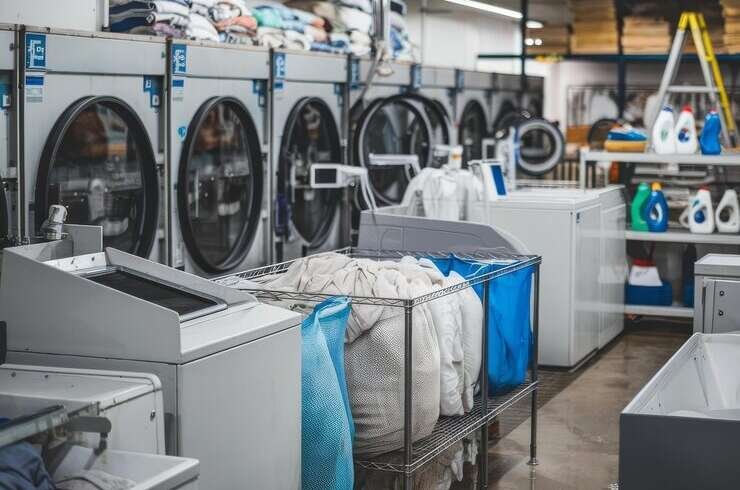

A hospital laundry must process soiled linen safely, consistently and efficiently. From patient bedding and towels to theatre textiles, staff uniforms and reusable garments, every load requires the right combination of washing action, temperature control, chemical dosing and water extraction. Choosing suitable laundry washing machines is therefore an operational and infection-control decision, not simply an equipment purchase. For hospitals, clinics and healthcare facilities planning to buy washer extractor equipment, the machine must match daily linen volume, available utilities, hygiene procedures, floor space and future demand.
Supershine Laundry supplies commercial and industrial laundry equipment for demanding institutional applications. Its approach is to help buyers assess the complete laundry process rather than select equipment based only on drum capacity or purchase price. The right laundry washing machines can improve workflow, reduce avoidable rewash, support consistent processing and make better use of dryer capacity. This guide explains what hospital buyers should evaluate before requesting a quotation in Dubai, including barrier design, extraction speed, programming, installation and after-sales support.
Why hospitals need washer extractors
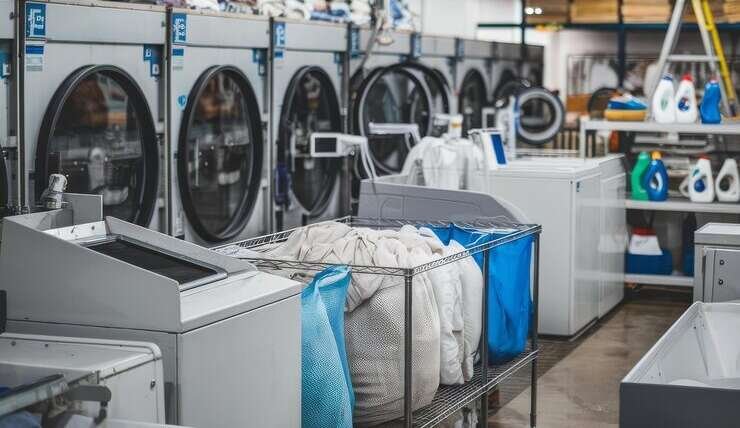
A washer extractor combines two stages in one machine: washing and centrifugal extraction. After the wash and rinse phases, the drum spins at high speed to remove a significant portion of the water from the linen. The partially dried load is then transferred to a tumble dryer or other finishing equipment.
This is different from a basic domestic washing machine. Commercial laundry washing machines are designed for repeated cycles, controlled programmes, heavier loads and integration with a wider laundry system. They are generally built with stronger frames, industrial controls and components suitable for institutional use.
For a hospital laundry, the main benefits include:
-
More consistent washing and rinsing across repeated loads.
-
Programmable temperature, time, water level and extraction settings.
-
Reduced moisture entering the dryer after high-speed extraction.
-
Better separation of linen categories through dedicated wash programmes.
-
Greater suitability for continuous daily operation.
However, a washer extractor cannot replace a complete hygiene procedure. Hospitals still need appropriate linen segregation, safe handling, approved chemistry, trained operators, preventive maintenance and documented process controls.
What is a barrier washer extractor?
A barrier washer extractor, also called a pass-through washer, has loading and unloading doors on opposite sides of the machine. The soiled side is used for loading contaminated linen, while the clean side is used for unloading processed linen.
This physical separation helps organise the movement of linen and people between dirty and clean areas. It is particularly relevant where a hospital laundry layout requires a clear one-way workflow. A barrier washer extractor should be considered alongside room design, air movement, staff routes, trolley movement and infection-prevention procedures.
A barrier model is not automatically suitable simply because it has two doors. Before purchase, the hospital should confirm:
-
Whether the building can accommodate the required wall opening and machine dimensions.
-
Whether the dirty and clean zones are properly planned.
-
How the machine will be accessed for maintenance.
-
Whether the programme can support the facility’s validated disinfection process.
-
How temperature, time, chemical dosing and cycle records will be monitored.
Healthcare laundry guidance recommends checking equipment programming before purchase and during commissioning to ensure that the machine can meet the required disinfection process. The same guidance also advises involving infection-prevention professionals when equipment is selected and operated.
How to choose the right capacity
Capacity should be calculated from actual linen flow, not guessed from the number printed on a brochure. A hospital should review:
-
Kilograms of linen generated per day.
-
Peak daily and weekly volumes.
-
Number of operating shifts.
-
Average load weight by linen type.
-
Available time for washing, drying and finishing.
-
Planned occupancy or service expansion.
-
Space available for additional equipment.
A machine that is too small may require excessive cycles, create bottlenecks and increase labour pressure. An oversized machine may operate inefficiently if it is frequently underloaded. In practice, multiple medium-capacity machines can offer useful flexibility because different linen categories can be processed separately and one unit may remain available during maintenance.
The equipment plan should also consider the downstream process. A washer extractor with high extraction performance can reduce the moisture load entering the dryer, but the dryer must still have suitable capacity and compatible heating. The same principle applies to flatwork ironers, garment finishers, folding areas and clean-linen storage.
Technical features that matter
Programmable wash cycles
Hospital linen may include lightly soiled bedding, heavily soiled towels, uniforms and specialist textiles. The washer should allow authorised staff to select controlled programmes with defined water levels, temperatures, wash times, rinse stages and extract speeds.
A programme should be selected according to the fabric, soil level and approved chemical process. Higher temperature is not automatically better for every textile because excessive heat can damage fibres or affect colour and finish.
Thermal and chemical disinfection
Disinfection means reducing harmful microorganisms through a validated combination of heat, time and, where applicable, chemical action. The exact process should be established by the hospital’s infection-control team and chemical supplier.
The machine should be able to maintain the required process conditions consistently. Useful features may include temperature monitoring, programmable hold times, chemical dosing connections, alarm functions and cycle records. Do not rely on a supplier’s general statement that a machine is “hospital grade”; ask for technical documentation showing how the proposed configuration supports the hospital’s approved process.
Extraction speed and G-force
Extraction speed is often described using G-force. In simple terms, higher G-force generally removes more water from the load during spinning, although the result also depends on textile type, drum design, loading and programme settings.
Higher extraction can help reduce dryer time and energy use, but delicate fabrics may require lower settings. A good machine should provide adjustable extraction programmes rather than one fixed speed for every load.
Chemical dosing
Automatic dosing systems can deliver repeatable quantities of detergent, disinfectant and neutraliser. This reduces manual measuring and may improve consistency, provided the system is correctly calibrated and maintained.
The hospital should confirm compatibility between the washer, dosing pumps and chemical products. It should also establish who will calibrate the system, inspect delivery lines and respond to dosing faults.
Installation considerations in Dubai
Before ordering, ask the supplier to review the proposed installation site. Important checks include:
-
Electrical supply, phase, voltage and connected load.
-
Hot-water, cold-water and drainage requirements.
-
Steam, gas or electric heating options for connected equipment.
-
Floor strength, vibration control and access routes.
-
Ceiling height, door widths and delivery restrictions.
-
Ventilation and heat management.
-
Space for service access and replacement parts.
-
Separation between soiled and clean work areas.
Local building conditions and utility arrangements can affect the final specification. A machine may fit on a plan but still be difficult to deliver, install or service inside an operating hospital. A site survey before purchase can identify these issues early.
Supershine Laundry can help buyers compare equipment requirements with the broader laundry-room design. The objective should be a workable installation that supports safe movement, operator access and future maintenance—not just a machine that fits into an available corner.
Questions to ask a supplier
When you are ready to buy washer extractor equipment, request a written proposal that clearly states:
-
Rated capacity and recommended loading weight.
-
Machine dimensions, weight and foundation requirements.
-
Available heating options and utility consumption data.
-
Programmability and cycle-recording features.
-
Compatible chemical dosing arrangements.
-
Extraction speed or G-force range.
-
Warranty terms and exclusions.
-
Installation, commissioning and operator training.
-
Preventive-maintenance recommendations.
-
Availability of genuine replacement parts and technical support.
Ask the supplier to distinguish confirmed specifications from estimates. Avoid choosing solely on the lowest initial quote. The total cost of ownership includes utilities, chemicals, labour, maintenance, downtime, spare parts and the effect of extraction performance on drying.
Supershine Laundry works with commercial and industrial laundry equipment requirements, so buyers can discuss washer extractors together with dryers, boilers, finishing equipment and workflow needs. This integrated approach is useful for hospitals that are developing a new laundry room or replacing outdated equipment in an existing facility.
Common buying mistakes to avoid
One common mistake is selecting capacity without measuring real linen volumes. Another is buying a machine without confirming whether the building can support its electrical, water, drainage or heating requirements.
Hospitals should also avoid treating a standard commercial machine as a substitute for a barrier system where clean-and-soiled separation is required. Similarly, a high-speed extractor should not be operated at maximum speed for every fabric. Programme flexibility matters because hospital laundries process different materials and soil levels.
Finally, do not overlook service support. Planned maintenance, operator training and rapid access to appropriate parts can be as important as the machine’s headline specification. A reliable supplier should explain how commissioning will be handled and what information the maintenance team will receive.
Why work with Supershine Laundry?
Supershine Laundry supports buyers looking for practical commercial and industrial laundry equipment solutions in Dubai. The company can help organisations define the application, compare suitable machine types and consider how the washer extractor will work with drying and finishing equipment.
For hospital procurement teams, the most useful supplier is not necessarily the one offering the largest machine. It is the one that asks about linen categories, daily throughput, workflow, utilities, hygiene procedures and service access before recommending a configuration. Supershine Laundry can be included at the planning stage so the proposed equipment is assessed against the actual operating environment.
Frequently asked questions
1. What type of washer extractor is best for a hospital laundry?
A barrier washer extractor is often considered where the laundry requires a defined separation between soiled loading and clean unloading areas. The final choice depends on the hospital layout, linen volume, infection-control procedures, utilities and budget. A qualified infection-control and facilities team should participate in the decision.
2. How do I calculate the required washer extractor capacity?
Start with the average and peak kilograms of linen processed per day. Then consider the number of operating hours, expected load weights, programme duration, drying capacity and future growth. It is usually better to model several realistic operating scenarios than to choose a machine based only on bed count.
3. Can one machine wash all hospital linen?
One machine may process different linen types if it has suitable programmes and the hospital’s procedures allow it. However, heavily soiled, infectious, delicate or specialist textiles may require different programmes, chemical settings or handling routes. Linen classification should be decided with the infection-control team.
4. Why is extraction performance important?
Extraction removes water before the linen enters the dryer. Effective extraction can shorten drying requirements and improve throughput, but the correct speed depends on the fabric and programme. High extraction should be adjustable rather than used indiscriminately.
5. What should I request before buying?
Request a detailed technical quotation, site survey, utility requirements, installation scope, programme information, dosing compatibility, commissioning plan, warranty terms and service arrangements. Also ask how the supplier will verify that the installed machine operates according to the hospital’s approved process.
Conclusion
Buying a washer extractor for hospital laundry requires more than comparing drum sizes. The equipment should support controlled hygiene processes, efficient workflow, safe linen separation, suitable extraction and dependable long-term service. By reviewing capacity, barrier design, programming, utilities and maintenance before purchase, hospitals in Dubai can make a better-informed investment. Supershine Laundry can help procurement and facility teams evaluate a complete commercial laundry equipment solution based on their operational requirements.