
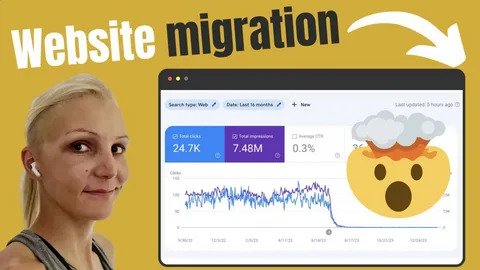

Moving a website to a new platform, domain, hosting environment or structure can improve performance and user experience, but it can also introduce search-related problems when the migration is not carefully planned.
A business in Dubai may redesign its website to improve mobile usability, update its branding or move to a new content management system. During the process, important URLs can change, pages can disappear, redirects can be missed and search engines may temporarily struggle to understand the new website structure.
A successful migration therefore requires more than transferring website files. Search visibility, content, links and technical settings should be considered throughout the process.
Why Can a Website Migration Affect Search Performance?
Search engines build an understanding of a website based on its pages, URLs, content, links and technical signals. When several of these elements change at the same time, search engines need to process the new structure.
Common migration changes include:
- New URL structures
- Changes to navigation
- New page templates
- Platform changes
- Domain changes
- Content removal
- Changes to internal links
- Modified metadata
- New hosting arrangements
If these changes are not managed properly, previously accessible pages may become unavailable or difficult to discover.
For Dubai businesses, this can be particularly important when established service pages already attract relevant visitors and enquiries.
What Happens When Old URLs Are Not Redirected?
Changing a URL without providing an appropriate redirect can create a broken journey for both visitors and search engines.
For example, an old service page such as:
example.ae/service-old/
might become:
example.ae/services/new-service/
If the old address is not redirected appropriately, users following existing links may encounter an error page.
Before migration, create a URL mapping document showing:
| Old URL | New URL | Redirect Required |
| /service-old/ | /services/new-service/ | Yes |
| /about-company/ | /about-us/ | Yes |
| /contact-us/ | /contact/ | Yes |
| /blog/topic-a/ | /insights/topic-a/ | Yes |
Not every old URL needs to be redirected to a different page. Where content has genuinely been removed and there is no relevant replacement, the appropriate response may differ.
How Can Indexation Problems Appear After Migration?
Indexation problems occur when important pages are prevented from appearing in search indexes or when search engines receive conflicting instructions.
Before launching a new website, check:
- Robots.txt
- Meta robots directives
- Canonical tags
- XML sitemap
- Indexable URLs
- Noindex settings
- Redirects
- Internal links
One common migration mistake is accidentally leaving a noindex instruction from the development website on the live site.
A technical review immediately after launch can help identify whether important pages remain accessible and indexable.
Why Should You Perform an SEO Audit Before Migration?
A pre-migration audit provides a baseline of the existing website. Without this information, it becomes harder to identify what was lost during the move.
A Top SEO Site Audit Service Dubai can assess important pages, existing URLs, metadata, internal links, technical issues and other search-related elements before the migration takes place.
Record important information such as:
- Organic landing pages
- Existing URLs
- Search traffic
- Important backlinks
- Metadata
- Indexation status
- Internal links
- Conversion pages
This baseline can then be compared with the new website after launch.
How Can Duplicate Content Be Created During a Migration?
A new website can accidentally create multiple versions of the same content. This may happen when old and new URLs remain accessible or when parameters, categories and alternative paths generate duplicate pages.
For example, a product or service could become accessible through several different URL variations.
Review:
- Canonical URLs
- HTTP and HTTPS versions
- WWW and non-WWW versions
- Trailing-slash variations
- Parameter URLs
- Duplicate category pages
- Old website versions
The preferred URL structure should be clear and consistently referenced through internal links and other technical signals.
How Can Internal Links Break?
A migration can change the location of pages, causing internal links to point towards outdated URLs.
Broken internal links can make navigation difficult and reduce the efficiency with which search engines discover important content.
After migration, crawl the website and check links pointing to:
- Deleted pages
- Redirected pages
- Incorrect URLs
- 404 pages
- Unwanted duplicate URLs
Where possible, update internal links to point directly to the final destination rather than relying unnecessarily on redirects.
Why Is Mobile and Page Performance Important?
Website migrations often involve new templates, scripts, images and hosting arrangements. These changes can affect loading performance and mobile usability.
A redesigned Dubai business website should be tested across different devices and screen sizes.
Check:
- Core page loading performance
- Image sizes
- JavaScript
- CSS
- Mobile navigation
- Buttons and forms
- Font readability
- Interactive elements
A visually attractive website still needs to provide a smooth experience for visitors.
How Does Technical SEO Fit Into a Website Migration?
Technical SEO should be considered before, during and after the migration rather than treated as a final checklist.
The technical process can include:
- Crawling the existing website
- Recording important URLs
- Mapping old URLs to new destinations
- Reviewing technical settings
- Testing the development website
- Implementing redirects
- Checking indexation after launch
- Updating XML sitemaps
- Monitoring crawl and traffic changes
The earlier technical issues are identified, the easier they are generally to address.
How Can Content Loss Affect a Dubai Business?
A migration sometimes involves removing pages that appear outdated or consolidating several articles into one. While consolidation can be useful, deleting content without reviewing its value can remove pages that attract relevant visitors.
Before removing a page, consider:
- Does it receive organic traffic?
- Does it generate enquiries?
- Does it have valuable backlinks?
- Does it answer an important customer question?
- Can its information be improved instead?
A Digital Marketing Company in Dubai can help businesses consider website migration alongside content, search and broader digital objectives.
What Should You Check Immediately After Launch?
The first few days after migration are important for identifying unexpected problems.
Run checks for:
- Redirects
- 404 errors
- Indexation
- XML sitemap accessibility
- Robots.txt
- Canonical tags
- Internal links
- Page titles
- Meta descriptions
- Structured data
- Mobile usability
- Forms and conversion tracking
Submit the updated sitemap through the relevant search management tools and monitor important pages.
How Should a Business Monitor the Migration Afterwards?
Migration work does not end when the new website goes live. Continue monitoring important metrics and technical signals during the following weeks.
Compare the new website with the pre-migration baseline, paying particular attention to:
- Organic traffic
- Search impressions
- Important landing pages
- Indexed pages
- Enquiries
- Rankings for priority searches
- Crawl errors
- Redirect activity
A temporary change does not automatically indicate a failed migration, but significant or persistent problems should be investigated.
Frequently Asked Questions
Can a website migration hurt SEO?
Yes. Changes to URLs, content, redirects, indexation and website structure can affect search visibility if they are not properly managed.
Should I redirect every old URL?
Not necessarily. Redirect URLs to relevant replacement pages where appropriate. Pages without a suitable replacement may require a different solution.
When should an SEO audit be performed?
Ideally, perform an audit before migration to establish a baseline and again after launch to identify technical or structural issues.
How long should a business monitor a migration?
Continue monitoring the website after launch and pay particular attention to important pages, traffic, indexation and crawl issues during the early post-migration period.
Can changing a domain affect search visibility?
Yes. A domain change introduces additional considerations, including redirects, verification, canonicalisation and communication of the new URL structure to search engines.
Conclusion
A website migration can provide valuable improvements, but moving pages without protecting their existing structure can create unnecessary search and usability problems. Careful URL mapping, redirects, content reviews, technical checks and post-launch monitoring can make the transition more controlled.
The migration should be treated as both a website project and a search project. Zenerom Digital Marketing Agency Dubai can support businesses by adding practical checks and optimisation steps that help protect important website assets while improving the new digital environment.