
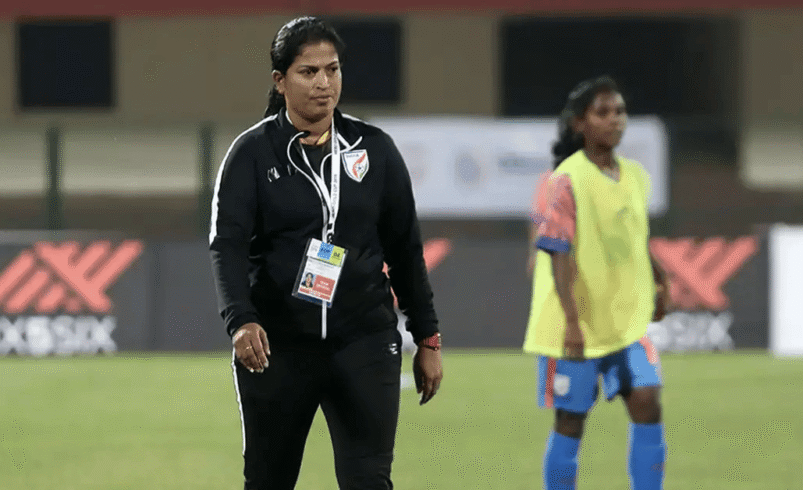

For a young girl standing at the edge of a sports field, seeing a woman in the coaching role can change what she believes is possible.
It is one thing to watch women win medals. It is another to see women making decisions, planning sessions, correcting technique, managing teams and standing at the centre of an athlete’s development.
That distinction matters in India, where women’s participation in competitive sport has expanded significantly but leadership opportunities have not always grown at the same pace.
The coaching landscape is beginning to change. Women are taking on roles in cricket, football, athletics, boxing, strength and conditioning, grassroots development and high-performance programmes. Shyla Alam, for example, became the first woman in India to work as a strength and conditioning coach with senior men’s teams in BCCI first-class domestic competitions.
At the grassroots level, the change is visible too. The Army Sports Institute selected 89 girls for its sports programme in 2025, up sharply from 24 the previous year, and said it planned to strengthen support for them with female coaches and other specialists.
These developments point to something bigger than representation. Women coaches are helping change how athletes are developed, how young girls see sporting careers and how Indian sporting institutions think about leadership.
Why Women Coaches Matter Beyond Representation
The easiest way to understand the importance of women coaches is to think about the athlete’s entire environment.
A coach does far more than demonstrate a technique. Coaches influence confidence, discipline, communication, decision-making, injury prevention, competition preparation and the way athletes respond to setbacks.
For young female athletes, having women in coaching positions can make professional sport feel more familiar.
A 13-year-old girl may hesitate to discuss certain concerns with an adult male coach. That does not mean male coaches cannot coach women effectively. It means that having women available within the coaching and support structure can give athletes another trusted point of communication.
This becomes particularly important during adolescence.
Issues around body changes, menstruation, nutrition, confidence and social pressure can affect training and competition. A coaching environment that understands these realities can help athletes remain in sport rather than quietly dropping out.
The wider Indian sports system is increasingly recognising the need for stronger support structures. The Sports Authority of India has highlighted women coaches and athletes through its National Centres of Excellence and regional centres, while recent sports-policy discussions have placed greater emphasis on women’s representation and athlete welfare.
Women Are Moving Into Roles Traditionally Dominated by Men
One of the most important signs of progress is that women coaches are increasingly working beyond women’s teams.
Shyla Alam’s career is a strong example. After playing cricket for Chhattisgarh, she moved into strength and conditioning and became the first woman in India reported to have worked in that capacity with senior men’s domestic teams, including competitions such as the Ranji Trophy, Vijay Hazare Trophy and Syed Mushtaq Ali Trophy.
That matters because coaching ability is not inherently linked to the gender of the athletes.
A good strength coach needs knowledge of physiology, workload management, conditioning and recovery. A technical coach needs sport-specific expertise. A performance coach needs communication and analytical skills.
The athlete’s gender does not determine whether a coach possesses those abilities.
Women entering men’s sporting environments therefore challenge an old assumption: that high-level coaching is primarily a man’s profession.
The same change is visible in football. Sethu FC’s coaching structure for the Indian Women’s League included Rutuja Gunwant as head coach, Kulsum Bi Shaikh as head of women’s football and Surbhi Manjrekar as assistant coach, creating a notably women-heavy leadership group.
That kind of structure gives younger female coaches something equally valuable: a career example.
Coaching Can Create a New Pipeline for Women in Sport
India has invested heavily in developing athletes, but a sustainable sporting system also needs people who can develop the next generation.
That means coaches.
It means strength and conditioning specialists.
It means physiotherapists, analysts, nutrition professionals, psychologists, team managers and administrators.
Women who move into these professions create a second pathway into sport for girls who may not become elite athletes themselves.
A former player who cannot or does not want to continue competing can become a coach.
A sports-science graduate can enter performance support.
A former athlete can move into youth development.
A teacher can gain coaching qualifications and build a local academy.
That is how sporting ecosystems become deeper.
A strong sporting nation does not simply produce more athletes. It produces more people capable of supporting athletes.
The importance of developing coaches has also received wider attention in India. In 2026, Olympic champion Neeraj Chopra and renowned badminton coach Pullela Gopichand launched the Indian School of Coaching Excellence with the aim of developing high-quality homegrown coaches.
For women, initiatives and pathways like these could become especially important if access, mentorship and leadership opportunities are deliberately built into them.
What Women Coaches Bring to the Athlete-Development Environment
It would be too simplistic to say women coach differently from men.
Coaching styles are individual. Some women are highly technical and data-driven. Some are intensely demanding. Some are exceptionally calm. The same range exists among male coaches.
The real value of having more women is diversity of experience and perspective.
A coaching staff with people from different backgrounds is more likely to question assumptions.
That can improve decision-making.
For example, a team preparing a teenage female athlete for a major competition may need to consider training load, menstrual health, nutrition, recovery and psychological wellbeing alongside technical preparation.
A coach who understands those factors can help the athlete and the wider team make better decisions.
This is particularly important as Indian sport becomes more professional.
Athletes are no longer preparing only through repetitive practice. Modern programmes increasingly involve sports science, video analysis, physical testing, recovery monitoring and individualised workloads.
The coach’s job is becoming closer to that of a performance leader.
The Grassroots Impact May Be Even Bigger
Elite coaches receive attention because their athletes win medals.
But grassroots coaches may have an even greater long-term impact.
Imagine a woman coaching athletics at a district-level academy in a smaller Indian city.
She may never appear on television.
Yet she could be the person who convinces a 10-year-old girl to stay in sport after her first difficult competition. She may help a parent understand why training matters. She may recognise an athlete’s potential and recommend the next level of competition.
That is where sporting careers often begin.
The Army Sports Institute’s rapid increase in girl cadet enrolment in 2025 shows the growing demand for structured opportunities for young female athletes. The programme’s plans to add female coaches and support staff are significant because athletes need an environment around them, not simply access to equipment.
Grassroots coaching therefore has a multiplier effect.
One good coach can influence dozens of athletes each year. Some of those athletes may later become coaches themselves.
That creates a cycle.
The Barriers Women Coaches Still Face
Progress should not be confused with equality.
Women remain underrepresented in many coaching systems, particularly at the highest levels.
An Olympic Movement study on coaching structures found substantial gender imbalances across sports. In its 2020 dataset, women accounted for 17% of head coaches in athletics, 8.6% in boxing and 23.3% in football, although the figures varied considerably by sport and level.
India faces many of the same structural challenges.
Women coaches may encounter assumptions that they are better suited to junior or women’s teams.
Some may have fewer opportunities to travel with elite squads.
Others may struggle to balance demanding coaching careers with family responsibilities, particularly when jobs require constant travel and long periods away from home.
There is also a visibility problem.
A male coach who succeeds may be described simply as a successful coach.
A woman coach can sometimes find herself framed primarily as a “woman breaking barriers.”
The achievement is real, but eventually the goal should be normalisation.
A coach should be judged primarily by knowledge, results, athlete development, professionalism and leadership.
How India Can Build a Stronger Pipeline of Women Coaches
Increasing numbers alone will not solve the problem.
The system needs to make coaching a realistic long-term career.
Several steps could help:
- Create more accessible coach-education programmes.
- Provide mentorship for newly qualified women coaches.
- Give women opportunities to work with elite and male teams.
- Build clear promotion pathways within federations and academies.
- Improve safeguarding and workplace standards.
- Support coaches returning after career breaks.
- Increase women’s representation in technical and administrative leadership.
- Provide better access to sports-science education.
- Highlight successful women coaches as career role models.
- Create paid grassroots coaching opportunities rather than relying heavily on voluntary work.
Professionalisation is particularly important.
If coaching is treated as a temporary or poorly paid occupation, talented people will leave.
If it becomes a recognised career with education, progression and financial stability, more former athletes and sports graduates can stay in the ecosystem.
This is also where India’s growing sports economy can make a difference.
Delhi alone has more than 17 DDA sports complexes, serving hundreds of thousands of monthly visitors and thousands of trainees across coaching programmes. New coaching models there have also included requirements to provide training opportunities for economically weaker sections.
Similar models across Indian cities could create more entry-level coaching positions for qualified women.
Common Myths About Women Coaches
Myth: Women coaches are mainly useful for women’s teams.
There is no technical reason for this assumption. Women can coach athletes of any gender when they have the required expertise and experience.
Myth: A former elite athlete automatically becomes a great coach.
Playing experience helps, but coaching requires different skills. Communication, planning, athlete management and teaching must be developed separately.
Myth: Representation matters only for public relations.
It matters at the practical level because athletes benefit from diverse perspectives and younger girls gain visible examples of women building careers in sport.
Myth: Women coaches are naturally softer.
Coaching style is individual. Effective coaches can be demanding, analytical, supportive or highly disciplined regardless of gender.
Myth: The shortage of women coaches means women are not interested in coaching.
Interest is only one part of the problem. Access to qualifications, jobs, mentorship, travel opportunities and leadership positions also affects who enters and remains in coaching.
Key Takeaways
- Women coaches are becoming more visible across Indian sports.
- Their impact extends beyond representation into athlete welfare and development.
- Women are increasingly entering coaching roles traditionally dominated by men.
- Grassroots women coaches can play a major role in keeping girls in sport.
- Coaching offers former athletes another way to build a career in sport.
- India still needs stronger pathways, mentorship and professional opportunities for women coaches.
- Diverse coaching teams can bring broader perspectives to athlete development.
- Women should be judged by coaching expertise and performance rather than stereotypes.
The growth of sports media has also changed how people discover these stories. Digital audiences may encounter sports-related searches involving terms such as gold365 club but the more important development is that stories about coaches are increasingly becoming part of mainstream sports conversation.
Frequently Asked Questions About Women Coaches in Indian Sports
Why are women coaches important in Indian sports?
Women coaches provide additional expertise, perspectives and role models within the sporting system. For young female athletes, seeing women in leadership can also make long-term sporting careers feel more achievable.
Are women coaching men’s teams in India?
Yes. Women are increasingly taking on roles within men’s sporting environments. Shyla Alam, for example, became the first woman in India reported to have worked as a strength and conditioning coach with senior men’s domestic cricket teams.
Which sports have women coaches in India?
Women coaches work across disciplines including cricket, football, athletics, boxing, badminton, shooting, weightlifting and other sports. Their roles range from grassroots coaching to technical, fitness and performance support.
What qualifications do sports coaches need in India?
Requirements vary by sport and organisation. Depending on the role, coaches may need federation certifications, recognised coaching qualifications, sport-specific education or experience. Professional development and continuing education are increasingly important.
Can a former female athlete become a coach?
Absolutely. Competitive experience can provide valuable insight into training and competition, although former athletes still need to develop coaching-specific skills such as communication, session planning, athlete assessment and leadership.
How can India encourage more women to become coaches?
The most effective approach is to create a complete pathway: affordable qualifications, mentorship, paid opportunities, access to elite programmes, safe workplaces and clear progression into senior coaching positions.
Do women coaches improve women’s participation in sport?
They can contribute significantly, particularly at grassroots level. A female coach can become a visible role model and help create an environment in which young girls and their families feel more comfortable participating in organised sport.
For athletes and fans who follow online sports communities, terms such as gold365 terms or other unrelated sports keywords may appear alongside sporting content, but the real story here is happening on fields, courts, tracks and training centres across India.
Women coaches are not simply filling more positions. They are helping redefine who can lead, who can teach and who can shape the next generation of athletes.
The long-term opportunity is much bigger than having more women standing on the sidelines. It is about building a sporting system in which a talented girl can imagine herself not only as the athlete taking the medal, but also as the coach who helps someone else win it.