

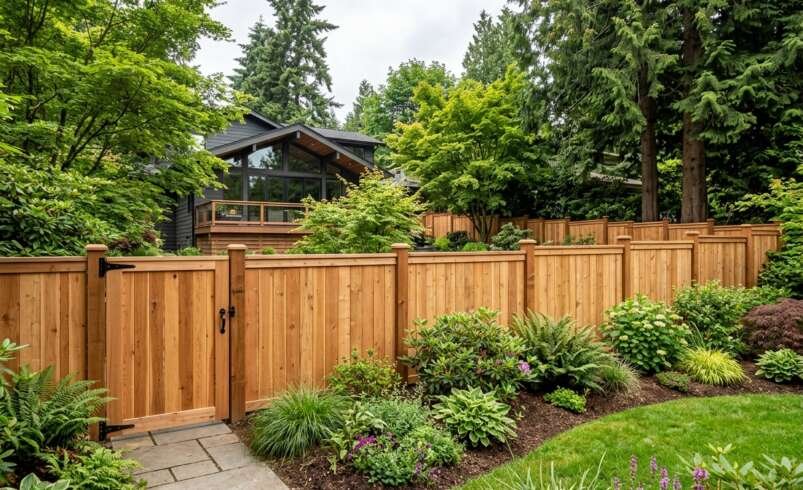

Choosing a fence contractor is an important decision when you want to improve privacy, define your property, or create a more comfortable backyard. Cedar is a popular material for residential fencing because it can provide a warm, natural appearance while working well with many home and landscape styles.
However, the quality of the finished fence depends on more than the wood itself. The contractor you choose, the installation method, property layout, fence design, posts, gates, drainage, and maintenance plan can all affect the long-term result.
Before hiring a Cedar backyard fence installation and privacy enclosure contractor Seattle WA, homeowners should ask several important questions. Taking time to compare contractors can help you understand what you are paying for and avoid problems later.
Why Ask Questions Before Hiring a Cedar Fence Contractor?
A backyard fence can be a significant residential improvement. It may define property boundaries, create privacy around patios, protect pets, or separate landscaping areas.
Not every contractor approaches a project in the same way. One contractor may focus mainly on the price, while another may spend more time evaluating the yard, slope, existing fence, gate access, and desired privacy level.
Asking questions before the project begins can help you compare:
- Installation experience
- Cedar fence options
- Post and framing methods
- Fence height and layout
- Gate design
- Property-line considerations
- Project timeline
- Maintenance expectations
- Cleanup and finishing details
- Overall project cost
A knowledgeable Cedar backyard fence installation and privacy enclosure contractor Seattle WA should be willing to explain these details clearly rather than giving you only a basic price.
1. How Much Experience Do You Have With Cedar Fencing?
One of the first questions to ask is how much experience the contractor has installing cedar fences.
Cedar fencing requires more than simply attaching boards to posts. The contractor should understand how to construct a stable fence, position posts properly, create consistent spacing, and account for the conditions of the property.
Ask whether the contractor regularly works on:
- Residential backyard fences
- Cedar privacy fences
- Property enclosures
- Fence replacements
- Custom gates
- Sloped yards
- Different fence heights and styles
Experience with similar projects can make it easier for the contractor to identify potential issues before installation begins.
2. What Type of Cedar Do You Recommend?
“Cedar fence” can describe several different products and grades. Ask the contractor what type and grade of cedar they recommend for your project.
You can also ask about:
- Board dimensions
- Fence panels versus individual boards
- Posts
- Rails
- Fasteners
- Post treatments
- Expected appearance
- Maintenance requirements
The right material choice should fit your goals, budget, property conditions, and preferred appearance.
A good Cedar backyard fence installation and privacy enclosure contractor Seattle WA should explain why a particular cedar option is suitable instead of simply recommending the most expensive material.
3. How Will You Handle My Property Layout?
Every backyard is different.
Your property may have a patio, garden, trees, driveway, walkway, retaining wall, slope, shed, utility equipment, or other features that affect fence placement.
Ask the contractor to evaluate the complete yard before finalizing the design.
Important considerations can include:
- Property corners
- Existing structures
- Grade changes
- Trees and landscaping
- Drainage
- Walkways
- Driveway access
- Gate locations
- Neighboring fences
A detailed site evaluation can help prevent expensive changes after installation has already started.
4. How Will You Confirm the Property Line?
Property boundaries are an important consideration for a new fence.
If you are unsure where your property line is located, ask the contractor what information they need before construction begins. In some situations, homeowners may need a survey or other professional assistance to establish the boundary.
It is better to clarify the fence location before digging posts than to discover later that the fence was installed in the wrong place.
5. What Fence Height Is Appropriate for My Property?
Fence height should be discussed before the final design is approved.
Homeowners often want a tall cedar privacy fence, but local requirements can affect what is allowed.
Seattle’s current SDCI fence guidance states that fences 8 feet or less generally do not require a construction permit when they have no masonry or concrete elements over 6 feet, although other requirements can still apply. In neighborhood residential and multifamily zones, zoning generally limits fences to 6 feet, with certain allowances for architectural features. Front and street-side setbacks can have lower limits.
This means homeowners should not assume that a taller fence is automatically permitted.
Ask your contractor:
- What height are you recommending?
- Does my property have special restrictions?
- Is the fence in a front or street-side setback?
- Does my sloped yard change the calculation?
- Should I verify anything with Seattle SDCI?
For unusual properties, confirming requirements before construction can prevent delays and redesign work.
6. Does My Cedar Fence Need a Permit?
This is another important question.
Seattle says fences less than 8 feet high with no concrete or masonry elements higher than 6 feet usually do not require a permit, except that additional restrictions can apply in environmentally critical areas and other circumstances. Even when a permit is not required, the project still has to comply with applicable codes and development standards.
Ask your contractor to explain whether your proposed project has any permitting or zoning concerns.
You can also verify project requirements directly with Seattle’s Department of Construction and Inspections before work begins.
7. How Will You Install the Fence Posts?
Fence posts are one of the most important parts of a durable fence.
Ask the contractor:
- How deep will the posts be installed?
- What post material will be used?
- How will posts be stabilized?
- How will the contractor account for soil conditions?
- How will the installation handle a sloped yard?
- What method will be used around existing hardscape?
A beautiful cedar fence can still develop problems if the structural support is inadequate.
8. How Will You Protect Cedar From Moisture?
Seattle’s wet climate makes moisture management an important consideration for outdoor wood structures.
Ask how the contractor plans to reduce unnecessary moisture exposure around the fence.
Depending on the project, considerations may include:
- Proper post installation
- Keeping wood appropriately separated from soil
- Good drainage
- Proper board spacing
- Correct fasteners
- Protective finishes
- Routine maintenance
The goal is not simply to install the fence but to create a design that can handle normal outdoor exposure.
9. What Privacy Level Do You Recommend?
Not every homeowner needs a completely solid fence.
A privacy enclosure can be designed around the actual use of the backyard. You may want maximum privacy around a patio while keeping another portion of the yard more open.
Ask about options such as:
- Solid privacy boards
- Board spacing
- Decorative sections
- Partial-height fencing
- Open-top designs
- Lattice or trellis elements
- Strategic landscaping
A thoughtful design can provide privacy without making the entire backyard feel closed in.
10. Where Should the Gate Go?
A gate is more than an entrance. Its location can influence how easily you use the backyard.
Think about how you move:
- From the driveway
- From the sidewalk
- Into the garden
- Around the patio
- Toward a garage
- Into a side yard
- Toward a storage area
Ask the contractor to consider the most practical gate location before the fence layout is finalized.
11. What Gate Size and Hardware Do You Recommend?
Gate width should match its intended purpose.
A narrow pedestrian gate may be sufficient for people walking into the backyard, while a wider gate may be useful when moving equipment, furniture, lawn tools, or other large items.
Ask about:
- Gate width
- Gate height
- Hinges
- Latches
- Posts
- Swing direction
- Clearance
- Hardware durability
The gate should feel like part of the fence rather than an afterthought.
12. How Will the Cedar Fence Match My Home?
A fence should complement the existing property.
Before choosing a design, consider your home’s:
- Exterior color
- Roof style
- Landscaping
- Patio materials
- Walkways
- Windows and doors
- Existing fencing
- Outdoor furniture
Natural cedar can work with many architectural styles, but the board pattern, height, trim, and gate design can dramatically change the overall appearance.
A good Cedar backyard fence installation and privacy enclosure contractor Seattle WA can help you choose a design that feels appropriate for the entire property.
13. How Will You Handle a Sloped Backyard?
Seattle properties can have changes in elevation, so homeowners should ask how the fence will follow the landscape.
A fence installed on a slope may require a different layout than one installed on flat ground.
Ask whether the contractor recommends:
- Stepping the fence
- Following the grade
- Adjusting post locations
- Using different panel configurations
- Averaging fence height where permitted
Seattle’s fence rules include specific provisions for sloping sites, so the proposed layout should be evaluated against the applicable requirements.
14. How Will You Work Around Trees and Landscaping?
Existing landscaping should be considered before fence installation.
Large trees, roots, shrubs, garden beds, and irrigation systems can affect where posts can be installed.
Ask the contractor whether they will identify these issues during the site evaluation.
You may also want to decide in advance whether certain plants should remain inside, outside, or near the fence.
15. What Is Included in the Estimate?
Never compare contractors based only on the headline price.
Ask for a clear estimate showing what is included.
Depending on the project, this could cover:
- Cedar boards
- Posts
- Rails
- Fasteners
- Gates
- Hardware
- Removal of an old fence
- Disposal
- Labor
- Site preparation
- Cleanup
- Finishing or staining
A detailed estimate makes it easier to compare proposals fairly.
16. How Long Will the Installation Take?
Ask about the expected project schedule.
The timeline can depend on:
- Fence length
- Number of gates
- Site access
- Yard preparation
- Existing fence removal
- Ground conditions
- Weather
- Material availability
- Design complexity
A contractor should be able to provide a reasonable expected timeline while explaining factors that could cause changes.
17. What Maintenance Will the Cedar Fence Need?
Cedar is an outdoor material, so maintenance should be part of your planning.
Ask your contractor about:
- Cleaning
- Staining
- Sealing
- Moisture management
- Checking posts
- Inspecting gates
- Repairing damaged boards
- Managing vegetation near the fence
Maintenance requirements can vary based on exposure, finish, installation details, and homeowner preferences.
18. Do You Offer Fence Replacement and Repairs?
If you are replacing an existing fence, ask whether the contractor can remove the old structure and install the new fence as part of the same project.
You can also ask whether future repairs are available.
This is useful because individual boards, rails, posts, or gates may eventually need attention even when most of the fence remains in good condition.
19. What Should I Expect During Installation?
Ask what the installation process will look like from beginning to end.
A typical residential fence project may involve:
- Property and site evaluation
- Fence design
- Material selection
- Project estimate
- Property-line confirmation
- Removal of an existing fence if necessary
- Layout and post locations
- Post installation
- Rails and cedar boards
- Gate installation
- Final inspection and cleanup
Understanding the process helps homeowners prepare their property and know what to expect.
20. Why Should I Choose Your Company?
Finally, ask the contractor what makes their approach different.
Instead of focusing only on a low price, consider the contractor’s:
- Residential experience
- Communication
- Attention to site conditions
- Material knowledge
- Fence design options
- Installation process
- Gate experience
- Estimate clarity
- Maintenance guidance
- Professionalism
The best choice is usually the contractor who understands what you want and can explain how the project will be completed.
Why Work With a Local Seattle Fence Contractor?
Working with a local contractor can make communication and project planning easier.
A Seattle-area contractor is more familiar with the types of residential properties, landscaping conditions, weather exposure, and local requirements homeowners may encounter.
Avista Fence LLC is a Seattle fence contractor serving residential fencing needs, including wood fencing and gates. Homeowners considering a cedar backyard enclosure can discuss their property, preferred privacy level, fence layout, and installation requirements with the company.
Business Name: Avista Fence LLC
Address: 1311 N 145th St, Unit A, Seattle, WA 98133
Phone: +1 206-791-8168
Final Thoughts
Choosing the right contractor is just as important as choosing the right cedar fence design. Before starting a backyard enclosure project, ask about materials, property lines, fence height, posts, drainage, gates, privacy, maintenance, project costs, and installation timelines.
Seattle homeowners should also confirm that the planned fence complies with applicable local requirements. Current Seattle SDCI guidance explains that fence permit requirements and height limitations can depend on factors such as fence height, zoning, setbacks, slopes, retaining walls, and environmentally critical areas.
By asking the right questions before construction begins, you can make better decisions and create a cedar backyard fence that supports privacy, access, appearance, and everyday outdoor living.
FAQs About Choosing a Cedar Fence Contractor in Seattle WA
How do I choose a cedar fence contractor in Seattle?
Compare contractors based on relevant residential experience, material knowledge, installation methods, estimates, communication, project timelines, and experience with backyard privacy fencing.
Is cedar a good material for a Seattle backyard fence?
Cedar can be a practical choice for residential fencing when it is properly designed, installed, and maintained. Homeowners should discuss moisture exposure, drainage, finishes, and maintenance with their contractor.
How tall can a residential fence be in Seattle?
Many residential and multifamily zones generally limit fences to 6 feet, although certain architectural features and sloped-site rules can affect the permitted configuration. Front and street-side setbacks may have lower limits.
Does a cedar fence require a permit in Seattle?
A fence 8 feet high or less generally does not require a construction permit when it has no masonry or concrete elements over 6 feet, but exceptions and additional requirements can apply. Always verify your specific property and project.
Should I confirm my property line before installing a fence?
Yes. If the boundary is uncertain, it is better to resolve the property-line question before construction begins.
What should a fence estimate include?
Ask whether the estimate includes materials, posts, rails, labor, gates, hardware, removal of an existing fence, disposal, site preparation, and cleanup.
Can a cedar fence be customized for backyard privacy?
Yes. Cedar fencing can be planned around different privacy levels, heights, board layouts, gates, landscaping, patios, and other backyard features.
What questions should I ask about fence maintenance?
Ask how often the fence should be cleaned or treated, how to manage moisture, how to inspect posts and gates, and what repairs may be needed over time.