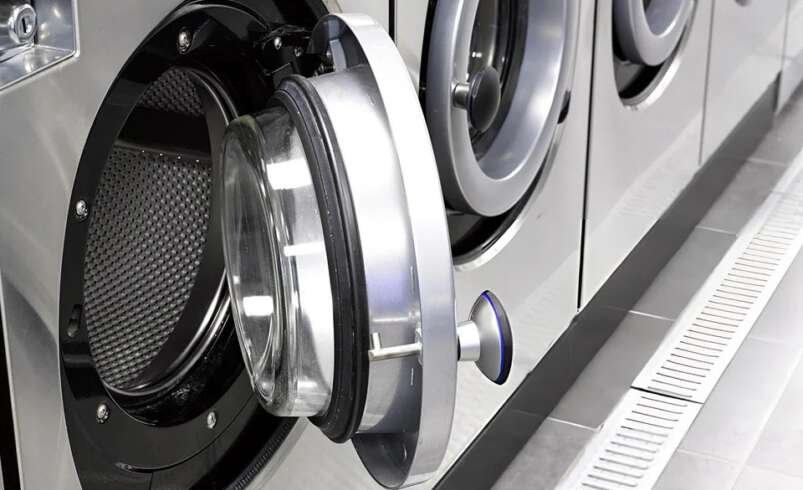

Choosing the right laundry equipment is a major operational decision for hospitals, hotels, universities, garment manufacturers and commercial laundries. Among the most important machines is the washer extractor, which combines washing and high-speed water removal in one unit. For buyers comparing industrial laundromat machines, the best choice depends on hygiene requirements, daily linen volume, available utilities, space, automation and after-sales support.
The question “Which brand of washer extractor is best for a hospital laundry in India” does not have one universal answer. A hospital needs more than a strong motor or large drum. It requires a machine designed for controlled processing, separation of soiled and clean linen, repeatable wash programmes and dependable service. Industrial laundromat machines should therefore be evaluated as part of a complete laundry system rather than purchased only on brand name or initial price.
Supershine Laundry helps businesses assess commercial and industrial laundry equipment according to their application, workflow and production requirements. This guide explains the most important technical and practical factors to consider before selecting a washer extractor for a hospital laundry in India.
What Is a Washer Extractor?
A washer extractor is a heavy-duty washing machine that washes, rinses and extracts water from textiles in the same drum. The extraction stage uses high-speed spinning to remove moisture before the linen moves to a tumble dryer, hydro extractor, flatwork ironer or finishing station.
The main technical term to understand is the G-factor. It represents the centrifugal force generated during extraction. A higher G-factor generally removes more water, which can reduce drying time, but the correct value depends on fabric type, machine design, balance control and the requirements of the finishing section.
A hospital washer extractor should also provide:
-
Programmable wash and disinfection cycles.
-
Accurate control of water levels, temperature and chemical dosing.
-
Stainless-steel areas exposed to water and chemicals.
-
Strong door locking and safety systems.
-
Clear cycle status and fault indications.
-
Easy access for cleaning and maintenance.
-
Compatibility with steam, hot water or electric heating, depending on the site.
The machine must be sized for actual daily loads. Selecting an oversized unit can increase unused capacity and utility consumption, while an undersized machine may create queues, overtime and inconsistent linen processing.
Which Brand Is Best for a Hospital Laundry?
When buyers ask, “Which brand of washer extractor is best for a hospital laundry in India”, the most responsible answer is: choose the brand that can meet the hospital’s hygiene workflow, technical requirements and local service expectations.
A suitable brand should demonstrate strength in five areas:
1. Healthcare-suitable design
For hospitals, a barrier washer extractor is often the preferred configuration where the laundry layout and infection-control process require strict separation. This machine is loaded from the soiled side and unloaded from the clean side, with the machine installed through a partition wall. The arrangement helps reduce the chance of clean linen passing through a contaminated area.
A standard front-loading washer extractor may be appropriate for smaller facilities or laundries with clearly separated rooms and controlled procedures. The choice should be made with the hospital’s infection-control team and laundry consultant.
2. Reliable programmability
Hospital linen may include bedsheets, pillow covers, patient gowns, towels, staff garments, theatre textiles and heavily soiled items. These loads should not automatically be processed using one generic programme.
Look for controls that allow adjustment of:
-
Pre-wash and main-wash stages.
-
Water temperature.
-
Wash time and mechanical action.
-
Number of rinses.
-
Chemical dosing.
-
Extraction speed.
-
Programme permissions and operator access.
Programmability should be practical rather than unnecessarily complicated. Operators need clear instructions, repeatable cycles and the ability to identify whether a load has completed correctly.
3. Appropriate material and construction
The inner drum and water-contact surfaces should be made from suitable corrosion-resistant stainless steel or an equivalent material specified by the manufacturer. Hospitals use detergents, bleaches, disinfectants and other chemicals, so material compatibility matters.
Buyers should review the construction of:
-
Inner drum and outer tub.
-
Door glass and gasket.
-
Drain valves.
-
Chemical injection points.
-
Bearings and suspension components.
-
Control panel and electrical enclosure.
A well-built machine is not defined by appearance alone. Ask for technical drawings, utility requirements, maintenance access details and recommended spare-parts schedules before placing an order.
4. Service and spare-parts support
A hospital laundry cannot afford extended downtime during periods of high linen demand. The supplier should explain how installation, operator training, preventive maintenance and breakdown support will be handled in the customer’s service area.
Supershine Laundry recommends asking for a written service scope that covers:
-
Installation and commissioning.
-
Utility connection requirements.
-
Staff training.
-
Preventive-maintenance intervals.
-
Availability of essential spare parts.
-
Response and escalation procedures.
-
Warranty terms and exclusions.
The best brand is often the one supported by a capable local supplier, not necessarily the one with the most well-known name.
5. Suitable total cost of ownership
Purchase price is only one part of the investment. Total cost of ownership includes water, heating, electricity, detergent, labour, maintenance, replacement parts and downtime.
For example, a machine with better extraction may reduce the moisture entering the dryer. However, the result depends on fabric type, loading practice, selected programme and the performance of the entire laundry line. Buyers should compare complete operating requirements rather than relying on a single efficiency claim.
Key Buying Factors in India
For Indian hospital projects, the machine must match the building’s available utilities and operating environment. Before requesting quotations for industrial laundromat machines, prepare a basic site and workload assessment.
Estimate linen volume
Record the approximate daily linen weight, peak-day volume, number of shifts and required turnaround time. Separate regular linen from heavily soiled or special-process items.
A practical sizing exercise should consider:
-
Kilograms processed per day.
-
Number of washing cycles per shift.
-
Average load weight.
-
Time available for washing.
-
Future expansion.
-
Backup capacity if one machine is unavailable.
Do not load a washer extractor beyond its rated textile capacity. Overloading can reduce washing quality, increase imbalance and place unnecessary stress on mechanical components.
Check power, water and heating
The quotation should clearly state the required electrical supply, connected load, water pressure, drain size, steam pressure, compressed air requirement and ventilation needs.
Heating may be provided through steam, hot water or electricity. Steam heating can suit facilities with an existing boiler system, while electric heating may be considered where steam is not available. The correct option depends on energy availability, infrastructure, operating cost and project design.
Water quality also deserves attention. Hard water can affect detergent performance and contribute to scale formation. The equipment supplier should be informed about the site’s water conditions so that filtration, softening or other treatment can be evaluated where necessary.
Consider installation and workflow
The location of the washer extractor affects productivity and hygiene. The laundry should ideally have a planned movement path from receiving and sorting to washing, drying, finishing, folding and dispatch.
For healthcare facilities, the design should address:
-
Soiled-linen receiving.
-
Sorting and weighing.
-
Clean and dirty traffic separation.
-
Chemical storage and dosing.
-
Drainage and floor slope.
-
Operator safety.
-
Clean-linen transfer.
-
Maintenance access.
Supershine Laundry can help buyers evaluate the relationship between machine selection and the broader laundry layout, rather than treating the washer extractor as an isolated purchase.
Comparing Machine Types
There is no single machine type that fits every hospital. The right choice depends on linen classification, building design, throughput, available utilities and the level of process control required.
Common Mistakes to Avoid
Many commercial laundry problems begin before installation. Avoid these purchasing mistakes:
-
Choosing capacity based only on the largest daily load.
-
Ignoring peak-day demand and backup requirements.
-
Selecting a machine without checking drain and water pressure.
-
Comparing brands only by purchase price.
-
Failing to confirm detergent-dosing compatibility.
-
Treating a hospital laundry like a hotel laundry.
-
Installing equipment without enough maintenance clearance.
-
Accepting unclear warranty or service terms.
-
Omitting operator training from the project plan.
-
Buying equipment before finalising the laundry workflow.
A professional supplier should ask detailed questions before recommending a model. If the quotation contains only a machine price and basic capacity, request a more complete technical and commercial proposal.
Why Work With Supershine Laundry?
Supershine Laundry supplies and supports commercial and industrial laundry equipment for businesses and institutions in India. Its role should be viewed as more than equipment supply: the selection process should connect machine capacity, utility planning, linen flow, operator requirements and after-sales service.
When evaluating a proposal from Supershine Laundry, buyers should request model-specific information rather than relying on general product descriptions. This may include the rated capacity, drum volume, extraction performance, heating method, cycle controls, dimensions, electrical requirements, water consumption assumptions and recommended maintenance schedule.
Supershine Laundry can also help decision-makers compare washer extractors with related equipment such as tumble dryers, hydro extractors, flatwork ironers, garment finishing machines, boilers and chemical-dosing systems. A balanced system is usually more useful than investing heavily in one machine while leaving bottlenecks elsewhere.
The final decision should be based on documented requirements, site suitability and service capability. Ask for references only where they can be verified, and ensure all performance, warranty and installation commitments are included in writing.
Frequently Asked Questions
1. Which brand of washer extractor is best for a hospital laundry in India?
The best brand is one that offers healthcare-suitable design, reliable programmable cycles, suitable construction, local technical support and documented operating requirements. For hospitals needing dirty-to-clean separation, a barrier washer extractor may be more appropriate than a standard model. Compare the complete solution, including installation and service, instead of choosing only by brand reputation.
2. Is a barrier washer extractor necessary for every hospital?
No. The requirement depends on the hospital’s laundry layout, infection-control procedures, linen volume and separation between soiled and clean areas. A barrier model is particularly useful when the machine can be installed through a partition separating the dirty and clean sides. The final decision should involve the hospital’s infection-control and facility teams.
3. What capacity washer extractor is suitable for a hospital?
Capacity depends on daily linen weight, peak demand, number of shifts, available washing time and future growth. Buyers should calculate the required kilograms per day and divide the workload across realistic cycles, while allowing for maintenance or backup needs. A supplier such as Supershine Laundry should size the machine after reviewing actual operating data.
4. Does a higher extraction speed always mean better performance?
Not always. A higher extraction speed can reduce residual moisture, but the result also depends on G-factor, fabric type, load balance, programme settings and dryer capacity. Excessive mechanical action or unsuitable extraction may affect delicate textiles. Select extraction performance as part of the complete textile-care process.
5. What should be included in a washer extractor quotation?
The quotation should include machine capacity, drum volume, extraction specifications, heating method, utility requirements, dimensions, installation scope, commissioning, training, warranty, maintenance terms and spare-parts support. It should also identify exclusions, such as civil work, steam generation, water treatment or electrical installation. Clear documentation helps purchase managers compare proposals fairly.
Conclusion
Selecting a washer extractor for a hospital laundry requires a careful review of hygiene workflow, capacity, programmability, construction, utilities, maintenance and service support. Industrial laundromat machines should be purchased as part of a complete laundry system, not as standalone equipment selected only by price.
For hospitals, hotels, universities, commercial laundries and industrial facilities in India, Supershine Laundry can help evaluate the practical requirements behind the purchase. The strongest decision is one supported by accurate workload data, a suitable machine configuration and clearly documented technical and service commitments.