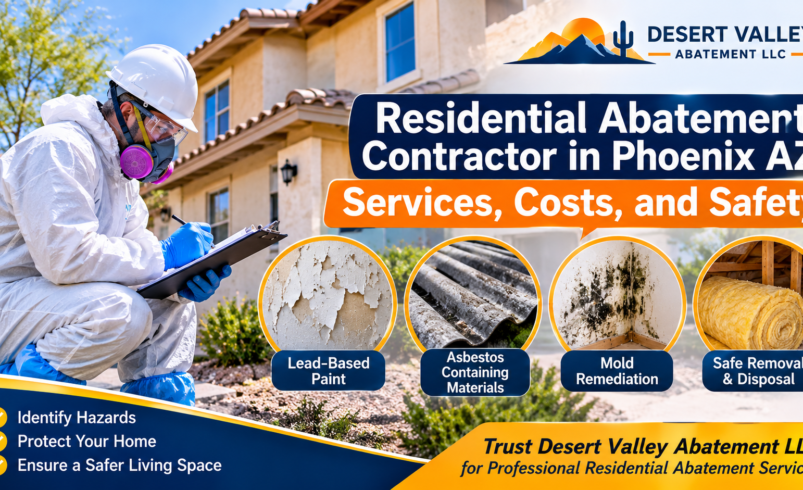

Homeowners planning renovations, repairing older properties, or dealing with potentially hazardous building materials need to understand the importance of professional abatement. Hiring a qualified Residential Abatement Contractor in Phoenix AZ helps property owners identify potential hazards, manage contaminated materials, and make informed decisions before work begins. Desert Valley Abatement LLC recognizes that residential safety involves more than removing damaged materials; it requires careful assessment, appropriate containment, responsible handling, and compliance with applicable safety requirements.
Whether you own an older house, are preparing for a remodeling project, or have discovered suspicious materials during repairs, understanding residential abatement services can help you protect occupants and avoid unnecessary exposure.
What Is Residential Abatement?
Residential abatement is the controlled process of identifying, managing, reducing, or removing hazardous materials from a home. Depending on the property’s condition, the work may involve asbestos-containing materials, lead-based paint, mold-contaminated materials, or other environmental hazards.
Not every damaged building material requires abatement. Some materials can be repaired or managed safely, while others may need specialized removal. The correct approach depends on the material, its condition, location, and the likelihood of disturbance.
A professional assessment helps determine the appropriate response instead of relying on appearance alone.
Common Residential Hazards That May Require Abatement
1. Asbestos-Containing Building Materials
Asbestos was used in various construction products because of its heat resistance and durability. Older homes may contain asbestos in certain insulation products, floor tiles, adhesives, roofing materials, ceiling textures, or pipe coverings.
The presence of asbestos does not automatically mean that immediate removal is necessary. Materials in good condition and left undisturbed may sometimes be managed in place. However, damaged materials or planned renovation work can increase the risk of releasing asbestos fibers.
A qualified professional can arrange appropriate inspection and testing before any material is disturbed. If asbestos is confirmed, the recommended management or removal method should follow applicable regulations.
2. Lead-Based Paint
Lead-based paint may be present in older residential buildings, particularly homes constructed before restrictions on its use. Peeling, chipping, sanding, scraping, or demolition can create lead-contaminated dust.
Young children and pregnant individuals are particularly vulnerable to lead exposure. Homeowners should avoid dry sanding or disturbing suspected lead paint without proper precautions.
Depending on the property and project, professional lead inspection, risk assessment, stabilization, or abatement may be appropriate.
3. Mold and Moisture-Damaged Materials
Water leaks, roof damage, plumbing failures, and poor ventilation can create conditions that support mold growth. Mold may develop behind drywall, beneath flooring, inside cabinets, or around windows.
Not every mold situation requires the same response. The underlying moisture problem must be corrected, and affected materials should be assessed to determine whether cleaning, drying, or removal is appropriate.
Professional remediation may be necessary when contamination is extensive, hidden, or associated with significant building damage.
4. Other Potentially Hazardous Materials
Some residential projects may involve contaminated insulation, chemical residues, or materials affected by previous property damage. The appropriate response depends on the substance involved.
Homeowners should not assume that every unusual odor, stain, or deteriorating material indicates a specific hazard. Inspection and, where necessary, laboratory testing provide a more reliable basis for decisions.
When Should Homeowners Hire an Abatement Contractor?
Knowing when to seek professional help can prevent a manageable problem from becoming more complicated. Consider arranging an assessment in the following situations:
- Before remodeling an older home: Cutting, drilling, sanding, and demolition can disturb concealed hazardous materials.
- After discovering damaged insulation: Deteriorating or exposed insulation may require identification before handling.
- When paint is peeling in an older property: Lead-based paint should be assessed before scraping or renovation.
- After water damage: Moisture can affect drywall, flooring, insulation, and other materials.
- Before demolition: A pre-renovation or pre-demolition survey may identify materials requiring special handling.
- When previous repairs reveal suspicious materials: Stop work until the material has been properly evaluated.
Early assessment is especially important when children, older adults, or individuals with respiratory sensitivities occupy the property.
What Services Does a Residential Abatement Contractor Provide?
The exact services depend on the contractor’s qualifications, applicable licensing requirements, and the type of hazard involved. Common stages of residential abatement include the following.
Property Assessment and Material Identification
The process usually begins with reviewing the property’s age, renovation history, visible damage, and areas of concern. When necessary, qualified professionals arrange sampling and laboratory analysis to identify suspected materials.
This step matters because asbestos, lead, mold, and other hazards require different procedures. A contractor should explain what has been confirmed, what remains uncertain, and what additional testing may be necessary.
Work Planning and Containment
If abatement is recommended, the work area may need to be separated from occupied spaces. Depending on the hazard, project requirements can include barriers, warning signs, controlled access, protective equipment, and specialized ventilation or air-control measures.
The containment strategy should reflect the material and the scope of work rather than follow a one-size-fits-all approach.
Safe Removal or Remediation
Some materials can be repaired or managed without removal. Others may require controlled removal by appropriately qualified personnel.
For example, asbestos work may involve wet methods, specialized equipment, and regulated handling procedures. Lead-related work may require dust-control measures and careful cleaning. Mold remediation generally includes addressing the moisture source and removing materials that cannot be adequately cleaned.
Waste Handling and Disposal
Hazardous materials must be collected, packaged, transported, and disposed of according to applicable requirements. Ordinary household trash procedures may not be appropriate.
Homeowners should ask how waste will be managed and whether disposal documentation is available for the project.
Final Cleaning and Project Verification
Depending on the hazard and project requirements, final procedures may include detailed cleaning, visual inspection, air monitoring, or clearance testing by an appropriately qualified independent professional.
The purpose is to verify that the work area meets the relevant project criteria before it is returned to normal use.
How Much Does Residential Abatement Cost in Phoenix AZ?
There is no single price for residential abatement because each property and hazard presents different conditions. A small, accessible project may require considerably less work than a large property with concealed contamination or complex containment needs.
Important cost factors include:
Type of hazardous material: Asbestos, lead, mold, and other contaminants require different procedures, equipment, and disposal arrangements.
Size of the affected area: Larger work areas generally require more labor, materials, containment, and waste handling.
Material condition: Damaged, friable, or deteriorating materials may require additional precautions.
Accessibility: Materials inside wall cavities, crawl spaces, ceilings, or confined areas can increase project complexity.
Testing and inspection: Sampling, laboratory analysis, and specialist assessments may add to the overall cost.
Occupancy and containment requirements: Projects in occupied homes may need additional isolation and scheduling arrangements.
Disposal requirements: The type and quantity of regulated waste can affect transportation and disposal costs.
Request a written estimate that identifies the scope of work, included services, testing requirements, disposal arrangements, and any exclusions. Comparing estimates based only on the final price can be misleading if contractors are proposing different levels of work.
How to Choose the Right Residential Abatement Contractor
Selecting a contractor should involve more than checking availability or choosing the lowest estimate.
Verify Relevant Qualifications
Ask whether the contractor and assigned workers hold the licenses, certifications, training, or approvals required for the specific material and project in Arizona. Requirements can differ depending on the hazard and type of work.
Request a Clear Scope of Work
A professional proposal should explain the materials being addressed, work areas, containment methods, removal or remediation procedures, cleanup expectations, and waste disposal arrangements.
Ask About Insurance and Safety Procedures
Confirm that the contractor maintains appropriate insurance and can explain worker protection, occupant safety, and emergency procedures.
Review Testing and Documentation
Ask whether the project requires laboratory testing, air monitoring, independent clearance, or disposal records. These requirements should be explained before work begins.
Evaluate Communication
A reliable contractor should answer questions clearly, explain limitations, and avoid promising that every hazard can be resolved through one standard procedure.
Safety Precautions Homeowners Should Follow
Until a suspected hazard has been assessed, avoid disturbing the material. Do not cut, drill, scrape, sand, sweep, or vacuum suspected asbestos or lead-contaminated materials using ordinary household equipment.
Keep children and pets away from affected areas. If material is visibly damaged, restrict access and seek professional advice. Do not collect samples yourself unless you have been given appropriate instructions by a qualified professional.
For mold and water damage, address the source of moisture as soon as possible. Simply painting over a stain or covering a damp surface does not resolve the underlying issue.
Frequently Asked Questions
1. Does every older home in Phoenix need abatement?
No. The age of a home may indicate that certain materials could be present, but testing and assessment are needed to determine whether a hazard exists and what action is appropriate.
2. Should asbestos always be removed from a residential property?
No. If asbestos-containing material is intact and unlikely to be disturbed, managing it in place may sometimes be appropriate. Damaged materials or renovation plans may change the recommendation.
3. Can I renovate my home before an asbestos inspection?
If the property may contain asbestos-containing materials, an appropriate inspection before renovation or demolition can help identify hazards before work disturbs them. Applicable survey requirements should be checked for the project.
4. How long does residential abatement take?
The schedule depends on the material, affected area, accessibility, testing, containment, and disposal requirements. A contractor can provide a more realistic timeline after assessing the property.
5. Is professional abatement more expensive than DIY removal?
Professional work has an upfront cost, but DIY disturbance can create exposure risks, contamination, cleanup complications, and potential regulatory problems. Suspected hazardous materials should be evaluated before anyone attempts removal.
6. What documents should I receive after the project?
Depending on the work, useful records may include the written scope, inspection or laboratory results, work documentation, waste disposal records, and applicable clearance or air-monitoring reports.
Conclusion
Residential abatement is an important part of protecting homes when hazardous materials are suspected or confirmed. From asbestos and lead-based paint to mold-affected building materials, the right response begins with identification, followed by a project-specific plan and appropriate safety controls. Homeowners should compare qualifications, request detailed estimates, and understand the proposed procedures before authorizing work. Desert Valley Abatement LLC encourages property owners to make informed decisions and seek qualified assistance when residential hazards may affect renovation plans or household safety. A careful assessment today can help prevent avoidable exposure and support safer property maintenance in the future.