

Running a successful restaurant involves far more than preparing great food and providing attentive service. Cleanliness is one of the most important factors influencing customer confidence, staff wellbeing, food safety, online reputation and the overall success of a hospitality business. From dining areas and kitchens to toilets, storage spaces and high-touch surfaces, every part of a restaurant needs a consistent and carefully planned cleaning routine.
Professional restaurant cleaning leeds services can help hospitality businesses maintain high standards while allowing managers and staff to concentrate on food preparation, customer service and day-to-day operations. A structured cleaning programme also helps reduce the build-up of grease, food residue, dust, bacteria and unpleasant odours that can develop in busy commercial environments.
For restaurants, cleanliness should not be treated as an occasional task completed when an inspection is approaching. Instead, it should be part of the daily operating culture. A well-maintained environment creates a positive first impression, supports safer working conditions and demonstrates that a business takes customer care seriously.
Why Restaurant Cleanliness Matters
Restaurants experience continuous activity throughout the day. Customers enter and leave, meals are prepared, ingredients are handled, tables are occupied and staff move between different areas. Consequently, surfaces can quickly become contaminated with food particles, grease, dirt and other residues.
Creating a Positive Customer Experience
Customers notice cleanliness from the moment they enter a restaurant. A spotless entrance, clean tables, fresh-smelling dining area and well-maintained toilets can immediately influence how people perceive the business.
Even when the food is excellent, visible dirt or neglected surfaces can negatively affect the overall experience. On the other hand, a clean environment can encourage customers to feel comfortable and confident about returning.
Cleanliness also contributes to the visual presentation of a restaurant. Floors, windows, furniture, counters and fixtures should complement the appearance of the dining space rather than distract from it.
Supporting Food Hygiene
Food preparation areas require particular attention because poor cleaning practices can contribute to contamination. Worktops, chopping areas, handles, sinks, equipment and floors can collect food residue throughout the working day.
Regular cleaning helps control these problems and supports the hygiene procedures already used by restaurant operators. Cleaning should be organised around the type of surface, level of use and potential contamination risk.
Protecting Staff and Customers
A clean workplace can contribute to a safer environment for employees and visitors. Greasy floors may become slippery, clutter can create trip hazards and poorly maintained areas can become difficult to work in.
A detailed cleaning routine helps identify these issues before they become bigger problems. It also encourages staff to take responsibility for maintaining professional standards throughout the premises.
Key Areas That Require Professional Attention
A restaurant contains multiple areas with different cleaning requirements. Each space should receive an appropriate level of attention rather than relying on a single general cleaning routine.
Commercial Kitchen Cleaning
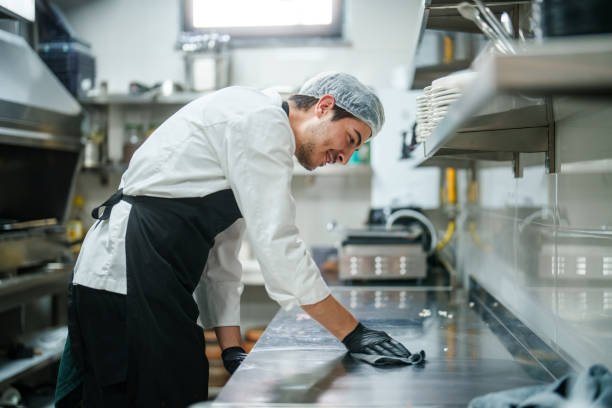
The kitchen is usually one of the busiest areas in a restaurant and often requires intensive cleaning. Grease, oil, food particles and moisture can accumulate around cooking equipment and preparation areas.
Professional cleaning may include:
- Degreasing suitable kitchen surfaces
- Cleaning worktops and preparation areas
- Cleaning sinks and surrounding surfaces
- Removing food residue from floors
- Cleaning doors, handles and frequently touched areas
- Maintaining suitable cleaning standards around equipment
- Cleaning ventilation-related surfaces where appropriate
- Paying attention to difficult-to-reach areas
Kitchen cleaning should be completed systematically so that important surfaces are not overlooked during busy periods.
Dining Area Cleaning
The dining area represents the restaurant in front of customers. Tables, chairs, floors, windows, doors and decorative surfaces all contribute to the appearance of the premises.
Cleaning schedules should cover both visible and less obvious areas. Dust can accumulate around furniture, corners and fixtures, while floors may require frequent attention during busy service periods.
A clean dining area creates a more pleasant atmosphere and helps maintain a consistent professional image.
Toilet and Washroom Cleaning
Restaurant toilets can strongly influence customer perceptions. They should be cleaned frequently and checked throughout operating hours.
Important tasks can include:
- Cleaning toilets and urinals
- Sanitising frequently touched surfaces
- Cleaning sinks and taps
- Maintaining mirrors
- Cleaning floors
- Removing waste
- Checking soap and paper supplies
- Controlling unpleasant odours
A well-maintained washroom demonstrates attention to detail and supports a more comfortable customer experience.
Building an Effective Restaurant Cleaning Schedule
A reliable cleaning programme should be based on frequency, risk and usage. Not every task needs to be completed at the same time, so dividing responsibilities into daily, weekly and periodic activities can make the process more manageable.
Daily Cleaning Tasks
Daily tasks normally focus on areas that experience regular contact or contamination. Tables, counters, floors, toilets, kitchen surfaces and waste areas may require attention every day.
At the end of service, staff should ensure that food waste is removed, surfaces are cleaned and relevant areas are left ready for the next operating period.
Weekly Cleaning Tasks
Weekly cleaning can focus on areas that do not necessarily require attention after every service. This may include deeper cleaning of walls, fixtures, furniture, storage areas and difficult-to-reach surfaces.
A weekly schedule should complement rather than replace daily cleaning.
Periodic Deep Cleaning
Some areas require more intensive cleaning at planned intervals. Depending on the premises, this can include detailed floor treatment, high-level dusting, difficult-to-access areas and deeper cleaning around kitchen equipment.
Periodic cleaning can help prevent the gradual build-up of dirt that routine cleaning may not completely remove.
Choosing the Right Cleaning Approach
Selecting a commercial cleaning provider requires more than comparing prices. Restaurant operators should consider reliability, experience, cleaning procedures, flexibility and the ability to work around hospitality schedules.
Experience in Commercial Hospitality
Restaurant environments have different requirements from ordinary offices or domestic properties. Cleaning teams need to understand busy service periods, food preparation areas, customer-facing spaces and the importance of working efficiently.
A suitable provider should be able to adapt its approach to the layout and operating pattern of the restaurant.
Flexible Cleaning Times
Cleaning schedules should fit around restaurant operations. Some businesses require cleaning before opening, while others need after-hours cleaning once customers and staff have left.
Flexible scheduling can reduce disruption and allow cleaning teams to work efficiently without interfering with food service.
Clear Cleaning Procedures
A professional approach should involve defined tasks and consistent standards. Managers should know which areas are being cleaned, how frequently they are being serviced and what level of attention is expected.
Clear procedures can also make it easier to identify missed tasks and maintain accountability.
Hygiene-Focused Cleaning Practices
Effective cleaning is not simply about making surfaces look attractive. A good programme should consider hygiene, contamination risks and the different requirements of individual surfaces.
High-Touch Surfaces
Door handles, light switches, taps, payment-related surfaces and other frequently touched points deserve regular attention. These areas can experience substantial contact throughout the day.
Including high-touch surfaces in routine schedules helps create a more thorough cleaning system.
Floors and Walkways
Restaurant floors are exposed to food particles, spills, dirt and heavy foot traffic. Kitchen floors may also encounter grease and moisture.
Cleaning should be appropriate for the flooring material. Spillages should be addressed promptly, while routine cleaning should prevent dirt from becoming embedded.
Waste Management Areas
Bins and waste storage areas can develop unpleasant odours and attract unwanted pests if they are neglected. Waste should be removed according to the restaurant’s operational requirements, with surrounding surfaces cleaned regularly.
Good waste management supports a cleaner working environment and helps maintain professional standards.
How Professional Cleaning Supports Restaurant Reputation
A restaurant’s reputation is influenced by many factors, including food quality, service, atmosphere and cleanliness. Customers can share their experiences quickly through online reviews and social platforms, making consistent standards increasingly important.
Online Reviews and Customer Perception
Customers may mention cleanliness directly in reviews. Positive comments about spotless tables, clean toilets or a well-maintained environment can reinforce confidence, while complaints about hygiene can damage a business’s reputation.
Maintaining consistent standards therefore has value beyond the physical premises. It can contribute to the overall perception of professionalism.
Supporting Customer Loyalty
People are more likely to return to places where they feel comfortable. Clean surroundings can form part of that sense of comfort.
Restaurants that consistently maintain their premises can create an environment where customers feel confident bringing family members, colleagues or friends.
Benefits of Using a Professional Cleaning Company
Managing restaurant cleaning internally can place additional pressure on employees, particularly during busy service periods. A professional provider can take responsibility for planned cleaning tasks and help create greater consistency.
Saving Staff Time
Restaurant employees have important responsibilities involving food preparation, service and customer care. Assigning extensive cleaning duties to already busy staff may affect productivity.
A professional cleaning team can handle designated cleaning responsibilities while restaurant employees concentrate on their core roles.
Consistent Standards
Professional cleaning services can operate according to agreed schedules and checklists. This structured approach can reduce the likelihood of important areas being forgotten.
CleanVerge provides cleaning support designed around the practical requirements of commercial environments, helping businesses maintain organised and professional premises.
Professional Equipment and Methods
Commercial cleaning may require appropriate equipment and products for different surfaces and levels of contamination. Using suitable methods can improve efficiency while reducing the risk of damaging floors, fixtures or other materials.
The correct approach should always consider the manufacturer’s recommendations and the specific requirements of the premises.
Maintaining Standards Between Professional Visits
Professional cleaning works best when supported by good everyday practices. Restaurant staff can help maintain standards by dealing with spills quickly, keeping work areas organised and reporting maintenance problems.
Encourage Good Workplace Habits
Employees should understand which areas need immediate attention and how cleaning responsibilities fit into the restaurant’s normal workflow.
Simple habits such as wiping suitable surfaces after use, removing waste promptly and keeping walkways clear can make a significant difference.
Monitor Cleaning Quality
Managers can use cleaning checklists to monitor completed tasks. Regular checks can identify recurring problems and highlight areas that require additional attention.
This approach also creates a clearer system for communicating expectations between management, staff and cleaning teams.
Making Restaurant Cleaning More Efficient
Efficiency is particularly important in hospitality because cleaning often needs to happen within limited time windows. Planning the order of tasks can reduce unnecessary movement and improve productivity.
Work From High Areas to Low Areas
Where appropriate, cleaning should progress from higher surfaces towards lower areas. This prevents dust or debris from falling onto areas that have already been cleaned.
Separate Cleaning Tasks by Area
Dividing the premises into zones can make cleaning more organised. Kitchen, dining, toilet, entrance and storage areas can each have clearly defined tasks.
This method makes it easier to track progress and maintain consistent standards.
Use Appropriate Cleaning Products
Different surfaces require different cleaning methods. Products should be selected according to the material, cleaning requirement and manufacturer’s guidance.
Using excessive product does not necessarily produce better results. Correct dilution, application and contact time are often more important for effective cleaning.
What to Look for in a Restaurant Cleaning Provider
Before choosing a provider, restaurant owners and managers should consider several practical factors.
Reliability and Communication
A cleaning provider should communicate clearly about schedules, changes and specific requirements. Reliable attendance is particularly important for restaurants operating extended hours.
Tailored Cleaning Plans
Every restaurant has a different layout, customer volume and operating schedule. A tailored cleaning plan can address the areas that need the most attention rather than applying an identical routine to every property.
Attention to Detail
Professional results depend on more than cleaning obvious surfaces. Corners, handles, fixtures, underneath furniture and other overlooked areas should form part of a comprehensive approach.
A Cleaner Future for Leeds Restaurants
The hospitality industry continues to place strong emphasis on customer experience, operational efficiency and professional presentation. Cleanliness connects all three areas.
A well-planned restaurant cleaning leeds strategy can help businesses create a welcoming environment, support workplace hygiene and protect the appearance of their premises. It can also help restaurant managers establish repeatable routines instead of relying on occasional deep cleans.
The most effective approach combines regular cleaning, detailed periodic maintenance, staff awareness and professional support where required. By treating cleanliness as an essential part of restaurant management, businesses can create stronger standards that benefit customers and employees alike.
For restaurants looking to maintain dependable cleaning routines, CleanVerge can provide a structured approach suited to commercial cleaning requirements. With the right cleaning plan, appropriate scheduling and consistent attention to detail, restaurant operators can maintain a professional environment that supports customer confidence and day-to-day operations.